
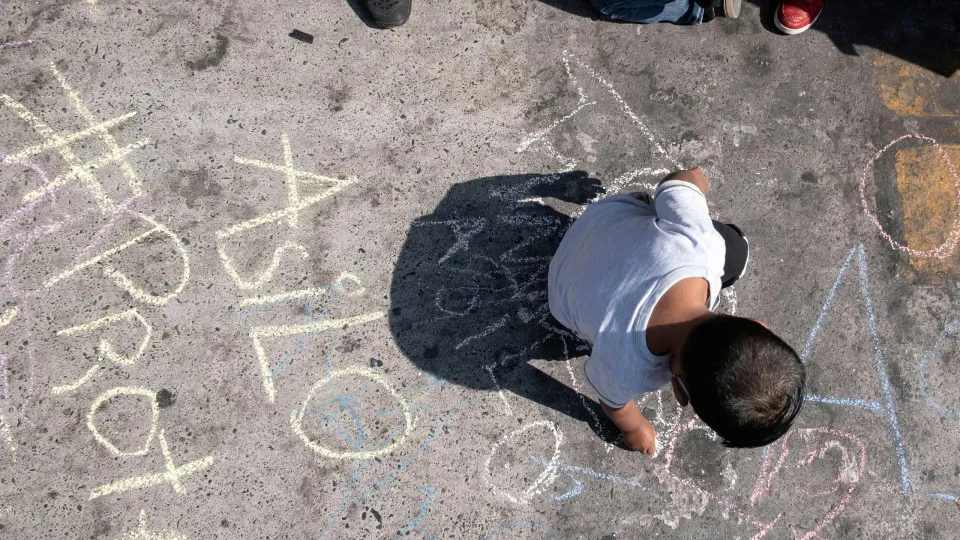
The Organisation for Economic Cooperation and Development (OECD) has today argued that early childhood investment can help reduce poverty and contain pressure on public finances in the future.
© GUILLERMO ARIAS/AFP via Getty Images
05/10/2026
by
Lusa
O alert is a report from the organization based in Paris, published today, and concludes that children who grow up in poverty or in unfavorable socioeconomic conditions are more likely to present a more fragile health, lower school performance and fewer employment opportunities, which, in the long term, translates into lower productivity, lower tax revenue and higher costs for governments.
The OECD points out that social expenditure in its member countries has increased in two decades from around 20% of GDP to 25%, mainly driven by spending on health and social security.
Despite this, programmes for families with children still represent less than 10% of total social expenditure, the report points out that in 2023 12.5% of children in OECD countries were living in poverty.
According to the organisation, about one in seven children in the OECD European countries suffered from serious material and social deprivation in 2024, even if in many cases they were part of families with incomes above the poverty threshold.
The situation is also reflected in education and health, since the proportion of 15-year-olds with insufficient skills in PISA tests increased from 31% in 2009 to 43% in 2025, while more than one in five adolescents considers their health to be regular or weak, warns the report “Investing better in children through social policies”.
The simple increase in spending in these areas is not enough, it also warns the OECD, which points out that better results are only achieved through a combination of income support, measures to promote the employment of accessible parents and public services such as day care.
Early childhood education and care stand out among the most impactful investments, according to the study, since the increase in investment and participation of children from three to five years in these services is associated with the reduction of child poverty, better educational results and better health in adulthood.
According to OECD estimates, the increase in the proportion of social expenditure allocated to these services, coupled with greater participation, could increase its impact on the reduction of relative child poverty by about 50% over ten years.
The organization also estimates that the increase in investment and participation in these services may reduce the proportion of students with low performance in PISA by 4% and increase the proportion of students with high performance by 3%, compared to the levels of 2025.