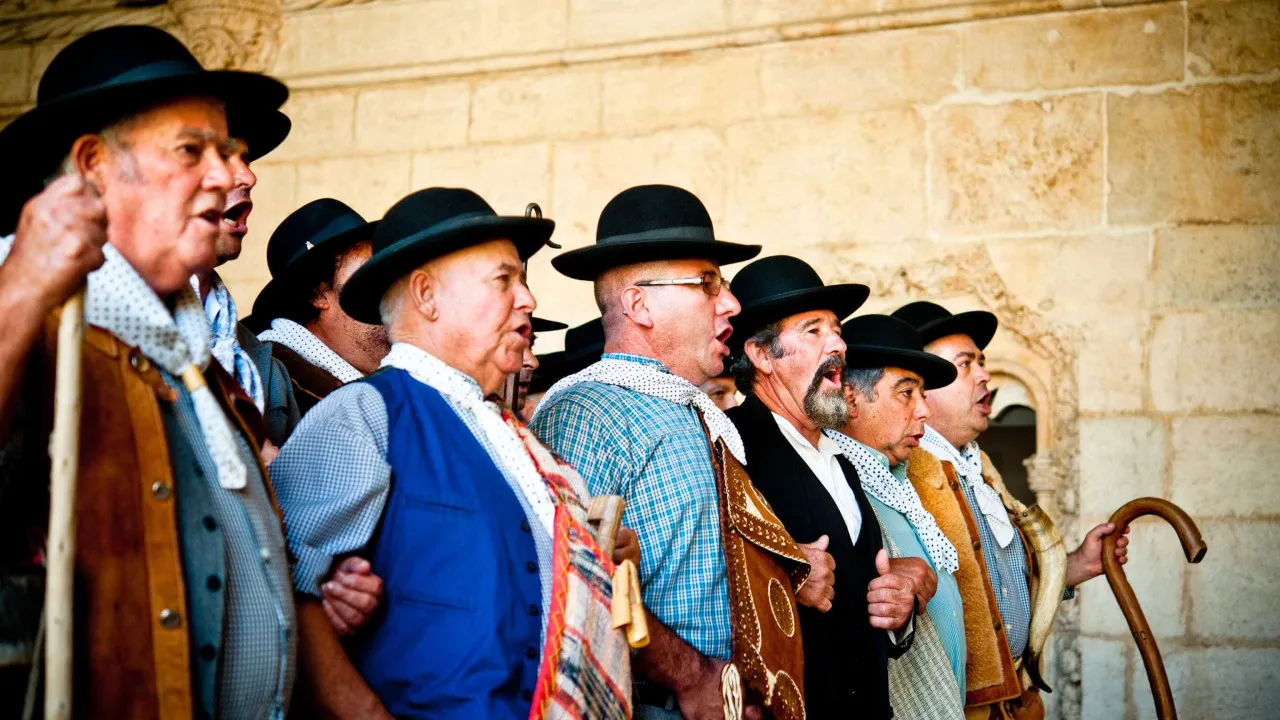
The Alentejo and Fado, both classified as the UNESCO World Heritage Site, are highlighted in the cultural initiative “Sung Heritage”, which the Beja House will promote over the next week.
© Global Images
20/11/2026
by
Lusa
O sing Alentejo and fado, both classified as World Heritage by UNESCO, are highlighted in the cultural initiative “Sung Heritage”, which the House of Beja will promote over the next week.
In a statement, the municipality explained that the event, which will take place from Monday and until Saturday, intends to value the “cultural and social meaning [of Alentejo singing and fado], reflect on the challenges of its safeguarding and promote dialogue between tradition and contemporary life”.
“Beja celebrates, therefore, what differentiates it and links it to a greater heritage: the strength of voices, the memory of places and an identity that continues to find in these expressions a way to recognize and project itself in the future”, he said.
According to the municipality, the initiative “affirms the importance of keeping the intangible cultural heritage alive” by the United Nations Educational, Scientific and Cultural Organization (UNESCO).
It acknowledges that the safeguarding of these classified goods “is not exhausted in institutional or international recognition”.
“ It is built daily through the practice, the transmission of knowledge, the participation of communities and the creation of new ways of living and sharing it”, he stressed.
In this context, the initiative “Sung Heritage” will invite “to reflect, share and celebrate the Immaterial Cultural Heritage, placing people, communities and knowledge that give life to traditions and ensure their continuity”.
Open rehearsals of Alentejo singing, fado shows and tertulias are some of the proposals of the program, which will take place in different areas of the county and involve coral groups, singers, fadoists, researchers, associations and cultural agents.
The initiative starts at 5:45 p.m. on Monday, with an assisted essay by the Alentejo Rouxinois coral group, at the UNESCO Club of Beja, following, from 6:30 p.m., the conversations “Memoirs of the City – What was heard here” and “Think of today’s safeguard”, both at Sintra Taberna.
On Tuesday and Wednesday, the program will be more dedicated to fado, highlighting the initiative “Conversations around fado”, with Custódio Castelo, João Chora and Raúl Caldeira, and a show by Hélder Moutinho, with the participation of Daniela Helena, both at the UNESCO Club of Beja.
Already for the day 26, it is planned, for 19:00, in the Gallery of Disassossego, a wine tertulia around the book “The Wine of Talha in the Lower Alentejo”, while, the next day, the Taberna do Sintra receives, at 18:30, the conversation “Imaterial Cultural Heritage – Matrix and Reinvention”, with Maria José Barriga, Rui Arimateia, Mafalda Vasques and José Emídio.
On the last day, several groups of Alentejo cante of the county will hold, starting at 10:30, the “Rota do Cantar a Vozes”, between the Pax Julia Municipal Theatre, the Cod Garden and the Portas de Mértola, “in a collective celebration of the voice and the Alentejo cante”.
Fado was recognized by UNESCO as an intangible cultural heritage of humanity in 2011 and, three years later, the same happened to Alentejo singing, collective singing without instruments.