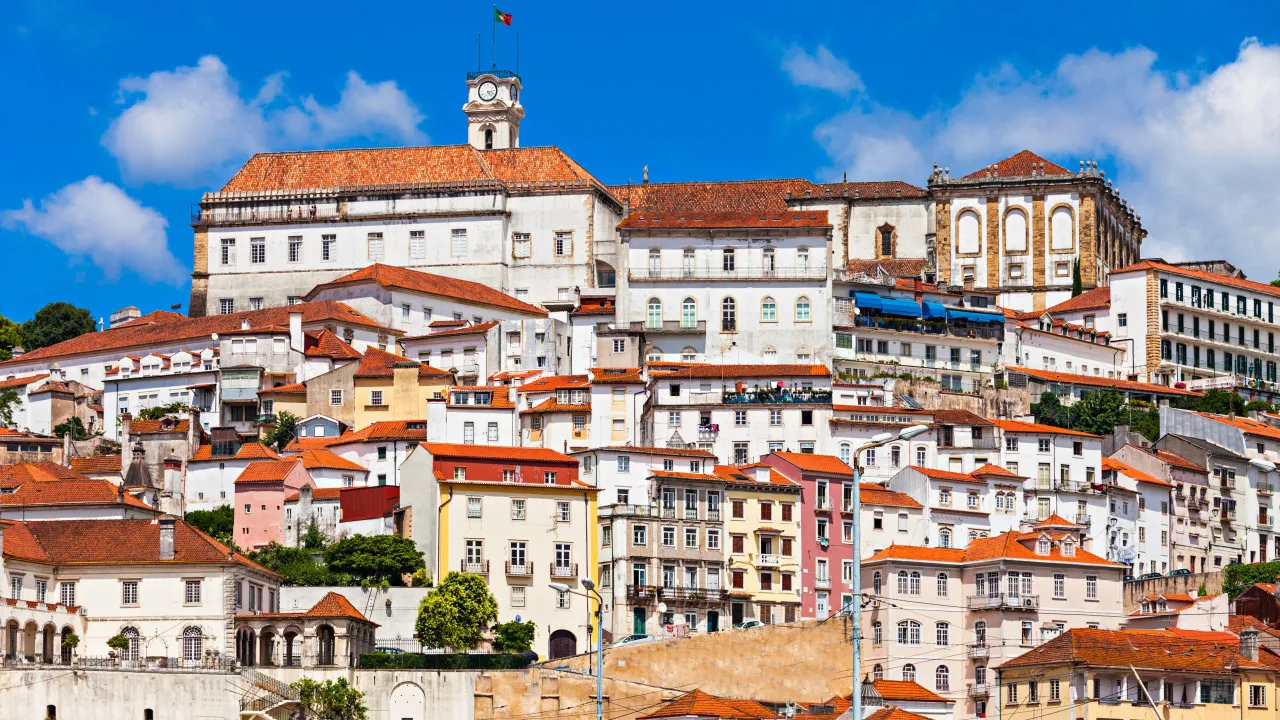
The European Biennial Manifesta, which will take place in Coimbra in 2028, currently has a budget of EUR 5.3 million (ME), but organisation hopes to ensure “further funding”.
© Shutterstock
20/11/2026
by
Lusa
Manifesta
A european biennial manifesta, which will take place in Coimbra in 2028, currently has a budget of EUR 5.3 million (ME), but organization hopes to ensure “further funding”.
During the public announcement of Coimbra as a stage for the Manifesta in 2028, in a co-creation with the biennial Anozoro, an overall investment of eight million euros had been pointed out, with the Portuguese Government assuming half of the value.
In response to questions from the Lusa agency, the organization of the Manifesta now states that the “current work budget is 5.3 million euros”, but it stressed that it is working together with the Municipality of Coimbra (CMC) and the University of Coimbra (UC) “to ensure additional funding, with several talks already underway with potential partners and supporters”.
“ Based on our experience, we are confident that we will be able to raise an amount considerably higher than this initial value as the project develops,” said the directors of Manifesta 17 Coimbra, Emilia Van Lynden, Catherine Nichols and Carlos Antunes.
Asked by Lusa, CMC’s official source refused the idea of a revision of an initial budget, but rather a “value calculation from a preliminary estimate”, because it is a process that is built “phased”.
“ The current amount results from the consolidation of ‘masterplan’, reflecting still an estimate that will be the target of the usual developments for strategic projects of this scale”, he explained, in written response.
On the concrete counterpart that will be assumed by the municipality in the organization of the Manifesta, the municipality refused to advance with a maximum value or ceiling of support.
The CMC “does not assume a financial ceiling of a unilateral watertight value, its contribution being framed in the municipality’s budgetary capacity and in a shared financing model,” he said, stating that the financial effort of the municipality “is sized to ensure the economic sustainability” of the biennial, “without compromising the municipality’s remaining current and investment obligations”.
In this sense, the local authorities also have a view that the budget will be complemented with the support of European funds, private partners and the development of cultural mechanisation programmes.
The municipality also stressed that the contribution of the municipality is not limited to financial support, but to the provision of infrastructure, logistics and human and technical resources “for urban rehabilitation and the dynamization of public spaces, such as Baixa and Rua da Sofia”, which will be the central stage of this biennial.
“ Details of the specific amounts and the allocation of this contribution will be presented very soon,” he said.
Regarding the creation of the entity that will be responsible for the production of the biennial, the directors of the Manifesta 17 Coimbra stated that this process is “progressing according to the expected schedule”, looking at the formal constitution of an association before the end of the year.
The option for association was taken “after consultation with the municipality and legal experts”, considering this to be the most appropriate model given the collaborative nature of the biennial that will take place in Coimbra.
According to the municipality, the association, of private and non-profit law, with limited duration, will integrate the main partners of the biennial: International Foundation Manifesta, Centro de Artes Plásticas de Coimbra, CMC and UC.
Meanwhile, the biennial is selecting the first creative mediator, who will develop, together with the team of Manifesta, local experts and communities, the urban vision for Rua da Sofia and Baixa de Coimbra, has advanced the organization.
The appointment will take place in December, following in March the appointment of a second creative mediator.
The Manifesta 17 will have in 2028, in Coimbra, being the first time this nomad biennial takes place in Portugal.