
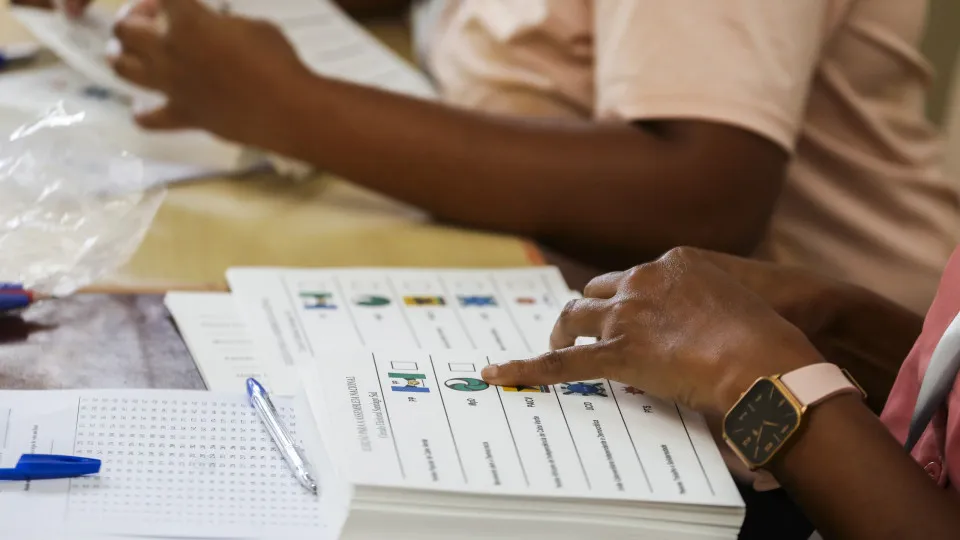
Cape Verde will receive about 150 observers from six international organizations for the Sunday presidential elections, today announced the National Election Commission (CNE) of the archipelago.
© Lusa
11/11/2026
by
Lusa
Cabo Verde will receive about 150 observers from six international organizations for the presidential elections on Sunday, today announced the National Election Commission (CNE) of the archipelago.
The six organizations present are the African Union (AU), the Economic Community of West African States (CEDEAO), the Community of Portuguese-speaking Countries (CPLP), the CPLP Network of Jurisdictional and Electoral Administration (ROJAE-CPLP), the International Francophony Organization (IFO) and the United Nations Office for West Africa and the Sahel (UNOWAS).
The missions have made overall positive assessments of the elections in Cape Verde, as happened with the May legislation this year, recommending improvements in electoral and logistical participation.
“ Despite some specific operational challenges, the process was successful and in line with best practice”, concluded the mission of ECOWAS, the largest.
The presidential elections on Sunday have about 426,500 registered voters, of which there will be around 76,900 in the diaspora (18% of the total).
In the last presidential elections in 2021 seven candidates participated, against six this year.
José Maria Neves, President of the Republic and candidate for a second term, is supported by the African Independence Party of Cape Verde (PAICV, power).
Former Justice Minister Joana Rosa has the support of the Movement for Democracy (MpD, opposition).
The other four candidates are Gilson Alves, doctor, Casimiro Pina, jurist, Antero Tavares, judge, and Loisito Sousa, professor.
In 2021, the abstention was 52%.
José Maria Neves won the first round by winning more than 50% of the votes (at 51.8%).
Carlos Veiga, former Prime Minister and founder of the MpD, came second, with 42.4%.
All the presidents elected by universal suffrage in Cape Verde who fought for a second term have so far been reelected.
It was with Mascarenhas Monteiro, who won the elections in 1991 and 1996, Pedro Pires (2001 and 2006) and Jorge Carlos Fonseca (2011 and 2016).