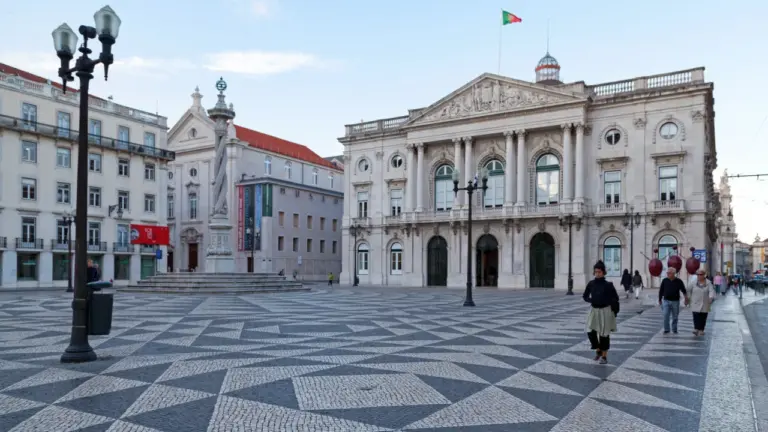
The Lisbon House has approved to hire the installation of 68 video surveillance cameras in Baixa, as well as to remodel the facilities of the precincts and install an image recording system, a proposal that raised concerns for including artificial intelligence.
© ShutterStock
25/11/2026
by
Lusa
A Câmara de Lisboa today approved to hire 68 video surveillance cameras in Baixa, as well as to remodel the facilities of the precincts and install an image recording system, a proposal that raised concerns for including artificial intelligence.
At a public meeting of the municipal executive, the Councilwoman of Projects and Works in Public Space, Joana Baptista (independent, indicated by the PSD), presented four proposals to invest in the video surveillance system in the city, with "an investment of more than three million euros", and all documents were made possible with the votes against BE, Livre and PCP.
The PS also voted against one of the proposals, namely the refurbishment of electrical installations and the monitoring of CCTV (closed television circuit) in the Lisbon Metropolitan Command (Cometlis) of the Public Security Police (PSP), providing them with the monitoring capacity of existing cameras and to be installed, as well as the installation of a system for receiving and recording images in the 1st Division, to be contracted for EUR 1.23 million, for the execution period of 180 days.
The vote of the PS was justified with concerns about the introduction of artificial intelligence mechanisms as to the installation of an image reception and recording system in the 1st Division of the PSP, indicated the Socialist Councilwoman Alexandra Leitão, stating that the specifications “are not limited to predict recording and viewing”, because it requires the service provider to have ‘artificial intelligence algorithms for detecting abnormal behaviour’.
The councilwoman of the PS stressed the issue of legality as regards respect for the fundamental rights of citizens and said that what may happen is that once the contract is awarded, 'the terms of the award are illegal'.
This concern regarding the use of artificial intelligence was also pointed out by the board members of BE, Livre and PCP, requiring responses from the PSD/CDS-PP/IL governance.
In response, Councilwoman Joana Baptista said that the House acquires technology and rehabilitates squadrons, “but the use and visualization [of images] is the sole responsibility of the PSP”, adding that it is a possibility to use the algorithm based on artificial intelligence for detecting patterns or recording naturally noisy environments.
Thanking the warnings of the opposition, the responsible for the Project and Works in Public Space assured that “everything is respected, is in accordance with the law”, while the mayor, Carlos Coins (PSD), said that he will talk to the Lisbon commander of the PSP, adding that “I would not imagine that the police would use this type of equipment in a way that was not legal”, ensuring that the legality of this process.
Other proposals approved are for the installation of 68 surveillance cameras in Baixa Pombalina, including in Praça da Figueira, to be hired for the value of EUR 1.8 million (including VAT), with the execution deadline of 180 days, within the framework of Phase I of the collaboration protocol for the installation of the surveillance system in the city, which covers 216 cameras in 16 areas of the city, of which 133 cameras are already installed in the areas of Bairro Alto, Miradouro de Santa Catarina, Cais do Sodré, Campo das Onbolas, Ribeira das Naus and Restauradores.
Councilwoman Joana Baptista also highlighted the expansion of the video surveillance system, within the scope of Phase II, to areas such as Martim Moniz, Moraria, Avenida Almirante Reis, Castelo São Jorge and the axis Restorers – Saldanha, through a new protocol between the municipality and PSP, through the Cometlis.
It was also approved the free provision to PSP of 20 portable video cameras and their accessories, with the Councilwoman of Projects and Works in Public Space explaining that they will be used for surveillance of the public space and for criminal investigation purposes.
The councilwoman of PS Carla Madeira pointed out that the mayor of Lisbon, Carlos Coins (PSD), inherited in 2021 from the former socialist governance, a complete process for the installation of 216 chambers, including seven awarded, and stressed that, so far, “only 106 chambers of this lot have been installed” and it is now intended to proceed with another 68, but there will still be no 42 cameras.
'This is a completely unacceptable delay for the PS', said the Socialist, saying that this corresponds to an average of 21 cameras installed per year, and hoping that 'this process will now accelerate', because otherwise 'not until 19 years' will the city have all these video surveillance equipment installed.
Alderman of Cávez, Bruno Mascarenhas, said that “unfortunately, there is a problem of insecurity in the city”, pointing out as problematic zone the Rua do Benformoso, in Martim Moniz, and suggested that the new cameras include Largo de São Domingos, with Joana Baptista advancing that three cameras will be installed in this place.
The Councilwoman of Projects and Works in Public Space indicated that the video surveillance is full of the city's security ecosystem, which includes urban cleaning and lighting, revealing that "in the short term there will also be a mobile police station in Martim Moniz, with the Municipal Police", highlighting the bet on buying mobile posts for proximity policing.
João Ferreira, of the CFP, considered that it is not with the city 'full of surveillance cameras' that citizens' safety will be ensured, arguing that the path to closure of police stations must be reversed and community policing strengthened.
The councilor of Livre, Carlos Teixeira, said that a city that uses video surveillance "is a city that has given up promoting community policing, proximity policing".
From BE, Ricardo Moreira argued that Lisbon is a safe city, considered that video surveillance has no deterrent effect and added that the capital does not need artificial intelligence cameras to decide whether citizens are criminals.