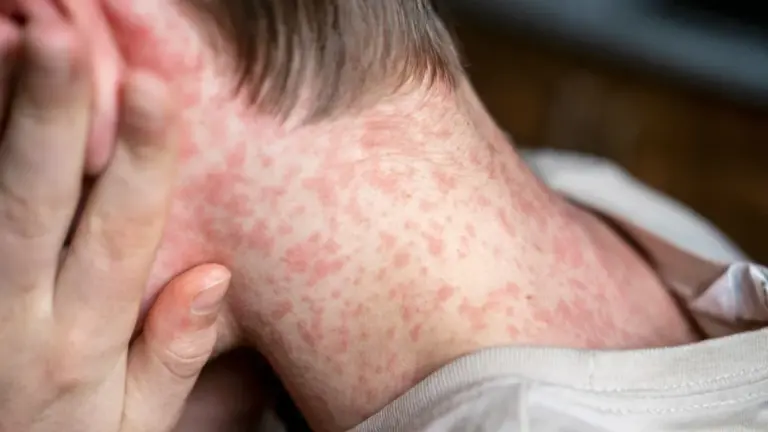
Measles cases decreased in all regions of the world except the Americas, where about 73,000 people contracted the virus in 2025, eight times more than 25 years ago, according to WHO data.
© Shutterstock
27/11/2026
by
Lusa
Omeasles cases decreased in all regions of the world, except in the Americas, where about 73,000 people contracted the virus in 2025, eight times more than 25 years ago, according to WHO data.
The World Health Organization (WHO) attributes this step back to a large extent to misinformation.
“ Words and actions influence public confidence and decisions on vaccination. Therefore, we call for the use of clear, concise, coherent and scientific evidence-based messages,” said the director of the WHO Immunization Department, Kate O’Brien.
Around the world, ten million people contracted measles in 2025, a 74% reduction from the beginning of the century.
Only 84% of children received the first dose of the vaccine against the disease and 77% received the second dose, much lower than the 95% target for both doses, which was considered necessary to advance the eradication of the virus.
In total, 29 million children were not adequately immunised, of which 21 million did not receive the first dose and eight million did not receive the second, despite the proven high efficacy and safety of the vaccine.
Kate O’Brien, a Canadian pediatrician, presented journalists with data on recent measles outbreaks and their consequences, which led three countries in the Americas – the United States, Mexico and Bolivia – to lose the status of measles-free countries recently.
This situation “shows the fragility of progress in the fight against the disease,” said WHO’s head, considering this to be a global challenge that requires political will and resources.
According to the WHO, 59 countries registered large outbreaks in 2025 or with serious consequences, 11 of which had previously been declared measles-free.
Of these countries, 18 were low incomes, 34 were average incomes and seven were high incomes.
Measles caused 72,000 deaths in 2025, 40% of which in Africa, representing a 91% reduction compared to 2000, when the disease caused more than 770,000 deaths.
Measles, considered the most contagious disease among humans, can cause serious complications, such as pneumonia and infections likely to cause permanent brain damage.