
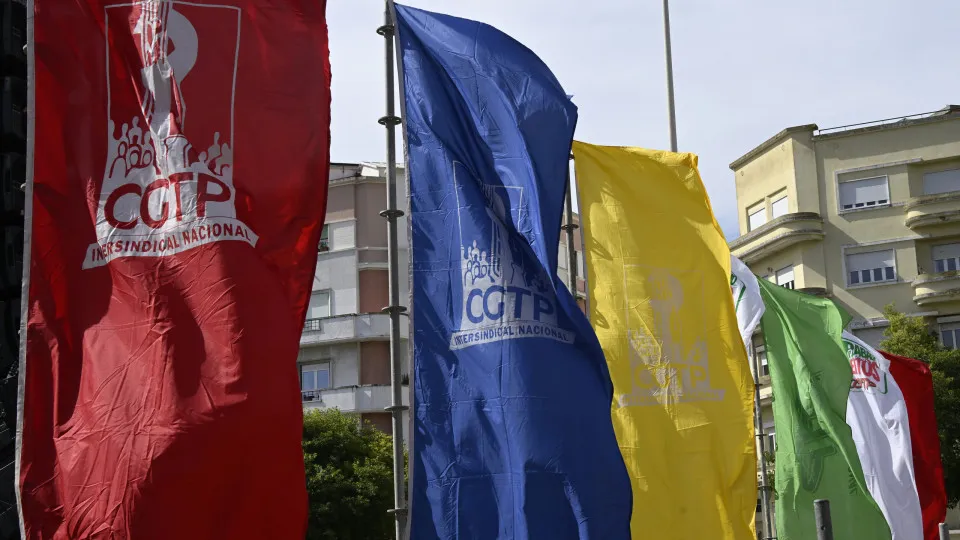
CGTP-IN accuses the State Budget for 2027 of favouring large economic groups and harming the population, highlighting the lack of investment in public services.
© Horacio Villalobos#Corbis/Getty Images
08/10/2026
by
Lusa
A CGTP-IN considers that the proposal of the State Budget for 2027 (OE2027) “not only does not respond, but worsens” the problems faced by workers and the general population.
“ Without prejudice to further analysis, what springs to light in the OE2027 is the contrast between what is lacking to raise, or even maintain, the quality of essential services in the lives of those who work and work and what remains of support, benefits and free for the large economic groups”, says the trade union centre in a statement, in reaction to the document known today.
For CGTP, it is a “budget that reflects the political option of the PSD/CDS government for degrading the public services and social functions of the State, for maintaining and aggravating the conditions that allow the accumulation of wealth by a tiny minority, which fosters the business of private groups and commercializes social rights”.
In an analysis by sectors, the CGTP begins by highlighting health, an area in which, according to the trade union center, the impacts of the so-called “state reform” and where “the reality is maintained in which more than 50% of the funds allocated to the SNS are drained directly to the private sector”.
According to the figures highlighted by the trade union center led by Tiago Oliveira, this situation occurs in a situation in which total consolidated expenditure falls 1.5% compared to 2026 and investment in health, compared to 2026, falls 33.7%.
In education, the trade union central criticizes the fact that the State is still away from the target of 6% of gross domestic product (GDP) – considered as minimal by several international organizations – but that “in the Portuguese case, given the chronic underfunding burden, it requires a more robust response”.
CGTP has no doubt that “the budget allocation for this area, around 3.4% of GDP, reflects the devaluation of the Public, Inclusive and Quality School, being insufficient to stop the degradation of equipment, ensure the hiring of the missing professionals or even face the expected evolution of inflation”.
In housing, it criticises the absence of an evaluation of the programmes implemented by the Government, considering that the OE2027 “expresses the recently approved measures that deepen the difficulty of accessing this right, increasingly transformed into a financial asset”.
Household expenditure has a 6% reduction compared to the budgeted in 2026.
“OE2027 also shows social security balances, in particular from the social security system, which confirm the possibility of more substantial increases in reforms on a permanent basis, in a context of 48% of pensioners receiving a pension of less than EUR 500”, according to the same statement.
And it goes further: “At the level of those who are indispensable for the guarantee of these and other rights inscribed in the Constitution of the Portuguese Republic, the OE2027 reflects the option of denying wages and careers that allow to fix and value workers of the Public Administration”.
“ At a time when there are so many difficulties in these areas, where there is a degradation of essential equipment and services, the forecast of a budget surplus for 2027 reflects an option, accommodated by the EU guidelines and impositions, to continue the root in public services and social functions of the State”, regrets CGTP.
The CGTP therefore demands “answers” and “solutions to problems and not the backwardness and delay of the country that the OE2027 mirrors”, he concludes.
The Government today handed over to the Assembly of the Republic the proposal for a State Budget for 2027, before the deadline laid down by law.
The budget proposal foresees an economic growth of 2.3% this year and 2.1% in 2027 and balanced accounts this year and a surplus of 0.1% in 2027.
The proposal will be discussed and voted on in general between 27 and 28 October. The overall final vote is scheduled for November 24, after the discussion process in the specialty.