
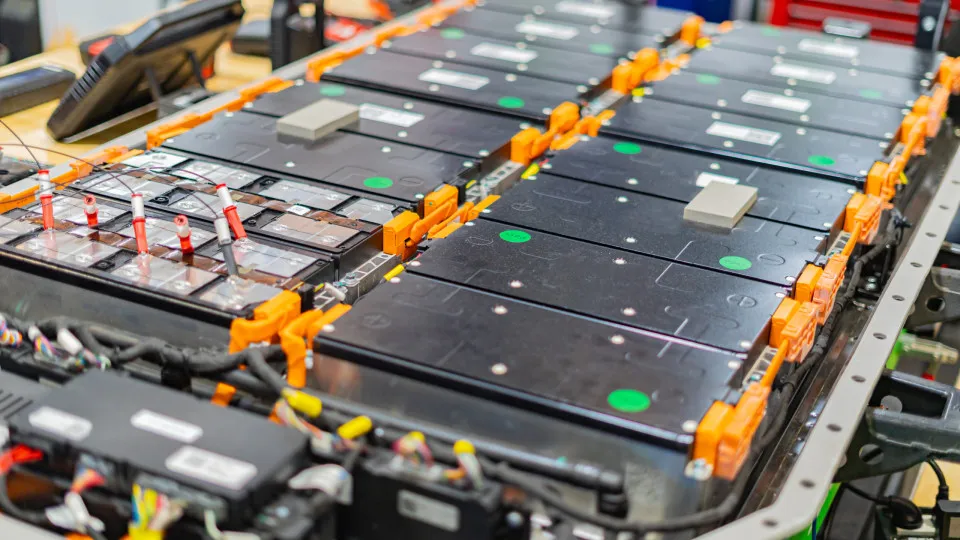
BYD proposes a different method of cooling by immersion of car battery cells. The solution is a patent recently published and reduces the risk of contact between electrical and fluid components.
© Shutterstock
07/10/2026
by
News to Minutes
A cooling of batteries is one of the challenges of electric cars and, bYD, comes a patent of a different concept to do so by immersion – that is, with cell modules directly in the cooling liquid.
Liquid cooling is far from a novelty in batteries, but the most common is that it is done indirectly – with the cooling product circulating between aluminum plates positioned alongside the modules of battery cells. That is, there is an indirect transfer of heat between cells and liquid.
Immersion cooling is not new either, but there are existing concepts that present the risk of escape due to the existing positioning – and there is still no application in automobile industry. BYD proposes something different, for now for battery cabinets or static energy storage devices – not automobiles.
One patent published in recent days in China deals with a two-chamber architecture: in a top are electrical components; in another lower are modules and dielectric liquid.
The output of electric cables is located at the top of both, so there is a lower risk of direct contact between the exit point and the coolant fluid. The potential for leakage is lower, so the safety and life of the whole are beneficial.
With its positioning at the top, the sealing interface is subject to less pressure. This way, it is easier to contain the liquid. The proposed design therefore aims to respond to one of the major challenges of immersion cooling: keeping the electrical parts away from the fluid.
The liquid itself is a dielectric fluid, ideal for heat management and insulation of electrical installations – which is not a conductor of electricity.
There are of course challenges – which are addressed in the patent are suggested solutions. This is the case of a scenario in which the screws are not tight enough or the condensation in the partition between chambers, in which the resulting liquid water runs a path to a drainage hole.
If this solution will be applied to future BYD car batteries, only time will tell – many patents do not reach the market, and it is mainly a method of protecting ideas or concepts.