The new climate decision-making project of COP31 reintroduces the obligation of developed countries to make financial resources available, but maintains no concrete value the objective of triple funding for adaptation by 2035.
© Lusa
22/11/2026
by
Lusa
O new draft final decision of COP31 on the climate released today reintroduces the obligation of developed countries to make financial resources available, but maintains no concrete value the objective of triple funding for adaptation by 2035.
The text presented by the co-presidency of Turkey and Australia — to be submitted to the plenary session to be resumed at 09:00 local time (0600 TMG) – seeks to balance in the financial chapter the demands of the bloc of developing countries — which called for sound guarantees of public funds — with the refusal of industrialised economies to make new quantitative commitments.
In order to unlock the support of the developing group of nations, the proposal for an agreement takes up an express reference to Article 9(1) of the Paris Agreement, stressing that developed countries “must provide financial resources” to help mitigate and adapt as a continuation of existing obligations, while recalling that other nations can contribute voluntarily.
However, the document maintains, without a defined minimum value, the goal of tripling the funding for the adaptation until 2035, after, in the second preliminary version of Thursday, the reference to the target of reaching “at least $120,000 million” annually, which was in the first version of Monday, has been deleted.
Instead, the text instructs the Standing Committee on Finance to draw up a technical report with options to define the reference basis for this calculation and refers to the definition of an implementation roadmap for the next climate summit (COP32), scheduled for November 2027.
In addition, it launches, under the leadership of the Presidencies of COP31 and COP32, the so-called “Adis Ababa Roadmap on Financing for Adaptation and Resilience”, aimed at identifying predictable and innovative public sources and improving access mechanisms before the end of 2027.
Similarly, the document maintains a diagnosis of the magnitude of the economic gap, stressing that the needs collected in the national climate plans of developing countries amount to between 5.1 and 6.8 billion dollars by 2030 (from 455,000 to 584,000 million per year), and another 305,000 million annually for adaptation by 2035.
The presidency chose to remove from the final draft the critical data contained in the previous versions on the lack of liquidity of the Loss and Damage Fund (where the applications amounted to USD 2,800 million, against only 342 million allocated, and only half of the promised 822 million had been disbursed), replacing them simply with a diplomatic appeal to continue to expand resources.
Finally, the text reiterates the importance of reforming multilateral financial architecture to eliminate barriers such as high capital costs and the limited budget margin of developing countries, and notes the 21% increase in the climate financing of multilateral development banks recorded last year, with a view to contributing 120,000 million annually and mobilizing 65,000 million from the private sector by 2030.
The new draft final decision continues not to explicitly mention fossil energies, but contains an appeal to electrification, also calling for the acceleration of the use of carbon capture, use and storage technologies (CCUS), promoted by oil and gas companies, a reference contested by some countries.
The document contains no explicit call for the abandonment of coal, oil or fossil gas, the use of which is the main cause of climate change. It is limited to an allusion to the result of the COP28 in Dubai, which in 2023 called on the countries of the world for the first time to transition to abandon these energies.
The producer countries, with Saudi Arabia at their heads, oppose any new reference in the final text in Antalia. However, nations in the Pacific, Europe or Latin America demand that these energy sources be explicitly mentioned.
Finally, the text addresses the equally controversial issue of the timetable for publishing the forthcoming GIEC reports, the group of scientists working under the aegis of the UN, stressing their “importance” for the next “global balance” of countries’ efforts to limit greenhouse gas emissions, scheduled for 2028. India and Saudi Arabia prefer to wait until 2029 for the publication of these reports.
The Turkish president of COP31, Murat Kurum, asked countries to act “with responsibility” on Saturday and look for a “commitment”.
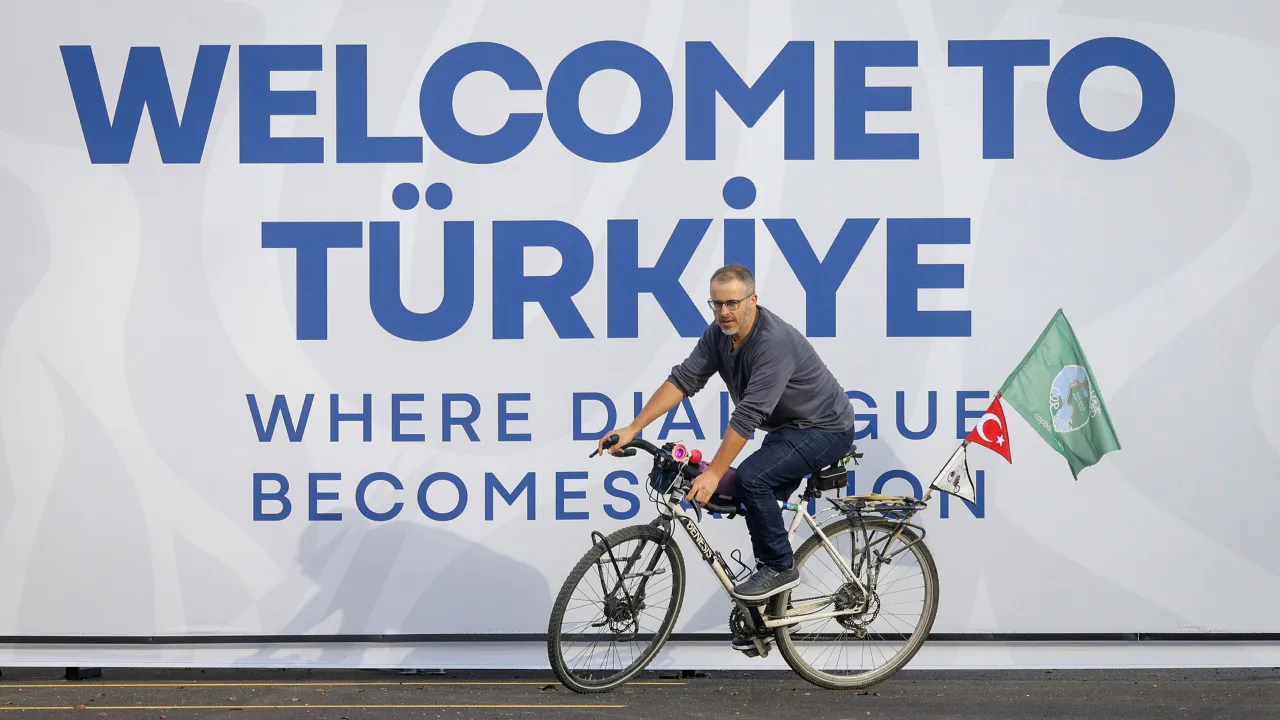
The conference, which brings together almost 200 countries in Antalia, is the most important global climate meeting.