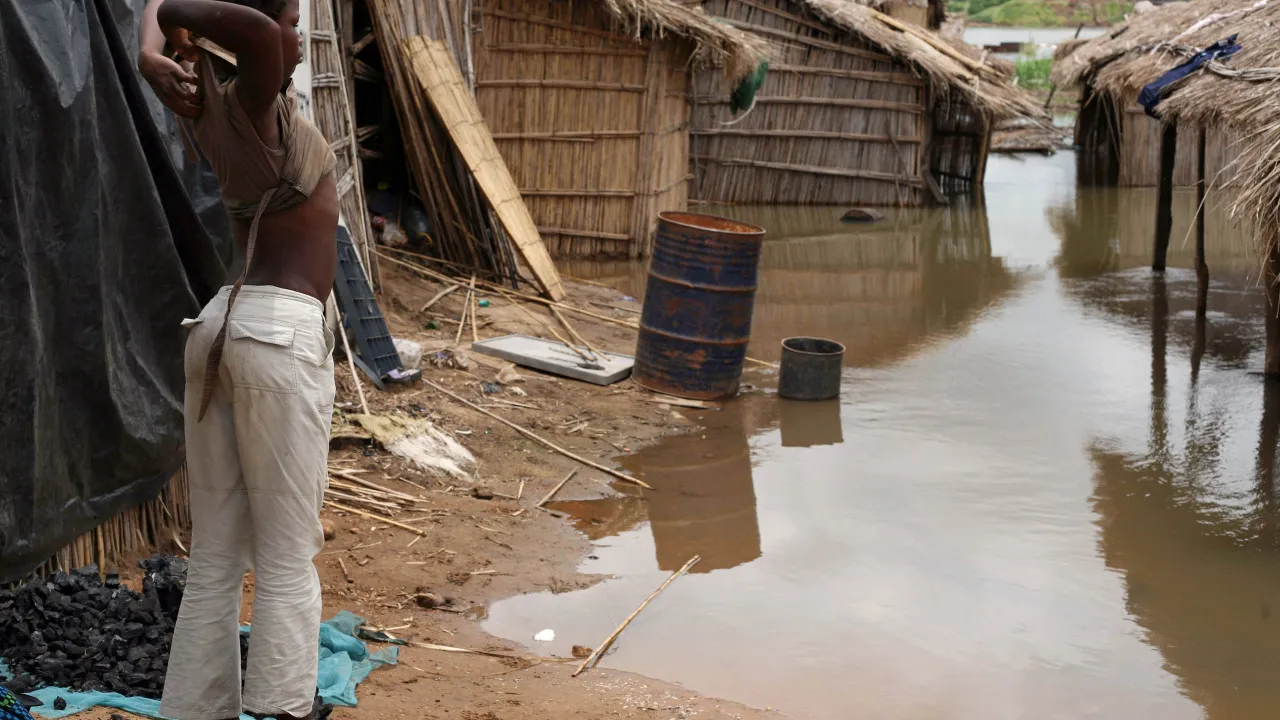
Seven Portuguese-speaking countries emit less than 3% of global greenhouse gases, but some are among the most vulnerable to climate change, facing droughts, floods and rising sea, according to official data.
© Lusa
21/11/2026
by
Lusa
Sand these lusophone countries emit less than 3% of global greenhouse gases, but some are among the most vulnerable to climate change, facing droughts, floods and rising sea, according to official data.
Angola, Brazil, Cape Verde, Guinea-Bissau, Mozambique, São Tomé and Príncipe and Timor-Leste represented, according to the last EDGAR report (Emissions Database for Global Atmospheric Research, published in September 2026), 2.62% of world emissions in 2025, totaling 54.149 million tonnes.
Without Brazil, the weight drops to 0.21%, reads in the document consulted by Lusa when the UN annual climate conference is held in Antalia, Turkey, COP31.
According to EDGAR, Brazil issued 1,307 million tons of carbon dioxide equivalent (CO2e) in 2025, the sixth highest value in the world between countries and 2.4% of the total.
Angola followed, with 70.7 million tons, and Mozambique with 36.5 million. Guinea-Bissau has issued 3.4 million, East Timor 1.8 million and Cape Verde 990 thousand tonnes. São Tomé and Príncipe issued 260,000 tonnes, one of the lowest among the 208 countries and territories on the list.
Guinea-Bissau and São Tomé and Príncipe are among the countries most exposed to sea rise and coastal erosion. In Guinea-Bissau, up to 80% of the population live in low coastal areas, and in São Tomé and Príncipe floods can cost more than 4% of the country's wealth by the end of the century. Cape Verde suffers from frequent droughts and irregular rain, reads in the document.
In East Timor, the sea rises faster than the world average and Mozambique is on the cyclone route and faces increasingly frequent floods, while Angola deals with prolonged droughts that affect thousands of people.
The seven countries have already delivered their nationally determined contributions (known as NDC 3.0) to the United Nations, climate plans which include emission reduction targets and adaptation measures and which the countries signatories to the Paris Agreement must submit every five years.
EDGAR, produced by the Joint Research Centre of the European Commission, compares emissions from all countries with the same methodology, but values do not include forests and land use, underestimating the weight of countries where this is the main source of emissions.
This is the case in Angola, which, according to the national inventory cited in the NDC, issued 211.5 million tonnes of CO2e in 2020, of which 84% came from deforestation and land use and 10% of energy, despite this being an oil country.
In Mozambique, emissions from 2020 range from 30.6 million tons without forests to 91.3 million with forests, according to the NDC.
Forests remove carbon dioxide from the atmosphere and store it as they grow, but when they are slaughtered or burned they release that carbon. Therefore, in national inventories, deforestation counts as emission and forests preserved as absorption.
There are countries where forests and mangroves absorb more carbon than the country emits, making it a liquid sink, such as Guinea-Bissau, which plans to restore 60% of mangroves by 2035.
Most countries condition their climate targets to external support, according to the NDCs consulted by Lusa.
Brazil undertakes to reduce emissions between 59% and 67% by 2035, compared to 2005, and is the only one of the seven that measures the cut against one last year. Other countries with global targets calculate it against the usual business scenario, i.e. without further measures.
Cape Verde provides for an 18% cut without relying on external support (unconditional goal) and admits to reaching 39% in 2035 with international support (conditional goal). Guinea-Bissau promises 40% and São Tomé and Príncipe 38.2%. Mozambique points to 15% to 25%, in a goal that is “in development”, according to the NDC, while Angola fixes 5% with its own resources and 11% in total with external support.
In Guinea-Bissau, Mozambique and São Tomé and Príncipe, all targets depend on external funding.
From the countries that quantify the financial needs to achieve the goals, Angola estimates the cost of mitigation between 2025 and 2035 by 412 billion dollars and provides 235 million dollars for adaptation. São Tomé and Príncipe asks for USD 886 million by 2035 and Guinea-Bissau USD 684 million for mitigation, equivalent to about 23% of gross domestic product (GDP). The Cape Verde NDC cites a World Bank estimate of 140 million dollars per year by 2030, while Mozambique and East Timor do not have a total value.
Neither did Brazil, but in the previous NDC stated that, from 2021, it would need “at least 10 billion dollars a year” to face climate challenges.
According to the summary report of the United Nations Framework Convention on Climate Change (UNFCCC), published in October, 127 new NDC 3.0 had been delivered by 31 August.