
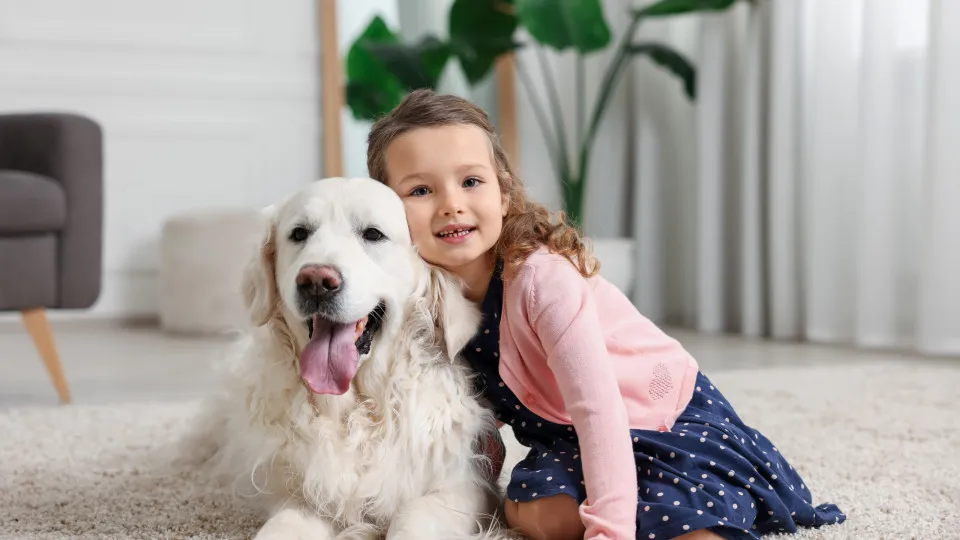
Opinion article by Cheila Teodoro, Practice Manager and veterinary doctor at the AniCura Arco do Blind Hospital Veterinária.
© Shutterstock
12/11/2026
by
Creserting with a companion animal can teach children much more than liking animals. This coexistence can help them develop empathy, a sense of responsibility and respect for the needs of others. But for this relationship to be truly positive, there is a learning that does not always receive due attention: understanding that showing affection also implies recognizing the limits of the other.
For a child, an animal is often a playmate, someone who is part of family routines and with whom an affective bond is created. This closeness can be an opportunity to learn how to take care and take on small responsibilities, appropriate to age. But these learnings don't happen automatically. It is up to parents to help children realize that an animal has its own needs, that they do not always coincide with their own, and that caring for it requires attention, consistency, and respect.
It is also up to adults to explain that not all manifestations of affection are well received. Hugging a dog hard, pulling the tail of a cat or insisting on a joke when the animal is trying to rest may seem harmless gestures in the eyes of a child. However, what to us represents proximity can be uncomfortable or threatening for an animal. It is therefore important for parents to set clear limits and set an example, teaching their children to interact in a calm and proper way.
As veterinarians, we know that animals communicate through body and behavior, but these signs are not always recognized by their caregivers. Getting away, looking for a hiding place, getting tense or trying to stop contact can be ways to express discomfort. Parents should help children identify these signs and understand that when an animal moves away, it is important to let it go. The fact that he is docile or used to living with children does not mean that he is always available for contact or that all interactions are comfortable for him.
Therefore, the safety of this coexistence cannot depend only on the child's ability to understand the animal. This responsibility belongs first and foremost to adults. It is up to us to lay down rules, intervene where necessary and ensure permanent supervision, even when there is a close relationship between them. It is also essential to ensure that the animal has a space where it can rest and move away without being disturbed. It is not about creating a distance between the child and the animal, but about creating the conditions for this proximity to be positive for both of them.
Perhaps one of the most important learnings a child can take from this experience is to realize that liking someone does not mean having permanent access to their attention, space or affection. It means recognizing that the other has his own needs and accepting that he does not always want to play or receive affection. It is a learning that begins in the relationship with the companion animal, but that can accompany the child throughout life.
The true value of growing up with an animal is not only in the moments of play or in the gestures of affection that we so often celebrate. It is also in the way parents teach their children to stop, wait and respect the signs of the animal. As adults, we should not expect a child to understand alone what the animal cannot explain by words. Safe living begins when we stop thinking only about teaching children how to like animals and assume the responsibility of teaching them how to take care of them.
© Cheila Teodoro, Practice Manager and veterinary doctor at AniCura Arco do Blind Hospital Veterinário