Alexandre Correia, 55 years old, diagnosed with alpha-1 antitrypsin deficit at 42, runs the world of oxygen “backwards” and yearns to see this genetic and hereditary disease on the radar of Portuguese doctors.
© Shutterstock
28/11/2026
by
Lusa
alpha-1 antitrypsin
Alexandre Correia, 55 years old, diagnosed with alpha-1 antitrypsin deficit at 42, runs the world of oxygen “backwards” and, determined not to settle at home, yearns to see this genetic and hereditary disease on the radar of Portuguese doctors.
“ Even though this is a hereditary disease, my family didn't even know it existed. I had already stopped smoking, but I had several situations where I was very tired for example playing sports, playing ball. He couldn’t run, ran a little and was short of breath,” Lusa described.
Without cure but with treatment, alpha-1 antitrypsin is a rare, genetic and hereditary disease with implications for the lungs and liver, which has already created its own protocol within the National Health Service (SNS) but until the diagnosis some patients describe a true “peregrination” of consultations and examinations.
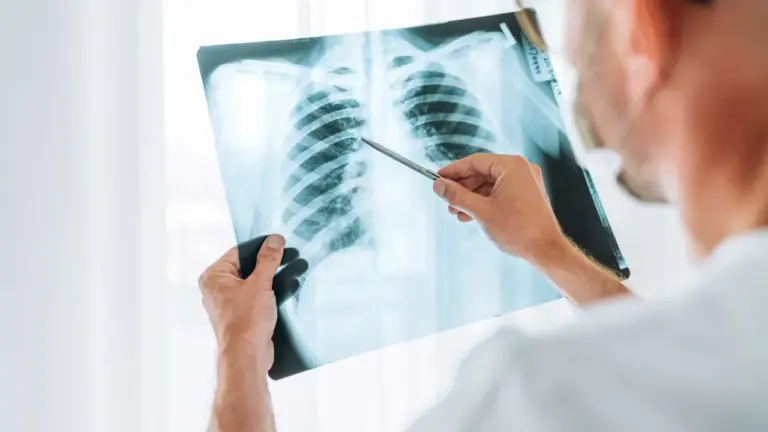
“They realized that I had a problem, but they didn’t connect to alpha-1. I went to a lot of pulmonologists who didn't really know why I was so tired. I did X-rays, CT... ", described.
Alexandre had confirmation of the ZZ phenotype, which is the most aggressive of the alpha-1 antitrypsin deficit thanks to “an older pulmonologist” who received it after “a lot of research” and a spirometry performed in the context of Occupational Medicine, which recorded a lower amount of exhaled air than expected for his age, height and sex. However, it is regularly followed at the Hospital de Santa Marta, ULS São José, in Lisbon.
According to the European database EARCO (European Alpha-1 Research Collaboration) Portugal has registered 433 patients. More than 33% are ZZ (most severe cases), but both the Portuguese Pneumology Society (SPP), and the Alfa-1 Portugal Association (AA1P) believe that the real numbers are much higher and that the disease is underdiagnosed in Portugal and the world.
“ International studies describe average delays in the order of five to eight years,” said the coordinator of the Alpha-1 Antitrypsin Deficit Study Group of SPP, Teresa Martin.
The alpha-1 deficiency antitrypsin causes the alpha-1 protein to be absent or to exist at very low levels in the body, leaving the lungs more vulnerable.
While you're on the phone with Lusa, Alexandre Correia is wearing nasal glasses attached to a liquid oxygen tank.
“ I walk the street always with the oxygen behind”, he said.
For the consultant, what is most needed at this time in Portugal is that the alpha-1 antitrypsin “gets into the radar” of doctors, particularly those working in Primary Health Care and Occupational Medicine, a conviction shared by patient and specialist associations.
“ Blood tests cost very little. It's cheaper than measuring cholesterol. What I recommend is that people with symptoms seek out their family doctor and take a once-in-a-lifetime test,” said pulmonologist Maria João Canotilho, who works in Leiria, a region identified in Portugal as having high prevalence.
The specialist believes that in Portugal “things are moving forward”, but warns of the need for greater articulation between the different hospitals and specialists and considers that “it is necessary to demystify that this is a serious genetic disease”.
“It’s not worth hiding because it exists. Causes death or can lead to debilitating states. It's more frequent than you think. [...] Within rare diseases, it is not so rare”, he said.
Henedina Antunes, a pediatric gastroenterologist at the ULS in Braga, also adds to the need for dissemination of the disease and greater fluidity to the circuits already assembled, the need to involve genetics at birth when a baby presents jaundice, for example.
“I’ve done a lot of diagnostics. I always looked for babies to be diagnosed in 24 or 48 hours. As it involves genetics, it is not a common practice in many hospitals, but I think it is fundamental”, said the hepatologist.
Alexandre Correia has received weekly intravenous alpha-1 replacement antitryptin treatment since 2013.
He did it at the hospital once a week. During vacation time, I was on a double dose. And about a year ago for self-administration.
He is enrolled in a lung transplant consultation, but is not on the waiting list because he is not considered a priority.
“ The treatment stops a little, but the disease continues to evolve. In 2018 I started doing night oxygen at home. Now I'm doing 24-hour oxygen. The approval for treatment took about a year”, he said.
The tiredness he feels, describes him “not as a muscular tiredness”, but as “running, not running, and getting a feeling that he cannot breathe”.
Looking back now, Alexandre recalls that “at the age of 20, he took a diving course, exhausted the air tank faster than his colleagues and did not know why.
He stopped doing sports involving races and jumps, opting for bodybuilding or pilates so as not to “punch so much” for his chest capacity. He reduced travel by medical recommendation because of the pressure difference, but when he needs to travel he does not hesitate because there is legislation that forces transport companies and adapts.
“ It's still a little work. It depends on the airlines (...). I have to report to TAP that I'm taking my oxygen. I recently traveled to the United States and went to a special place with access to a record. When I went to Japan I paid extra to get oxygen from Lufthansa herself. The Gol [Brazilian] demanded the most recent medical examinations. On the arrival of Turkey at Istanbul airport, they did not want to let me board, although I already have permission. They called a doctor who took a test right there on the boarding. He had oxygen on board because he had asked in Turkish ", described.
He is able to be on telework, but the company has also given him the conditions to be in the job and it is his option to go to the company.
With experience in this area and in a disease that affects the liver more in children, and in adults the lungs, both pulmonologist Maria João Canotilho and Henedina Antunes are permanent in the analysis that Portugal should invest in diagnosis as early as possible to reduce the impact on patients' quality of life.
The Alfa-1 Portugal Association (AA1P), which provides support to patients and families, is dedicated November to the dissemination and appeals about this disease.
On the other hand, the Portuguese Society of Pulmonology (SPP) has a Group of Alfa-1 Antitrypsin Deficit Studies and has already created guides and documents addressed to General and Family Medicine physicians, among other initiatives.