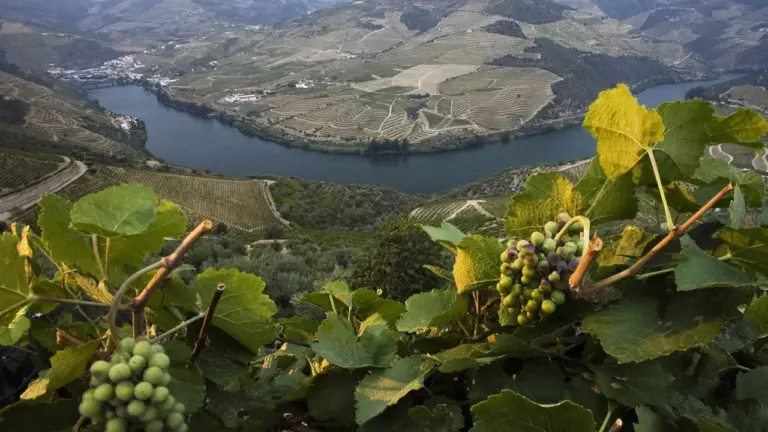
The Douro wants to attract more and more visitors, but 25 years after UNESCO classification, it wants to fix the population, attract young people and create qualified employment to ensure economy and landscape preservation.
© Reuters
24/11/2026
by
Lusa
O Douro wants to attract more and more visitors, but 25 years after UNESCO classification, it wants to “above everything” fix the population, attract young people and create qualified jobs to ensure economy and landscape preservation.
“ It was a remarkable moment in the region, especially because of the recognition of this same landscape and its interest throughout the world”, said Lusa João Gonçalves, president of the Intermunicipal Community (CIM) of the Douro and the Chamber of Carrazeda de Ansiães regarding the 25th anniversary of the Alto Douro Vinhateiro (ADV), classified as a UNESCO World Heritage Site on December 14, 2001.
The mayor said this is the time to reflect on the 25 years that have passed, but especially on the future.
The Douro wants to attract visitors and more investment that can contribute to the economy of the region.
“ But, above all, we want the development of the region to translate into the possibility of establishing a population, because without a population we have no economy and we will certainly not have the landscape that we have to show today and that is so valued and so recognized ", said the mayor of Bragança district.
The Douro suffers from depopulation, the viticulture that is the main basis of the economy is in crisis, with winegrowers experiencing difficulties in draining the grapes and selling at prices below the cost of production, and there are new concerns in the territory such as the intention to install solar panels in the Vilar albufeira, in the Távora river, a tributary of the Douro river, a project to which the CIM opposes.
There are “improvements in the development of the very remarkable region”, but João Gonçalves pointed out as a concern that these “25 years have not guaranteed an improvement in the quality of life and income” of those who produce grapes and do not transform them.
Despite its own characteristics, such as mountain viticulture, difficult mechanization and high production costs, the president said that the region cannot be dissociated from the decrease in wine consumption worldwide.
The crisis that the wine sector is experiencing is a concern for the Durian mayors who say they do not have direct intervention in the sector, but have taken the concerns to the Government that, according to João Gonçalves, “has guaranteed, within the possibilities, some funding for urgent measures”.
“ But if there are no medium- and long-term measures that are consensual and that are negotiated between all parties, there will be no way to deal with the problems, because they exist and are very complex,” he said.
With regard to the project for the Vilar dam, between Sernancellhe and Moimenta da Beira, the mayor recalled that UNESCO’s distinction was also translated into “conditionalisms that detract, in a way, the will of some investors to realize their ambitions”.
On the other hand, he pointed out, “it is interesting” that, for projects such as photovoltaic panels or others linked to hydroelectric production, “there is no longer so much difficulty in licensing them”.
“ We have this obligation to preserve the good, but we want to preserve the good not to immobilize it, but so that the territory is able to perpetuate the good and can, as I said, attract residents and investors ", he considered.
At a time when there are already municipalities moving forward with the tourist tax, such as Alijó, João Gonçalves said that “there is a basic consensus” on the idea of there being a way to pay winegrowers for the contribution to the preservation of the classified landscape, but there is still no consensus on how this remuneration should be made.
This is therefore a subject that is still under discussion in the CIM.
Among the priorities in the area of mobility, identified by the municipalities for several years, are the development of navigability in the Douro river, the construction of the Main Itinerary 26 (IC26) and the electrification of the Douro Railway Line, with its reactivation until Barca d’Alva.
To promote the Douro, the CIM invests in projects such as the Douro Identity Academy, the Host Douro and the Brussels World Contest 2027 that will bring 400 experts to the region in May.