
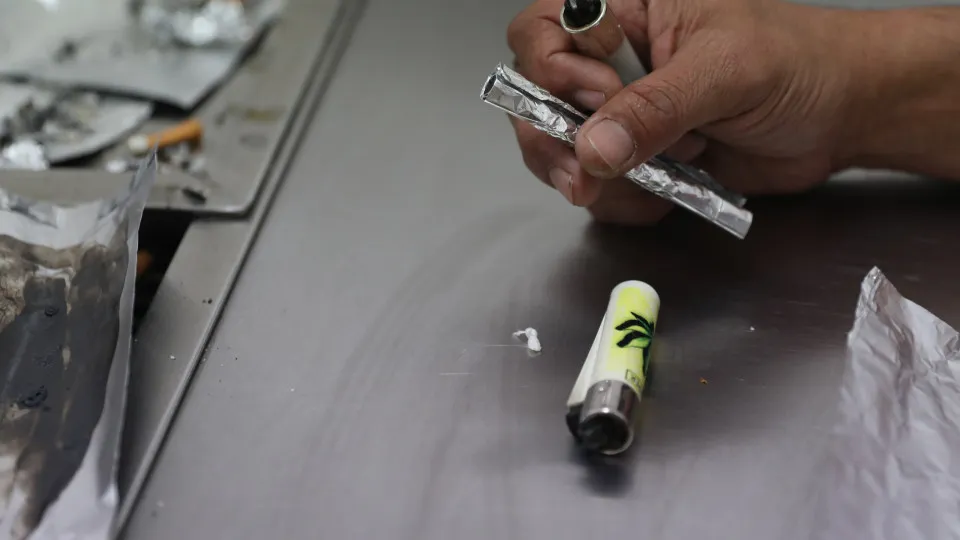
According to a survey by the European Drug Agency, 60% of Europeans consider drug trafficking and use as a serious problem, with Portugal reporting 56%.
© Lusa
12/11/2026
by
Lusa
Sthis is the case in every 10 people (60%) in the European Union (EU) consider that drug trafficking and drug use “are serious problems”, a percentage that is 56% in Portugal, according to the first survey by the European Drug Agency.
Data released today by the European Union Drug Agency (EUDA), based in Lisbon, present “a clear picture” of how respondents view this phenomenon, its impact and how society should react.
Of the 3,004 Portuguese who responded to the survey, 44% stated that trafficking increased at local level in the last five years and 38% identified mental health problems as the main public health concern related to consumption.
Twenty - eight percent highlighted the involvement of children and adolescents in drug trafficking as one of the main public safety concerns.
In the European Union as a whole 60% have said that drug trafficking and drug use are serious problems in the area where they live and 49% that trafficking has increased at local level in the last five years. Only 14% considered it decreased.
According to the results of the survey, 39% of respondents in the EU identify mental health problems as the main public health concern related to drug use and 30% highlighted the involvement of children and adolescents in drug trafficking as one of the main public safety concerns.
On the other hand, 48% stated that cannabis would be easy to obtain within 24 hours and 45% defended support and assistance to consumers.
The survey was conducted with 95,883 citizens from the 27 EU countries and also extended to respondents in Norway, Turkey, Albania, Bosnia and Herzegovina, Montenegro, Moldova, North Macedonia and Serbia and Kosovo.
Drug problems are considered serious, but the percentage of people who said that the use of these substances is a serious local problem ranges from 44% of respondents in Denmark to 78% in Cyprus, reaching 85% in North Macedonia, among the non-EU countries participating in the survey.
The perceptions that trafficking is increasing also differ, since 67% of Cypriots believe that this situation has worsened locally in the last five years, compared to 38% in Denmark and Lithuania.
The involvement of children and adolescents in drug trafficking is the most frequently reported drug-related public safety problem in the EU (30%), followed by violence (27%) and drug-related driving (26%). This is the first among public safety concerns in 17 of the 27 EU Member States.
Drug-related violence is primarily concerned in Spain, France, Luxembourg, Malta and Slovakia.
Thirty percent of respondents are concerned about the damage caused by new synthetic drugs.
Only 10% of Europeans say they have no security problems related to drug trafficking in the area they live in.
Almost half of respondents in the EU (48%) said cannabis would be easy to obtain within 24 hours, compared to about a third in the case of cocaine and MDMA. Of respondents aged between 15 and 24 years, 55% claim that cannabis would be easy to obtain, compared to 42% aged 55 years or older.
On what should be done about trafficking, EU respondents give priority to law enforcement, with 39% defending stricter measures against traffickers and 37% dismantling criminal networks.
Legalization and regulation of drugs are the least supported measures (13%).
When asked about what should be done to reduce consumption-related problems, 45% are in favour of a more energetic police action against trafficking and distribution, while 43% support the reintegration of drug addicts into the labour market and daily life.
Younger respondents attach a similar importance to prevention, social measures and law enforcement, while support for law enforcement increases with age. Support for stronger police action increases from 33% among people aged between 15 and 24 to 54% among those aged 55 years or older.
When asked about how people who use drugs and who come into contact with the judicial system should be treated, respondents favor aid to the detriment of punishment: 45% favors support and assistance, compared to 31% who prefer a criminal conviction or a prison sentence and 10% a lesser punishment, such as a fine.
However, this preference for support does not mean greater social acceptance: only 31% would accept a consumer as a neighbour and 19% would accept a drug addict marrying a family member.