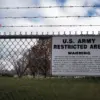
The U.S. Army today stated that the controlled explosion of five tons of lead azide did not spread toxic dust in the homes and rural priorities of Middletown, Iowa state.
© Shutterstock
25/11/2026
by
Lusa
O U.S. Army today stated that the controlled explosion of five tons of lead azide did not spread toxic dust in the homes and rural priorities of Middletown, Iowa state.
Acting Secretary of the Army, Adam Telle, stated that the operation seems to have been a success and that the explosion was well contained, while US President Donald Trump considered that the Army did a “great job” in a social media publication.
U.S. Environmental Protection Agency devices did not detect evidence of lead in the vicinity of the Army ammunition factory where the explosion took place in the southeast of the U.S. midwest state.
Still, government agencies and independent researchers plan to conduct comprehensive environmental tests in the coming weeks for traces of lead, particularly dangerous heavy metal for pregnant children and women, in water sources, rural properties, residences and leisure areas.
While some experts warn that it is still early to state whether the communities are totally out of risk, Major General Eric Shirley, in charge of the operation, said that the risk was “reduced to the level as close to zero as humanly possible”.
The two controlled detonations destroyed the 68 barrels without causing secondary explosions, Shirley added.
An Associated Press reporter recorded the explosions less than a mile from the munilões factory, having heard two loud bangs around the local 09:00 (15:00 Lisbon) and seen two columns of white smoke rising to the sky before dissipating quickly.
The U.S. military attributed the smoke to foam applied on the deposits, together with water and land barriers, to absorb the explosion.
The Army scheduled the detonation for Wednesday because the winds were blowing south-west, away from populated areas, including Burlington, a town with just under 25,000 inhabitants located on the right bank of the Mississippi River, about 15 kilometres from Middletown, a settlement with less than 400 inhabitants.
Since the military announced detonation, residents and environmental groups have expressed concerns about the possible impacts of the operation on public health and the environment, as well as the lack of information over the last two weeks.
Initially scheduled for Friday, the destruction of 68 barrels of lead azide generated fears about the possible contamination of the residents of the vicinity with lead particles and was rescheduled three times after a federal court authorized the operation on Monday night.