
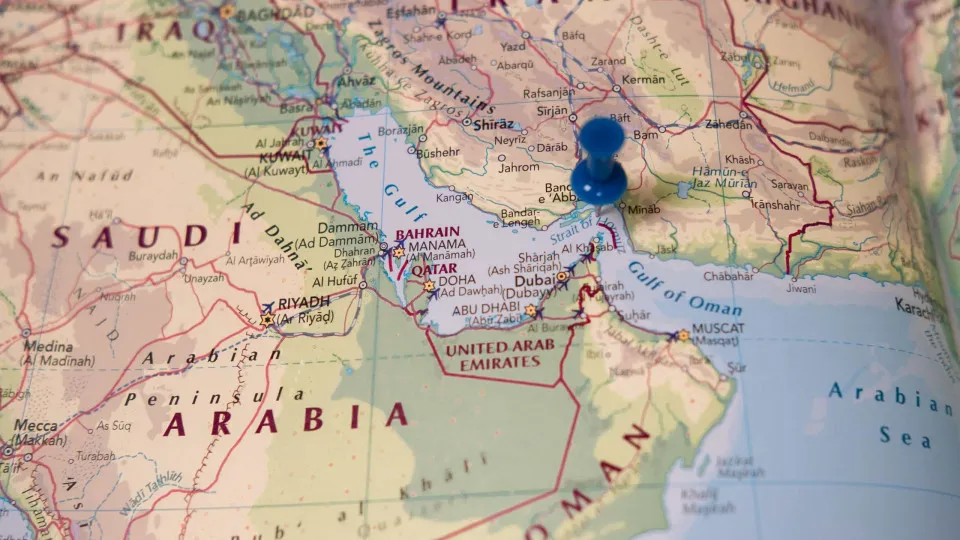
The war between Iran and the United States has caused EUR 180 billion of damage in the Gulf countries, according to a report by AllianzTrade, which provides for economic losses to be four times higher by 2030.
© ShutterStock
11/11/2026
by
Lusa
A war between Iran and the United States caused US$200 billion (EUR 180 billion) losses in the Gulf countries, where economic losses can be four times higher by 2030, according to a report by AllianzTrade.
In late February, the United States and Israel launched an attack campaign against Iran, which responded by blocking the Strait of Ormuz and targeting Washington's allies, especially in the Gulf region.
The U.S. bases in the region and civil infrastructure suffered damage, aggravated by the entry into the conflict in July of the Yemeni Houthis, Shia militia aligned with Iran.
The Houthis forces exchange attacks almost daily with Saudi Arabia which, in front of a military coalition, supports the Yemeni government in exile.
The Houthis regularly claim attacks against Riyadh airport and oil facilities in Saudi Arabia.
The report by the international insurance company based in Paris stated that material damage throughout the region is estimated at just over 200 billion dollars, mainly concentrated on the economies dependent on the Ormuz Strait, especially with regard to energy-related infrastructure.
More than 80 energy installations were hit by war, mainly in Kuwait, Qatar and Bahrain, and one third suffered “serious damage”.
The report covers the six member countries of the Gulf Cooperation Council (GCC): Saudi Arabia, Oman, Qatar, Bahrain, United Arab Emirates and Kuwait.
The war also had repercussions on tourism and the real estate sector, which should show slower growth in the coming years.
“The total cost of the war for the Gulf countries is to reach USD 790 billion, representing an accumulated deficit of 5.9% of gross domestic product (GDP) in the face of the pre-war trend by 2030,” the report said.
This number, according to the document, reflects the accumulated loss of economic production in the period from 2026 to 2030, i.e. the difference between what the region would have produced, following the pre-war growth trend, and what it is currently producing.
In order to compensate for losses, the Gulf States should increase national expenditure, as government priorities no longer focus on “megaprojects” to focus on “resilience and security issues,” the report pointed out, which also warned of an increase in the debt of affected countries.
National spending on infrastructure and defence should reach between 380 and 400 billion dollars by 2030, stating the report.
Saudi Arabia’s GDP, one of the world’s largest oil producers, must be contracted by 3.3% according to the International Monetary Fund (IMF) — five percentage points less than the July forecasts.
Despite the war and restricted access to Bab el-Mandeb's strait as a result of the Houthi attacks, Saudi oil giant Aramco announced in early November a 34.6% increase in net profit in the third quarter of the year.