
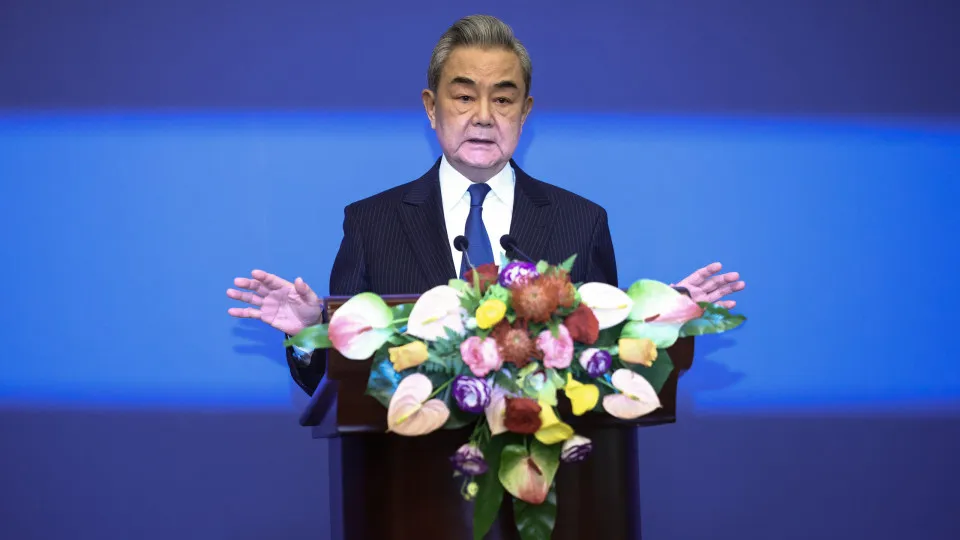
Chinese Foreign Minister Wang Yi warned the United States that stabilising bilateral ties “was not easy” and called for the strengthening of dialogue in conversation with the American counterpart, Marco Rubio.
© Lusa
12/11/2026
by
Lusa
O chinese Foreign Minister Wang Yi warned the United States that stabilizing bilateral ties “was not easy” and called for the strengthening of dialogue in conversation with the American counterpart, Marco Rubio.
The telephone conversation, held on Wednesday, was “positive and constructive”, according to a statement released by the Chinese Ministry of Foreign Affairs, which reported that both diplomats exchanged in-depth opinions on bilateral links and contacts between their leaders.
Wang stressed that the visit of Chinese President Xi Jinping to the United States in September was “successful” and provided the presidents with a “clearer strategic orientation” for bilateral relations.
The Foreign Minister said that the stabilisation of ties “was not easy” and stems from a “rational choice” based on the specific and shared interests of both countries.
It also ensured that Chinese policy towards Washington remains and expressed Beijing’s willingness to strengthen communication and cooperation, as well as to “manage properly differences” and “sensitive issues”.
Wang also requested mutual support for the organisation of the summits of leaders of the Asia-Pacific Economic Cooperation Forum (APEC), in Shenzhen, and the G20, to bring about the relationship of “constructive strategic stability” defended by both parties.
The Chinese statement did not detail what Rubio said during the conversation.
The call takes place before the meeting of APEC leaders, scheduled for November 18th and 19th in Shenzhen, in southeast China, where the presence of American President Donald Trump and Xi is expected.
Both leaders agreed in September to extend the bilateral trade truce until January 2027, although friction persists in several areas, such as technology.
Recently aggravated tensions by the scandal of alleged Chinese espionage involving the leader of the US semiconductor giant Nvidia, Jensen Huang, accusations that Beijing rejects.