
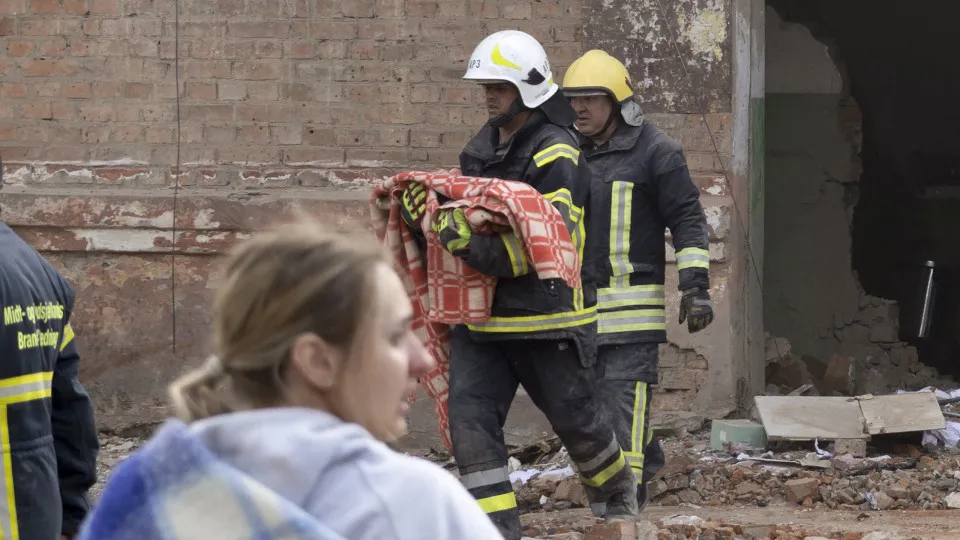
The Russian attack on Kramatorsk in eastern Ukraine left 30 dead and 18 wounded, according to police sources. The authorities announced a preliminary investigation for “war crime”.
© Lusa
08/10/2026
by
Lusa
Russia/Ukraine
Athe provisional balance of deaths from the Russian attack this morning against two buses in Kramatorsk, eastern Ukraine, said police sources.
Previously, the balance sheet indicated the death of 12 people and 14 injured, and local authorities warned that the total number of victims could increase.
On the other hand, the number of wounded increased to 18, according to the Ukrainian police and the Ukrainian Attorney General’s Office.
The regional governor announced the suspension of public transport in Kramatorsk and the neighbouring town of Slovakiask, due to what he said was the marked deterioration of the security situation.
The Ukrainian Attorney’s Office announced the opening of a preliminary investigation for “war crime.”.
Briefly occupied by pro-Russia separatists in 2014 before being taken over by Ukrainian forces, Kramatorsk is an important logistical center for the Ukrainian Army in Donetsk region, the epicenter of fighting.
The Ukrainian Army has been conducting a counter-offensive in this front sector for several weeks, claiming to have resumed “several kilometres” of territory.
Today's attack takes place one day after the Russian bombings that killed 30 people across the country — including 22 in a single residential building in Pryluky (north), destroyed by a missile — according to an updated balance sheet released today by President Volodimir Zelensky.
Russia invaded Ukraine in 2014 by annexing the Crimean Peninsula and launched a large-scale offensive against the entire country in February 2022.