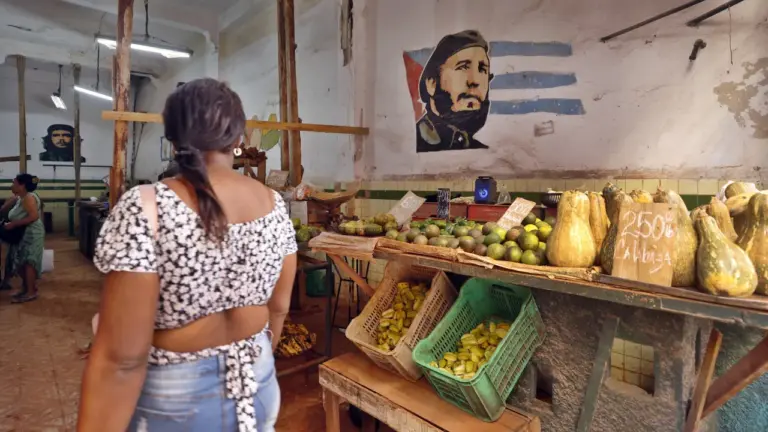
Life expectancy in Cuba fell for the first time since 1950, with a reduction of more than four years between 2020 and 2025, according to the WHO Director-General, during a visit to Havana.
© Lusa
25/11/2026
by
Lusa
A life expectancy in Cuba has decreased for the first time since 1950, with a fall of more than four years between 2020 and 2025, the director-general of the World Health Organization (WHO) warned Tuesday during a visit to Havana.
“In general, mortality has increased and life expectancy in Cuba has decreased for the first time since the beginning of registrations in 1950, from 78.8 years in 2020 to 74.4 years in 2025,” said Tedros Adhanom Ghebreyesu at a press conference.
This break occurred even before Washington’s application of a near-block to oil supply in force since January, which severely exacerbated the economic crisis that has plagued the island since 2020 and exhausted government foreign reserves.
Cuba has also been under US embargo since 1962.
The Cuban health system, which has long been internationally recognized for its quality, “is going through a difficult and critical period,” assessed the UN health agency’s head.
According to Tedros Adhanom Ghebreyesu, the infant mortality rate in Cuba more than doubled, from about 4 deaths per 1,000 births in 2020 to 9.9 in 2025.
Similarly, maternal mortality increased from 37.4 per 1,000 births in 2019 to 44.1 in 2025.
The survival rate of patients with paediatric cancer has dropped from 85% to 65% since the start of energy blockade, he added.
Tedros Adhanom Ghebreyesus also announced a $2 million aid to support child vaccination and the purchase of essential medical supplies.
The head of the WHO also stressed that his organisation and the UN are offering support for the implementation of the economic reform programme announced by the Communist government, aimed at the market economy and providing for the opening of broad sectors of the economy to the private sector.
“The government (...) faces problems in the health sector and other areas due to sanctions, which are known to all. But at the same time, it is positive that the government recognizes the existence of internal problems ", stressed.
“It is essential to address both external and internal issues in order to make progress,” he added.
The President of Cuba, Miguel Díaz-Canel, had already lamented today to Tedros Adhanom Ghebreyesus the impact of the United States blockade on the Cuban health system.
Díaz-Canel accused the “imperialist policy” of the United States of America, marked by economic blockade and restrictions on energy supply, affecting the daily lives of the population and aggravating the difficulties of the health system.
“ More than 67% of the medicines on the basic list are missing”, said the Cuban President, according to the newspaper Granma.
The Cuban leader added that more than 10,000 patients in need of radiology were affected and regretted the increase in waiting lists for certain surgical interventions.