
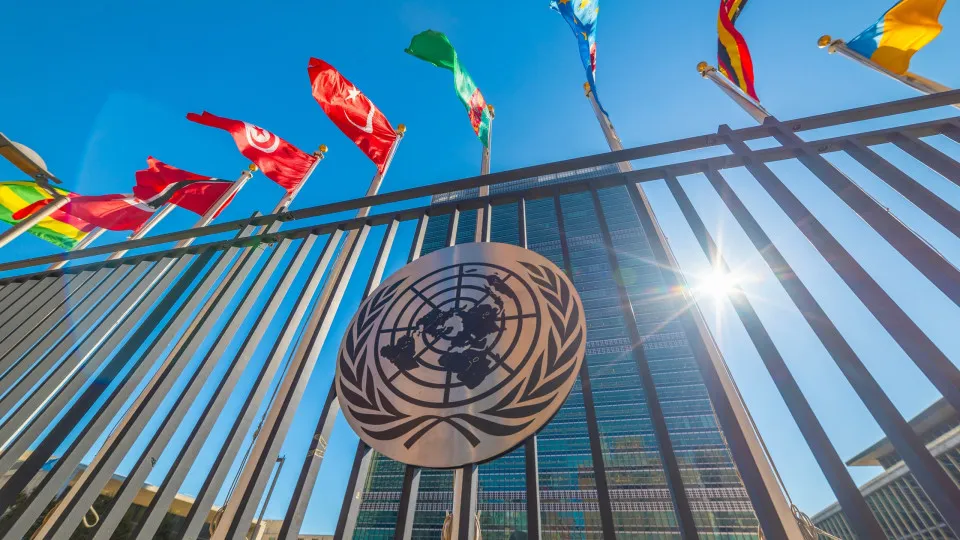
The wave of false bomb alerts that have hit European aviation and schools in recent weeks must be stopped and thoroughly investigated, the spokesman of the UN Secretary-General.
© Shutterstock
11/11/2026
by
Lusa
A wave of false bomb alerts that have hit aviation and European schools in recent weeks must be stopped and “investigated in depth”, today defended the spokesman of the UN Secretary-General.
“ Certainly these threats, whether false or not, have a real impact, preventing people from continuing their daily lives and must be stopped,” said António Guterres, Deputy Spokesman Farhan Haq, at a press conference in New York.
Asked about Guterres’ position on these threats, Haq stressed that “terrorist acts can include acts designed simply to provoke terror,” and therefore “must be avoided.”.
“And we hope that the authorities will investigate them thoroughly,” he urged.
Some 6,000 Italian schools today received a bomb threat by e-mail that generated alarm throughout Italy, indicated sources from the Ministry of Education.
Not all schools were evacuated, but several hundred of them were, while the police were conducting searches for explosives until they concluded that the threat was false.
Similar threats, also considered uncreditable, were reported in schools in the United Kingdom and Ireland and led, according to the media, to the evacuation of several educational establishments in Scotland.
Last month hundreds of schools in Northern Ireland, Scotland, Hungary and Serbia had already been subjected to false bomb threats.
These threats against educational institutions arise at a time when the false warnings of bombs in commercial aviation in European airspace and a series of cyberattacks to supermarket cooling systems in various European countries have been multiplied, as well as media-like threats.
Last week, a plane from Ryanair that was leaving Lisbon airport to Rome, for example, forced a security survey of the device by elements of the Special Police Unit (UEP), confirmed by PSP.
In all cases, threats have turned out to be false, but concerns about hybrid attacks are growing at a time when Europe is dealing with other recent disturbances, such as repeated attacks on supermarket cooling systems in various countries and drone incursions.