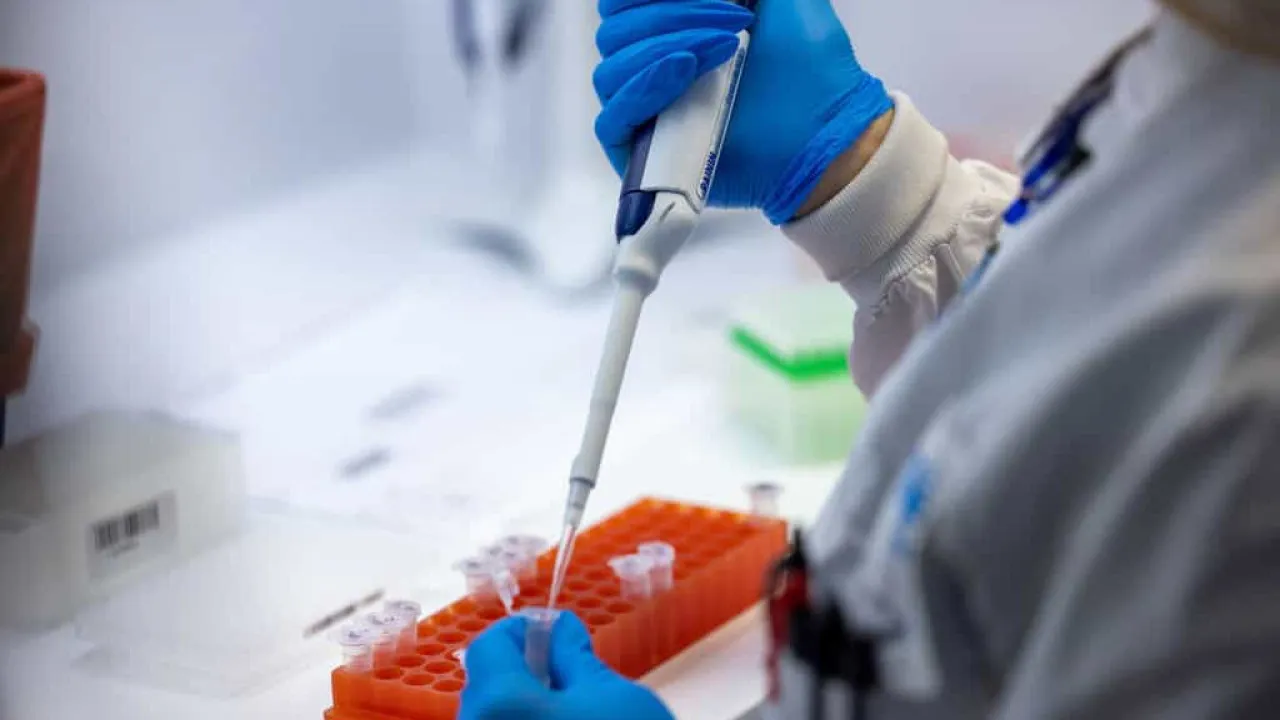
More than 2350 episodes in 10 years of broadcasts, which are held on Saturday, and the radio program “90 seconds of science” promises to continue to disseminate what Portuguese scientists do in various areas of research.
© Getty
20/11/2026
by
Lusa
Mais of 2350 episodes in 10 years of emissions, which are fulfilled on saturday, and the radio program “90 seconds of science” promises to continue to disclose what portuguese scientists do in various areas of research.
Issued every working day in Antena 1, the program has the participation of researchers who talk about their work and has already reported on a project to develop new antitumor and antibacterial molecules or on how to reduce costs and improve results in the training of surgeons, an investigation into the bacteria responsible for listeriosis, a serious infection of food origin, or what is done in the International Iberian Laboratory of Nanotechnology.
He also published works on how to improve the sustainability of the catch of perceives on the southwest coast, promote the gastronomy of a certain location, the impact of emotions on academic performance in higher education, the consumption of meats and social inequalities in Évora between the 14th and 17th century or about buildings that adapt to the terrain and integrate the local vegetation in its structure.
As comets and meteorites are analyzed to learn more about the appearance of life on earth, the obstacles that researchers face and the use of artificial intelligence in medicine were other topics addressed.
“The program ‘90 seconds of science’ was born from a simple idea: putting little pieces of science on the radio. Ten years later, we like to think that these pieces of science also tell, in the first person, the history of science that is done in Portugal ", says the vice principal of the Institute of Chemical and Biological Technology António Xavier (ITQB), Ana Sanchez, coordinator of the program, quoted in a statement of this research institute of the Universidade Nova de Lisboa.
The other coordinator of the program, António Granado, a professor at the Faculdade de Ciências Social e Humanas (FCSH) da Nova, says: “The 90 Seconds of Science is ours and of all the institutions that have helped us to disseminate the science that is done in Portugal”, adding: “We want it to always stay that way.”.
Regarding this 10th anniversary, these institutions “are invited to join the celebration, sharing a publication on their social networks under the hashtag #10 years10historia, with their collection of 10 episodes, which will later be shared by the team of the program”, the statement said.
A joint initiative by ITQB NOVA and FCSH, the “90 seconds of science” was born in the framework of the Master’s Degree in Science Communication and has the support of the Foundation for Science and Technology (FCT), having been in 2025 “the 20th most heard radio program in RTP Play, with a 46% increase in the number of users and 31% in the number of ‘plays’, in relation to 2024”, according to that institute.
According to a Marktest ranking on podcast audiences, were made last October 7899 ‘dowloads’ of the “90 seconds of science” by listeners located in Portugal.
In addition to the Ciência Viva Media Award awarded by the Agência Ciência Viva in 2025, the program was also recognized with the Pois 2023 Award (Radio category), the Gulbenkian Award Knowledge 2019, the Award Access Culture 2018 (Intellectual Accessibility category) and the Honorable Mention of the National Innovation Journalism Award 2016 (Podcast category).