The six-month project that led European chefs to Cape Verde came to an end with a positive review and the hope of returning in 2027, said Marco Abbondanza, director of the Seven Suns Seven Moons festival.
© Shutterstock
28/11/2026
by
Lusa
O six-month project that led European chefs to Cape Verde came to an end with a positive balance and the hope of returning in 2027, said Marco Abbondanza, director of the Seven Suns Seven Moons festival.
“ We hope to continue in 2027 with other actions and more 'chefs', now that we realize that we can receive 'chefs' with Michelin stars ", he said, in an interview with Lusa.
The festival, which combines music and gastronomy, joined the European Union (EU) to develop the Blue Food Roadshow project.
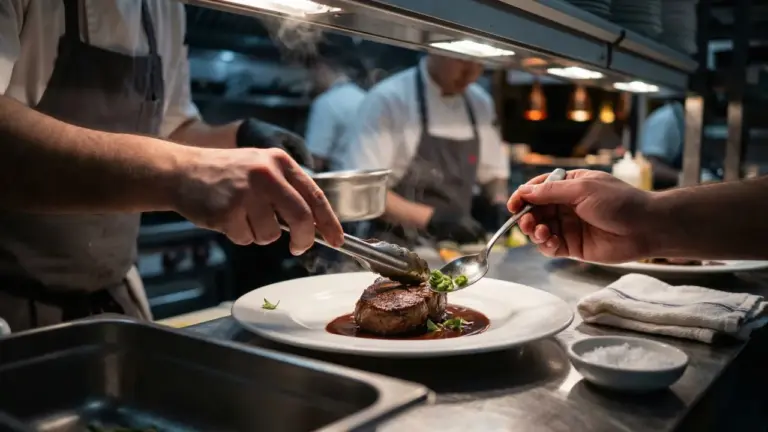
It consists of “involving renowned international chefs, already prestigious, traveling to Cape Verde, finding the rich local culture and confronting island cooks to innovate recipes, including fish,” he explained.
It was six months of “a gastronomic residence” with culinary arts professionals from France, Spain, Luxembourg and Portugal.
“Each one had ten days passing through three different islands”, with visits to the markets, direct contacts with the reality of the restoration, ‘workshops’ and moments of tasting, described Marco Abbondanza.
Among the expected results, “the most important thing is to create a mental habit of renewal, improve supply, create a concern for customer satisfaction” with a sector that will have to respond to tourism growth and “to be more attractive”.
“ Deep down, to create that attitude of going to research, talking to each other, asking questions, awakening creativity” to bring down cultural conventions – such as that “fish has to be dry”.
“Why?” he questioned, arguing that it is possible to imagine other horizons.
Abbondanza said that “in the smaller and peripheral islands there is a social urgency”, because visitors begin to express themselves “but we need to create an offer, we need to develop the tourist destination of these smaller, weaker islands, but that guard what is most important, the most genuine Cape Verdean culture”.
The Portuguese chef Vasco Coelho Santos, from the restaurant Euskalduna Studio, in Porto, distinguished with a Michelin star, closed the mission of 2026 in a project that he classified as “intense, challenging and very good, above all”.
He recalled the 10-day routine in the archipelago, beginning with São Vicente, where he went to the market, “always in the morning”.
“ He bought things, inspired me, made drafts” and then discovered reality, such as in a public school on the island of Santo Antão: “they opened our doors” and joined “many students and many restaurant owners from various locations”.
“ I left a little bit of my know-how, but I also learned a lot. I think I carry a lot of luggage.”.
And highlighted the exchange of ideas about the potential still to explore one of the greatest riches in the country, the fresh fish, traditionally well grilled, sometimes in excess: “it gets very dry”, described Vasco Santos.
“ Today I had three people inside [in the kitchen] who had never tasted raw fish,” he pointed out, pointing to the project’s ambition: “the main idea was to bring someone to try to leave a habit of innovating, thinking about things. The raw material is here. I think it’s leaving a little seed” that promotes new ideas, he said.
In the islands of Sal and Boa Vista, which welcome about 80% of the archipelago's tourism, the large hotels serve meals similar to those of other parts of the world, a reality from which Cape Verde can learn, Marco Abbondanza considered.
“ We can develop [the gastronomy], but with a different cultural, musical and gastronomic richness. It's a big challenge and we're trying to plant some seeds. Something will come out sooner or later”, he concluded.
The Seven Suns Seven Moons festival has been held for 34 years in more than 30 cities in 10 countries, including Cape Verde, in a logic of cultural decentralization, crossing intercultural dialogue with social concerns.
The project was founded with José Saramago, who was honorary president for 18 years, and his name was removed from the Convent Memorial work.