The Presidents of Kenya, William Ruto, and the Democratic Republic of the Congo, Felix Tshisekedi, agreed today to open a
© Shutterstock
22/11/2026
by
Lusa
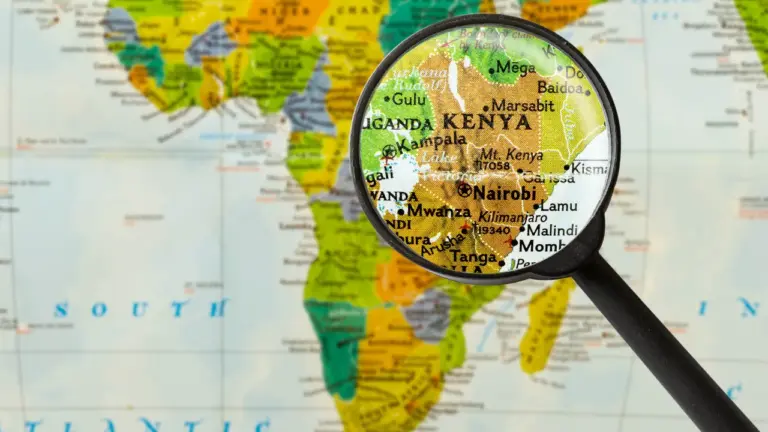
Opresidents of Kenya, William Ruto, and the Democratic Republic of Congo (DRCongo), Félix Tshisekedi, agreed today to open a “new chapter” in their relations, based on “mutual trust, respect and cooperation,” the Kenyan Head of State said.
Both leaders held a dialogue within the framework of a quadripartite mini-summer in which the President of the Council of Ministers (head of the Government) of Togo, Faure Gnassingbé – mediator of the African Union (AU) on the crisis in eastern DRCongo also participated – and Denis Sassou Nguesso, President of the Republic of Congo (Congo-Brazzaville), a country that hosted the meeting in the city of Oyo (center).
“ We have agreed to deepen cooperation on trade, economic development, security and culture, as well as to collaborate to promote peace, stability and regional integration,” Ruto said on social network X.
“Our commitment will be guided by dialogue, mutual respect and peaceful resolution of differences, for the benefit of our two nations and our two peoples,” the President of Kenya added.
For its part, the Presidency of DRCongo stressed on the same platform that the two leaders had decided to normalise and “reestablish fully bilateral relations” with the mutual return of their respective ambassadors to diplomatic posts.
In the same official note from DRCongo it was also said that the two countries “agreed to intensify their collaboration in preventing and combating Ebola virus disease”.
On 15 May, DRCongo declared an outbreak of the Ebola virus – the second most deadly in global history – which has also affected Kenya, which has registered nine cases in its territory (including two deaths).
Some unofficially confirmed press reports had previously pointed out that the meeting was an attempt to bring Ruto and Tshisekedi closer together after some disagreements in recent years that increased tensions between the two leaders.
One example would be the irritation of the DRCongo after the launch in 2023 in Nairobi, by the Congolese exiled opponent Corneille Naanga, of the political-military coalition Rio Congo Alliance (AFC), which included the powerful Congolese rebel group Movement 23 March (M23).
The Kenyan Government did not then agree to stop Naanga, but denied any support or connection with that rebel coalition, while the DRCO executive called on its ambassadors to Kenya and Tanzania for consultations, the second being the host country of the East African Community.
The conflict in eastern DRC reached a new dimension on 13 October with the birth of the new insurgent coalition Front for the Refoundation of the Nation (FRN), led by former Congolese President Joseph Kabila (2001-2019) and who has as one of his Vice Presidents Nangaa.
The FRN is made up of M23, a group that has the support of neighbouring Rwanda in its fight against the Congolese army.
Formerly, fighting in eastern DRC intensified at the end of January 2025, when M23 took Goma and Bukavu, capitals of the North and South Kivu provinces, respectively.
Eastern DRC, rich in minerals essential to the technological industry, has been experiencing a conflict fueled by rebel groups and the army since the 1990s, despite the deployment of the UN mission in DRCongo (Monusco).