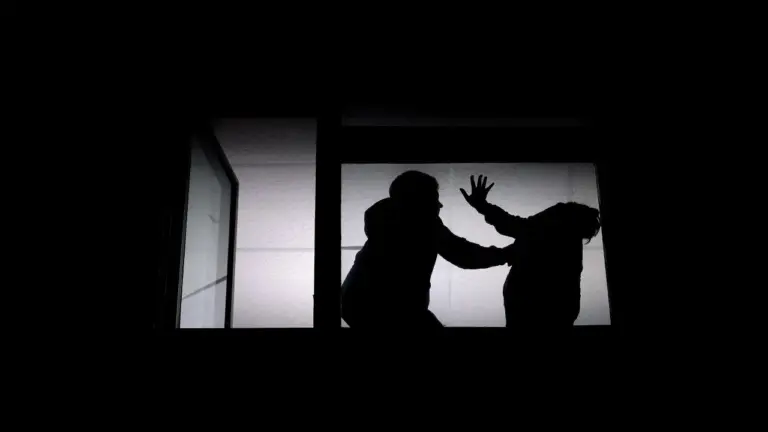
The Guimarães Relation Court confirmed the conviction of a man for domestic violence based on statements of “hearing”, in a case in which the victim, the defendant’s companion, refused to make statements.
© Shutterstock
25/11/2026
by
Lusa
O Guimarães Relation Court confirmed the conviction of a man for domestic violence based on statements of “hearing”, in a case in which the victim, the defendant’s companion, refused to make statements.
By judgment of November 3, today consulted by Lusa, the Relation says that “indirect testimony, or ‘hearing to say’, can be valued as a means of proof, when the source witness [the victim] has been called to testify, not requiring the law to make statements effectively”.
However, the decision was not unanimous, since one of the three judges of the collective considered that these statements constitute prohibited evidence, since the victim did not confirm whether its content is true or not.
In this case, the defendant was convicted on the testimony of a neighbor of the couple and a friend of the victim.
These two witnesses said in court that they did not see the assaults, but that the victim had confessed to them that he had been assaulted by his partner inside the couple's residence.
On the day of the assaults, GNR was called to the scene and found that the victim, who was already inside the ambulance, had “immediately visible” injuries, compatible with assaults with punches and kicks.
In the Court of Braga, the defendant was sentenced to three years and four months in prison, with suspended sentence, being obliged to attend courses and programs to prevent domestic violence and forbidden to contact the victim.
The court gave as proof that the defendant, on December 21, 2023, assaulted the companion with an undetermined number of punches in the face and kicks in the legs, causing multiple injuries.
The victim was on sick leave until January 31, 2024.
The defendant appealed to the Relationship, alleging that the evidence resulting from the indirect testimony of the two witnesses could not be valued, because the victim was not confronted with the content of them.
However, the court gave him no reason.
“What the legislator requires is that the source witness be called to testify, except in cases of death, supervenient psychic anomaly or impossibility to be found. It does not require its testimony to be effectively provided, nor that this testimony in any way confirms the indirect testimony ", says the judgment.
One of the three judges who analyzed the appeal presented an explanation of vote, arguing that “indirect testimony can only be valued, according to the principle of free appreciation of the evidence, in conjunction with the testimony effectively provided by the referenced person of whom it was heard to say”.
For that judge, if the offended woman refuses to make statements about the testimony of the witnesses of “hearing to say”, these statements “cannot be valued, constituting prohibited evidence”.
“ In the specific case, the impossibility of valuing the testimony of the witnesses, in the absence of other means of proof that confirm that the defendant was the author of the injuries caused in the offended, lead to the acquittal of the applicant ", adds.