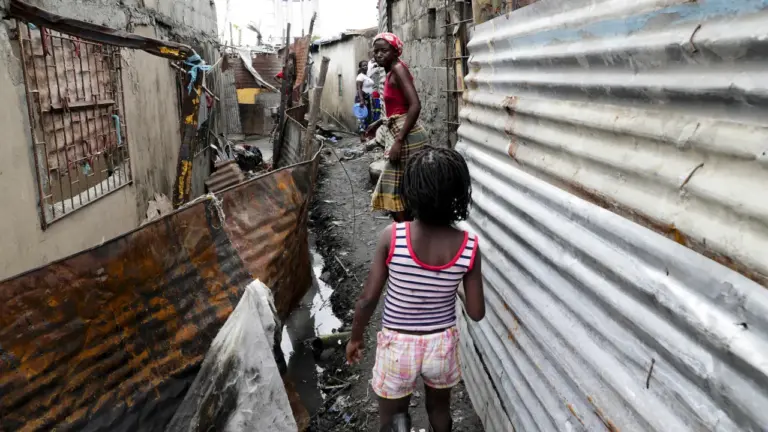
At least 1,218 children were removed from premature unions and reinstated in their families in Mozambique by September, announced the Secretary of State for Gender and Social Action, defending a collective mobilization to combat this practice.
© Lusa
26/11/2026
by
Lusa
Plink minus 1,218 children were removed from premature unions and reinstated in their families in Mozambique until September, announced today the Secretary of State for Gender and Social Action, defending a collective mobilization to combat this practice.
Speaking during a round table on the implementation of the recommendations of the Fourth Regional Conference of Southern African National Human Rights Institutions, Abdul Ismael called for a “collective war” against premature marriages in the country, admitting that there are more cases in communities, in addition to the figures reported by the authorities.
“We must all fight to stop and allow our children to study, play and continue dreaming of a promising future,” he said.
The Secretary of State acknowledged that Mozambique continues to face challenges related to poverty, violence, abuse and sexual exploitation, child labor, neglect, social exclusion and premature unions, phenomena that compromise the development of children, defending “firmer, articulated and lasting responses”.
On the other hand, the president of the child parliament of Maputo, Cláudia Bila, warned about “new risks” for children associated with increasing access to the Internet, defending the strengthening of digital education and raising awareness among families about the mechanisms of prevention and online protection.
“The growth of Internet access and social networks has brought opportunities for learning and access to information, but it has also exposed children to new risks, such as cyber crime, harassment, online exploitation and exposure to harmful content,” he said.
Save the Children’s representative in Mozambique, Stélio Ramos, said that one year after the fourth Regional Conference of Southern Africa’s National Human Rights Institutions continues to implement several recommendations related to child protection.
For Stélio Ramos, the existence of legislation and public policies is not enough without adequate resources, institutional coordination and accountability mechanisms.
“ It is essential that we leave this round table with concrete actions, measurable indicators, clearly defined institutional responsibilities, realistic deadlines and regular monitoring mechanisms,” he added.
On the other hand, the president of the National Commission on Human Rights, Albashir Macassar, defended greater coordination between the different sectors involved in child protection.
“ A child at risk cannot be lost between institutions without follow-up and much less without response,” he said.
The person responsible proposed the establishment of permanent mechanisms to monitor the recommendations of the conference, with defined responsibilities, implementation deadlines and periodic evaluations of the results achieved.
In addition to premature unions, the meeting discussed topics such as sexual violence, child labor, digital protection, child participation, inclusion of children with disabilities, climate change and social assistance.
According to the Secretary of State, the government currently supports about 137,000 children through basic social assistance programs in the provinces of Cabo Delgado, Nampula, Zambézia and Niassa.
According to the African Report on Child Welfare 2026, today released by the African Child Policy Forum (ACPF), Mozambique is in the 29th position in 52 countries analyzed (the second worst among the Lusophone African countries) in the “Index of Commitment to Children”.
The country has a rating of 0.4909, having descended four positions from 2023, but remaining seven places above the position it occupied in 2018.
Among the Lusophone African countries, Cape Verde is the best placed (the second African, after Seychelles) in the protection and promotion of children's rights, followed by São Tomé and Príncipe (16th position), Angola (26th position), Equatorial Guinea (28th), Mozambique (29th) and Guinea-Bissau (44th position).