
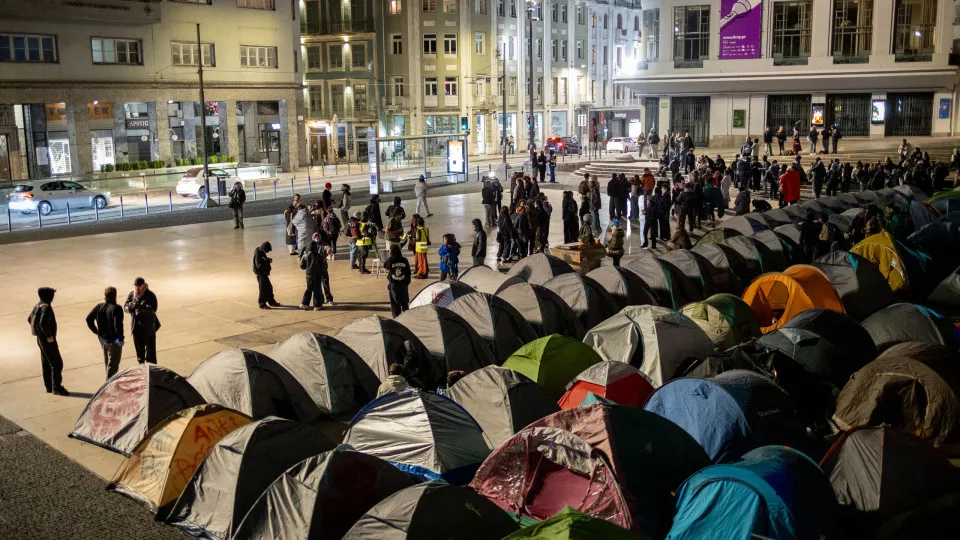
About 200 people were singing while waiting for the beginning of another popular assembly, in Praça D. João I, in Porto, where they will vote if they agree to meet with the mayor of the city at Teatro Rivoli.
© Diogo Baptista/SOPA Images/LightRocket via Getty Images
30/10/2026
by
Lusa
Cerca of 200 people sang while waiting for the beginning of another popular assembly, in Praça D. João I, in Porto, where they will vote if they agree to meet with the mayor of the city at Teatro Rivoli.
By 8:00 p.m., the square was divided between those who sang, to the center, who waited, on the sides, and at the feet of the steed that on the left side “watched” the Square prepared the dinner to be served in the community canteen.
“I have come every day. In two months I have to leave my house in the Antas. I'm paying 600 euros for a T1, the landlord wants to sell and I don't know where I'm going ", I told Lusa Manuel António, 34 years old, waiter of a coffee shop in the city.
Stories about the current housing problems are common: “Our landlady says that we pay little, that if we pay 300 euros more we can stay, if not, we have to put ourselves out there”, said António and Sara, 33 and 35 years.
The couple pays 700 euros for a “misterable and humid” T1 near the balloon market.
In the square, the advanced hypothesis is that the movement, which since October 10 challenges the high prices of housing, will meet with the mayor of Porto, Pedro Duarte, at the Rivoli Theatre, right next to the square of the camp.
“ It's not true that you decided to meet him there. What was decided was to vote this possibility today ", explained source of the camping movement of Porto.
At 20:10 the choir was silenced, the microphone prepared, smelled of food, and the assembly began with the usual interventions.
The protesters demand the reversal of the new rental law, the end of demolitions and evictions without an alternative housing, a stop to the purchase of housing by real estate funds, the increase in public housing, the recovery of vacant buildings for housing purposes and ceilings “truely accessible” to income.