
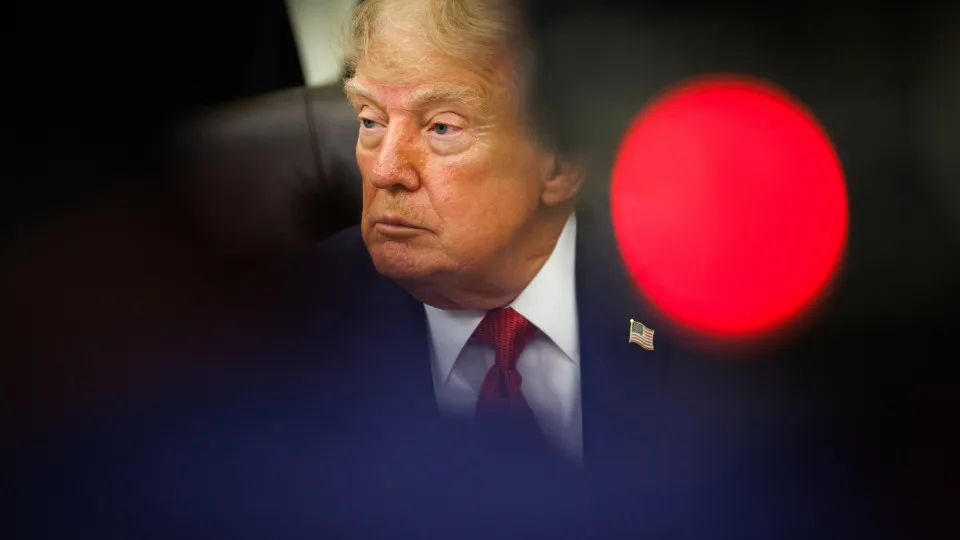
President Donald Trump's administration will sell public land to local states, tribes and governments in an effort to reduce the size of federal assets, according to a new five-year plan by the Department of the Interior.
© Samuel Corum/Sipa/Bloomberg via Getty Images
12/11/2026
by
Lusa
A administration of President Donald Trump will sell public lands to local states, tribes and governments in an effort to “reduce the federal heritage dimension”, according to a new five-year plan of the Interior Department.
Agency officials said that the sale of federal properties would allow the government to concentrate resources on “nationally important” land. But no details were given on which land could be sold, nor on the range or location of potential sales.
The proposal quickly raised objections from some legislators, including Montana's Republican Ryan Zinke, who was Secretary of the Interior in Trump's first term.
The plan also provides for strategic land transfers and exchanges to support increased energy production, one of the main pillars of Trump's policies for fossil fuels. This reflects Trump's view of treating most public lands as assets to be used, not as spaces to be reserved for preservation.
The Department of the Interior oversees more than 1.9 million square kilometers of land, an area larger than that of the US states of Texas and California together, and still vast underground mineral reserves.
This puts the agency at the heart of a controversial debate that has lasted for decades about whether the government controls too much territory.
The Associated Press (AP) news agency today sent emails to the Home Department officials asking for comments and more details.
Most public lands are in the western states. In some of them, the government controls the vast majority of the territory, protecting it from possible exploitation, but also hindering growth. Nevada, for example, is almost 80% under federal control.
Interior officials said that, according to the plan, a part of any revenue obtained from the sale of land would revert to the buyer for conservation purposes elsewhere.
Still, it is not certain whether the Secretary of the Interior, Doug Burgum, can achieve the objectives of the administration without the cooperation of Congress.
Zinke’s office stated in a statement that he “continues firmly against the sale or transfer of public land and will vote against any legislation on the matter if this happens before the congressman leaves Congress at the end of this term.
The senior member of the Senate Natural Resources Committee also promised to fight against any sale of federal land or privatization efforts.
“ These lands belong to the American people, not to private interests that want to profit. Public lands must be in the hands of the public,” said Senator Martin Heinrich, a New Mexico Democrat.
Some West lawmakers last year tried to sell vast tracts of land in Utah and Nevada, saying that it could generate revenue and ease the pressure of growth in the expanding cities.
Among the proposals, Utah Republican Senator Mike Lee suggested selling over 2 million acres (8,000 square kilometers) to states or other entities.
These efforts failed due to bipartisan opposition.
The new plan establishes a roadmap for the priorities and actions of the Department of the Interior between 2026 and 2030.
Future administrations would not be bound by it. The department regulates mining, drilling, grazing, leisure and other activities over which many state and local employees want to have greater control.
The interior includes the Land Management Bureau, the National Parks Service, the Fishing and Wildlife Service and the Bureau of Indigenous Affairs.
The agency's strategic plan was last updated four years ago under the administration of former Democratic President Joe Biden.