
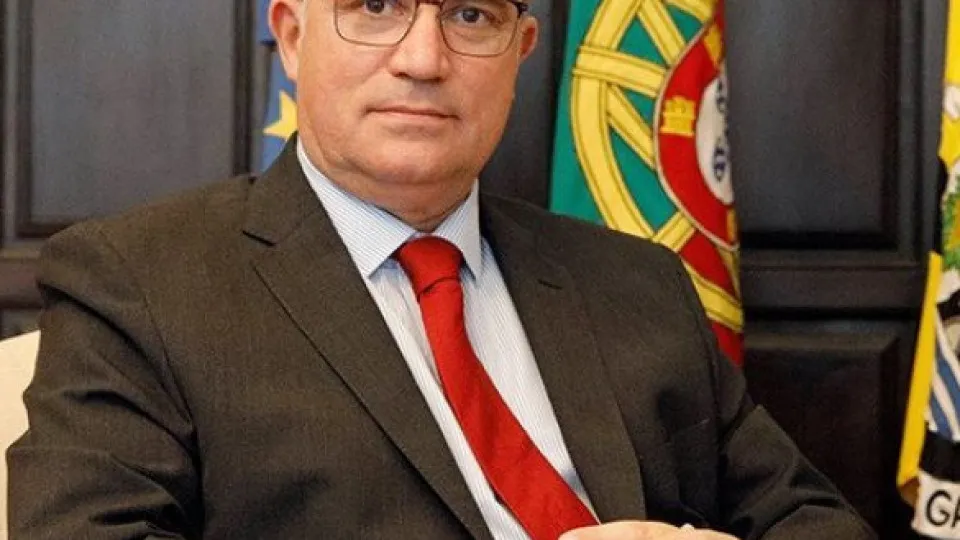
The president of CCDR Norte, Álvaro Santos, said that the region needs to “produce better” to increase competitiveness and pay better wages.
© North CCDR
16/11/2026
by
Lusa
Northern CCDR
O president of CCDR Norte, Álvaro Santos, said today that the region needs to “produce better”, in order to increase its competitiveness and pay better wages.
Speaking in Braga, at the end of the conference at the conference “50 Years of Local Power”, promoted by the Northern Coordination and Regional Development Commission (CCDR), in collaboration with the JN, Álvaro Santos stressed that the region continues to suffer from “structural weaknesses”, such as productivity lower than its potential, difficulties in the progression of value chains and yield levels that do not fully reflect productive capacity.
“The challenge is not just to produce more. It is better to produce, incorporate knowledge and technology, create greater added value and ensure that this value translates into better wages. We need a new industrialization, digital, innovative and sustainable, capable of attracting investment and generating qualified jobs”, he said.
He stressed, however, that an economic strategy “is only truly successful when its results reach the people”.
“ Growth should be reflected in social mobility, affordable housing, quality public services and concrete opportunities for young people. Competitiveness cannot be an end in itself: it must be an instrument of social progress”, he said.
The appreciation of the diversity of the territories of the region was another of the paths pointed out by Álvaro Santos.
“ We want a region where the place where you are born or live does not determine the opportunities of each citizen. This requires differentiated public policies, adjusted to local realities, and increasingly robust inter-municipal cooperation”, he said.
For the leader of the CCDR North, a culture of institutional cooperation and territorial governance is also needed.
“ The great contemporary challenges, from mobility to housing, from water management to climate adaptation, from competitiveness to the organization of public services, do not end at the administrative borders of the municipalities. They require coordination between local authorities, intermunicipal communities, regional institutions and central administration,” he said.
According to Álvaro Santos, the CCDRs can play “a renewed role” in that articulation, stating themselves as institutions of proximity, dialogue and consultation, capable of coordinating public policies and mobilizing the agents of the territory, “fully respecting municipal autonomy”.
“The strengthening of the skills of the CCDR, in particular in Education and Health, can improve the capacity of the State to respond. But decentralization must be accompanied by adequate resources, clear competences and effective decision-making capacity. We do not need to create new administrative obstacles. We need simplification, responsibility and results,” he said.
For Álvaro Santos, the North needs a “strong cohesion policy, with adequate resources and genuine participation of regions and local authorities in defining investment priorities”.
“ Without a territorial dimension and without proximity, European policies lose effectiveness,” he warned.