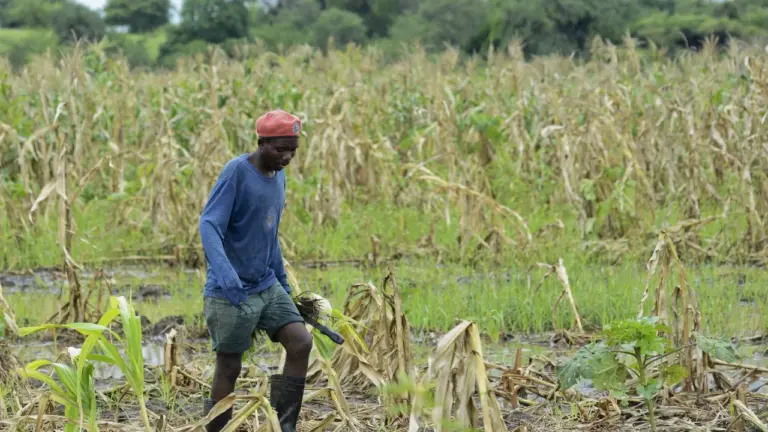
The World Bank warned that a very strong episode of El Niño may limit the next agricultural harvest in Mozambique and neighboring countries, aggravating food insecurity in southern Africa during the period of scarcity of 2027/28.
© Lusa
26/11/2026
by
Lusa
O World Bank warned that a very strong episode of El Niño could limit the next crop in Mozambique and neighboring countries, and exacerbate food insecurity in southern Africa during the time of scarcity of 2027/28.
The warning is contained in the latest update on Food and Nutrition Security, a World Bank publication accompanying the evolution of global food risks and identifying growing threats to agricultural production in various regions of the world due to extreme climate phenomena, conflicts and high food prices.
According to the bulletin, there is a 98% probability that the current episode of El Niño persists until the beginning of 2027, causing floods in parts of East Africa and warmer and drier conditions in southern Africa.
He points out that “the strong crops of 2026 and the remaining ‘stocks’ will provide short-term protection in southern Africa, but El Niño may restrict the next harvest in Mozambique, South Africa, Zambia and Zimbabwe, and the conditions of food insecurity may worsen during the 2027/28 shortage season.”.
For the World Bank, this scenario is particularly worrying because the effects of climate anomalies are usually more intense in the months following the agricultural campaign, when they decrease family food reserves and increase market dependence.
The publication states that “a very strong El Niño forecast by the beginning of 2027 is threatening crops”, pointing to drought risks in parts of southern Africa, Sahel and Southeast Asia, while favoring excessive precipitation and flooding in eastern African countries.
While recognising that the good agricultural results recorded this year offer some margin of protection, it warns that impacts may vary significantly between countries, depending on the intensity of drought, availability of food reserves, market behaviour and response capacity of national authorities.
The Mozambican National Institute of Meteorology (Inam) has this week put several districts in the process of activating early measures against severe drought in the first quarter of 2027 in the provinces of Gaza, Maputo, Sofala and Nampula.
According to the bulletin of monitoring plans of actions anticipated to drought, released today by Inam, the districts of Chicualacuala, Mágude, Manapi, Massangena, Chókwè, Mandlakazi and the city of Beira were placed in the “Set” phase for severe drought, referring to Window 2 of the rainy season 2026/27, corresponding to the period between January and March 2027.
The Institute explains that the “Set” phase represents the activation of the Anticipated Action Plans and the implementation of preventive measures to reduce drought impacts, within the framework of an alert system based on seasonal weather forecasts produced by the European Centre for Medium-Term Weather Forecast.
The monitoring follows the logic “Ready, Set and Go”, in which the “Ready” phase corresponds to the state of readiness and the “Set” phase points out that the expected risk justifies the triggering of early actions by the partner authorities and entities.
Another international report released this week has placed Mozambique among the most at risk countries in southern Africa in the face of the current episode of the phenomenon. El Niño-Oscilação Sul (ENOS), whose effects are expected in early 2027, with periods of intense rain in the north and severe drought in the south of the country.
In the chapter dedicated to the region, the November Global Update on ENOS, produced by the Global ENOS Working Group of the Permanent Interagency Committee (IASC), identifies Mozambique, Malawi, Zimbabwe, Zambia, Madagascar and Angola as being “between the region’s highest risk countries”, providing “dryer and warmer than average” conditions during the current agricultural season.
The document cites projections from the Mozambican Government that 2.22 million people may be affected by the impacts of the climate phenomenon, one of the highest estimates among the countries covered by the regional analysis.