
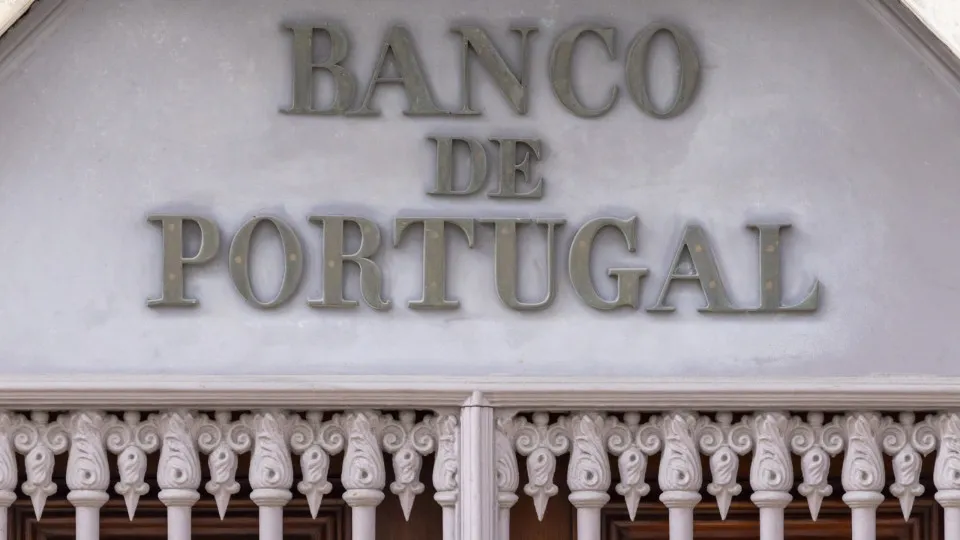
Banco de Portugal proposes to study a law that forces companies to accept at least one electronic means of payment, in parallel with cash, as part of its 2030 strategy.
© Getty Images
12/11/2026
by
Lusa
Electronic payments
O Forum for Payment Systems (FSP), driven by Banco de Portugal (BdP), proposes to study a law that forces companies to accept at least one electronic means of payment, in parallel with cash.
The proposal is contained in the “National Strategy for Retail Payments 2030”, today published and prepared by the FSP, an advisory structure of the BdP that brings together the main national actors in the supply and demand for retail payment services, including representatives of payment service providers, consumers, businesses and public administration.
In order to “encourage innovation and digital transformation”, one of the suggested lines of action is to “study a legislative amendment that imposes an obligation on companies to accept, together with cash, at least one electronic payment instrument”.
In this area, the need to “prepare the national ecosystem for the possible issuance of the digital euro” is also highlighted, to extend the options for electronic payments to the State and to expand the cases of use of the SPIN service, which allows transfers via the mobile phone number or NIF.
Monitoring the impacts of artificial intelligence, cryptoactives, stablecoins and tokenized assets in the payment sector are other priorities by 2030, along with removing “obstacles to increased use of immediate transfers”.
In the field of security and efficiency, the plan is aimed at combating fraud in payments, in particular by dynamising the Digital Fraud Monitoring Platform and studying solutions to identify bank accounts used in undue payments.
The FSP also aims to improve the confirmation of beneficiaries in the Interbank Compensation System (SICOI), remove barriers to strong authentication in e-commerce and open banking and ensure the identification of those ordering payments by reference.
In the vector of resilience and sustainability, it provides for the elaboration of a National Plan for Resilience of Payments, the study of ways to discourage the use of checks and the adoption of measures to reduce the environmental footprint of the sector.
Finally, with the aim of “enhancing proximity and communication with payment service users”, the strategy provides for the holding of financial literacy events and content, the promotion of accessibility in electronic payments and a new study on the costs of these instruments in retail.
According to the data disclosed in the report in 2025, as in 2024, electronic payments reached historic peaks in Portugal, with 5.2 billion transactions worth EUR 875.9 billion.
Payments with electronic payment instruments (cards, direct debits, credit transfers and immediate transfers) accounted for 99.9% of the number of retail payments made in 2025 without cash, with immediate transfers being the fastest growing electronic payment instrument (1623.6% in number and 397.9% in value).
On the other hand, card-based transactions grew by 5.4% in number and 9.0% in value, while direct debits increased by 3.6% in number and fell by 1.7% in value and credit transfers declined for the first time since 1999 (17.1% in number and 7.5% in value).
Card-based payments accounted for 85.2% of total transactions processed in SICOI in 2025, immediate transfers 6.2%, direct debits 4.8% and credit transfers 3.6%.
In that year, the use of ‘contactless’ technology in automatic payment terminals in Portugal with domestic and foreign payment cards increased 15.3% in quantity and 19.0% in value.
Online purchases with national payment cards grew 19.3% in quantity and 19.7% in value, with the weight of ‘contactless’ purchases in the total number of card purchases reached 57.9% (7.8% before pandemic).
As for paper-based payment instruments, the check totaled 0.1% of the number of transactions processed in SICOI.