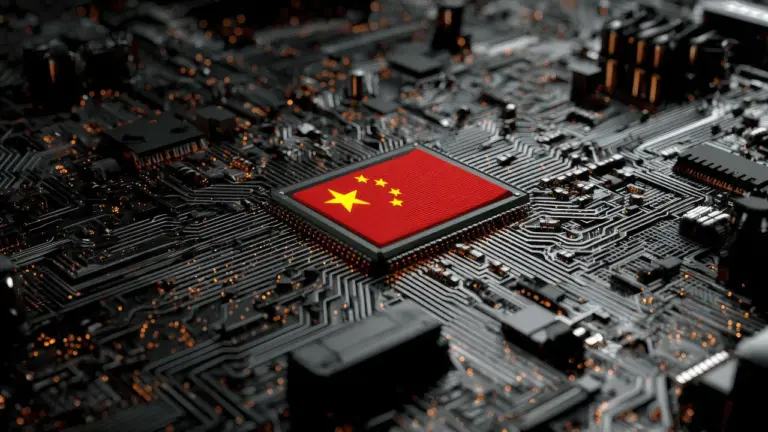
China's bet on artificial intelligence (IA) can aggravate the structural imbalances of the world's second largest economy, favoring companies and capital holders to the detriment of families, warned an economist of S&P Global Ratings.
© Shutterstock
26/11/2026
by
Lusa
A china's investment in artificial intelligence (AI) can aggravate the structural imbalances of the second largest world economy, by favoring companies and capital holders to the detriment of families, warned an economist of S&P Global Ratings.
Louis Kuijs, chief economist for the Asia-Pacific region of the financial rating agency, considered, in an interview published on Wednesday by the Hong Kong South China Morning Post, that the productivity gains associated with the AI may accentuate the disparity between supply and domestic demand.
“ The increase in productivity can mainly benefit capital, not labor ", he said.
The Chinese growth model, based for decades on investment in infrastructure and industrial capacity, to the detriment of private consumption, has resulted in an unequal distribution of income between companies and households.
Kuijs warned that, without structural reforms, the widespread adoption of the AI can generate new surpluses of productive capacity, this time in the technology-associated industries, forcing companies to seek a solution on the external markets for the insufficiency of domestic demand.
China has put the AI at the heart of the economic modernisation strategy, with initiatives to promote the use of technology in different sectors of activity.
Chinese AI-related expenditure is expected to reach around USD 220 billion (EUR 200 billion) this year, according to a study released this month by researchers associated with China Finance 40 Forum, an economic think tank.
The increase in investment by Chinese companies in the area should, however, contribute less than 0.4 percentage points to the growth of Gross Domestic Product (GDP).
The reforms advocated by Kuijs include improving access to health, education and social security services, as well as a clearer separation between the State and the business sector.
S&P Global Ratings revised on Monday in high the Chinese economy growth forecast for this year, from 4.3% to 4.5%, thanks to the strong performance of technological product exports.
However, the agency expects internal demand to remain weak in 2027.
The dynamism of exports also reduces, from the economist's perspective, the pressure on Chinese authorities to adopt new measures to stimulate consumption.
The persistence of economic imbalances raises fears that China will go through a prolonged period of low growth and low inflation, similar to that experienced by Japan after the burst of the real estate and financial bubble in the early 1990s.
Kuijs pointed out, however, that China still has a higher margin for economic development than Japan at that time.