
The Chinese government rejected the allegations regarding a espionage operation involving Jensen Huang, president of Nvidia, classifying the charges as unfounded and a defamation campaign against Beijing.
© Johannes Neudecker/picture alliance via Getty Images
09/11/2026
by
Lusa
A China today rejected the allegations of an espionage operation aimed at obtaining information through Nvidia's CEO Jensen Huang, classifying the charges as unfounded and a defamation campaign against Beijing.
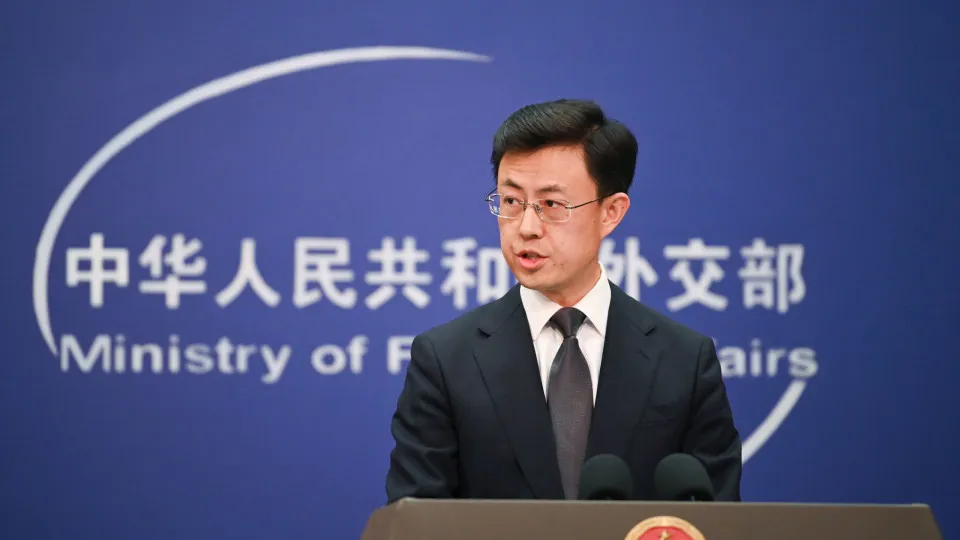
“ The so-called Chinese espionage charges have no foundation. They are just defamations against China”, said Chinese Foreign Minister Guo Jiakun at a press conference.
According to The New York Times, Huang acknowledged to the Nvidia Board of Directors that he had an intimate relationship with an entrepreneur that American intelligence services identified as someone who collected information for Beijing.
The head of the American semiconductor manufacturer is at the heart of a controversy over his efforts to promote the sale of advanced processors to China, despite Washington's technological restrictions to limit Chinese access to these technologies.
Nvidia announced on Sunday that she was opening an investigation into the case.
Huang didn't identify the person he had the extramarital relationship with.
China had already rejected a news report from The New York Times according to which Huang developed a close relationship with a Chinese citizen named Alice Huang, responsible for a company suspected of smuggling advanced semiconductors into China and pointed out as alleged Beijing intelligence agent.
Nvidia's executive president has advocated lifting US restrictions on the export of semiconductors to China.
Huang managed to convince President Donald Trump to authorize the sale of the company's H200 processors to the Chinese market.
Although they are not Nvidia's most advanced models, the H200 remain high performance semiconductors, used in particular in the development of artificial intelligence systems.
However, it remains uncertain whether Beijing will allow Chinese companies to purchase these processors on a large scale.