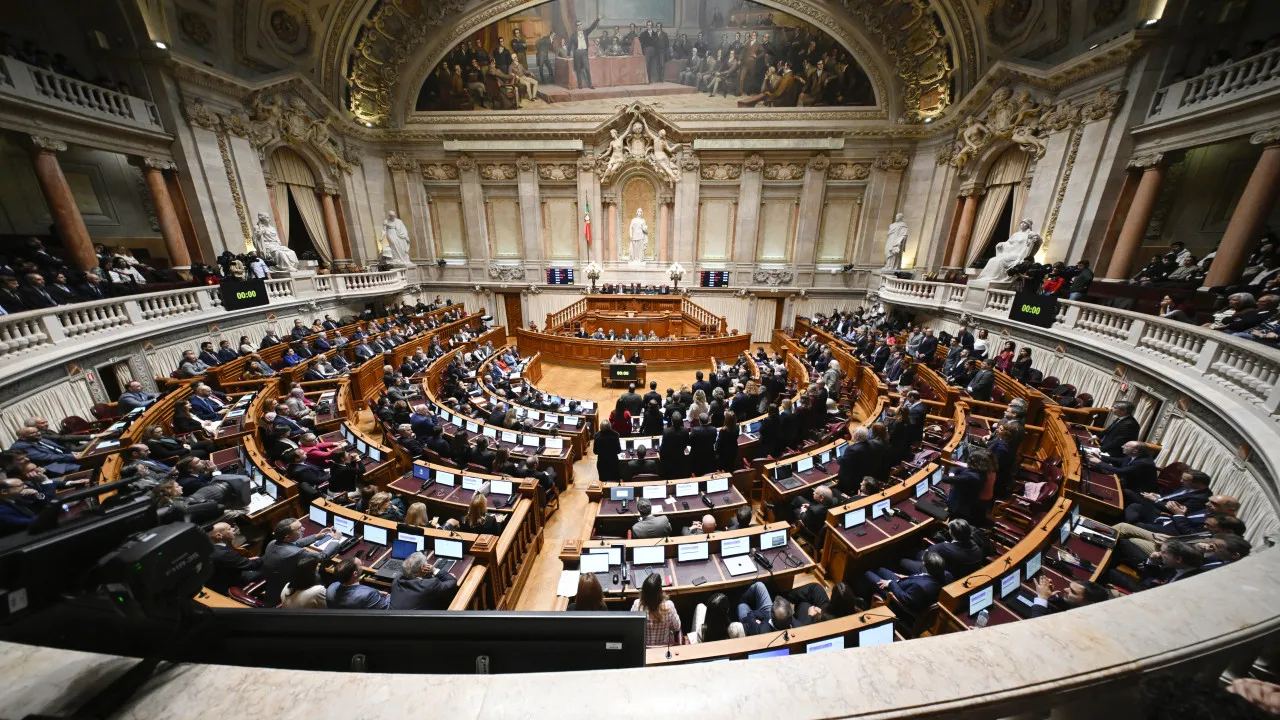
A group of citizens wants to bring to Parliament a citizens' legislative initiative (CCI) on accessible rental and right to housing, having come from the Port Camp and already recorded more than 1,500 contributions.
© Horacio Villalobos#Corbis/Corbis via Getty Images
20/11/2026
by
Lusa
Ua group of citizens wants to bring to Parliament a citizens' legislative initiative (CIL) on accessible rental and right to housing, having come from the Port Camp and already recorded more than 1,500 contributions.
The description of the initiative, which has now extended to the whole country, points to “the approval of the Accessible Rental Law, which defines a framework of measures to promote price accessibility, the availability of decent housing and the effective protection of the right to housing, as well as the relationship between tenant and owner”.
An ILC is a mechanism provided for in the Constitution according to which voters can submit a bill to the Assembly of the Republic, participating in the legislative process, provided it gathers 20,000 signatures from other voters.
So far, eight initiatives of this kind have been adopted in Portugal, out of a total of 17 that have been taken to Parliament.
According to the presentation of the measure, which has been under discussion and debate, “a stable housing market contributes to a country project that is fair to owners and tenants.”.
The motto came from conversations at the Porto Camp and a question that served as a motto to listen to all who wanted to participate in the inquiry: “Did you know that you and your friends can propose laws?”.
“In the early days of the camp [which began in Porto on October 10] we also wondered what other ways it is to take the voices of the street and the claims of the camp to other instances, more purposefully, and ILC appears in this context as one of the answers,” explains Lusa the architect Patricia Reis, part of the ILC working group.
With this plan to “take the square to the Assembly of the Republic”, they opened an inquiry that already has more than 1,500 answers, and “it has not been so long, although it has been very intense days”, with more than 40 days of protest in Porto.
“It is a very positive sign that people wanted something to be done. It signals this collective voice being created. ... The issue of affordable housing, of adequate housing, the need to build more public housing has often arisen,” he said.
The camp, moreover, brought to the fore this reflection on the role of each citizen “as a political agent, with the power to claim and demand more appropriate conditions”, and the ILC also serves to show these mechanisms that exist and that can “and should be used”.
“ In terms of time, even to start the subscription period, there is no set date, because it depends on the moment we all think it's ready to be signed. We look forward to it as soon as possible”, he adds.
The group looked at “all the legislation associated with the issue of housing”, of the soils, of the Constitution to the Bases Law, making this work available on the site, ‘https://ilc-habitation.sites.deploybase.eu/’, to also help “inform what is happening, which is not fulfilled”, with information on how laws, an ILC, links to the survey and information work.
There are about 20 people from various areas, from architecture to the right, to work the matter on the way to a bill that, hopefully, can lead to changes in response to the housing crisis in the country.
Among the support of this initiative is the architect and former deputy Helena Roseta, highlights Patrícia Reis, one of the most mentioned people in the suggestions they received, among suggestions that range from the lease accessible to the returnees, from the taxation of buildings for tourist purposes to cooperatives.
The document is based on four axes, already approved in popular assembly in Porto, and also gathers contributions from collectives such as the Network H or the Center for Planning and Evaluation of Public Policies, as well as the architect Helena Roseta.
The first chapter relates to the accessible lease, the second to the protection and stability in the lease, the third one “breaches speculation and tourism use of housing and the fourth to the promotion of public housing and cooperative policies.
Among the concrete measures are “the regulation and transparency of the value of rents and collateral”, the proposal of the Housing Rental Code and the Landlord’s Statute, the redefinition of urban pressure zones and limitations to local housing, new public housing targets, the regulation of the mobilization of public land and buildings, and the National Plan for the Development of Cooperative Housing.
Of the more than 1,500 responses, about 90% of participants expressed willingness to follow the process, and among them are technicians, architects, engineers, economists, lawyers, residents' associations, cooperatives and other civil society organizations.
Among the answers, explains the organization, are also “municipal chambers and parish councils”.