
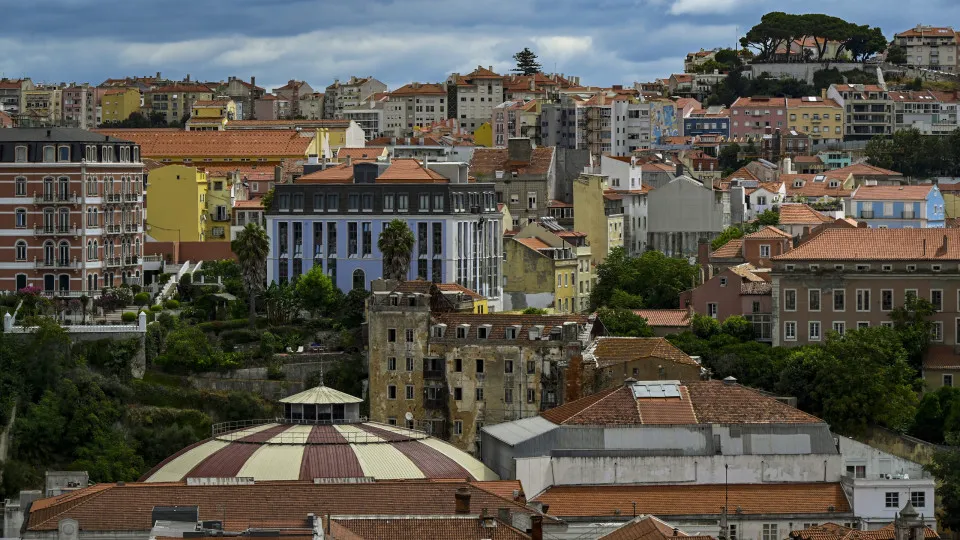
The new lease law proposed by the government unprotects tenants and does not respond to what is currently the biggest social problem in the country, the housing crisis, consider two experts heard in podcast Lusa Extra.
© Horacio Villalobos#Corbis/Corbis via Getty Images
24/10/2026
by
Lusa
A new lease law proposed by the government unprotects tenants and does not respond to what is currently the biggest social problem in the country, the housing crisis, consider two experts heard in podcast Lusa Extra.
Gonçalo Antunes, a geographer, and Rita Silva, a social economist, do not defend the same measures, but agree on the diagnosis: the housing crisis is currently the largest social problem in the country.
In conversation for the podcast Lusa Extra (https://lusaextra.podbean.com/), they criticize the government's decision to propose an urban lease law that speeds up evictions and puts an end to the limits of increasing rents.
Proposal by the Government and already approved in general by the parliament (with the vote in favour of PSD, CDS-PP and Liberal Initiative and the abstention of Aquida), the new law will now be debated in the specialty.
“ Those who are really in a more unprotected position at this time of difficulty in accessing housing are the tenants”, says Gonçalo Antunes, who does not see a reform of the rental law, but only “casuistic” and “pointual” proposals.
For this reason, the attractiveness of the measure – which supposedly intends to give “greater security to the market and to the owners” – will be “many reduced”, sees the teacher at the Faculty of Social and Human Sciences of the Nova University of Lisbon.
With the new law, the Government is “disprotecting even more tenants, who are already in an extremely delicate situation,” Rita Silva, a researcher at the Centre for Social Studies of the University of Coimbra and activist in the Just Life movement.
The “successive doses of confidence that have been given to the market” over the past 15 years have resulted in “overconfidence” and now “the market needs regulation”, a balance between rights and expectations of owners and tenants.
In fact, “there is an income regulation, which is 2,300 euros”, ironiza Rita Silva, referring to the controversial moderate income created by the government.
The new lease law “doesn’t serve either one or the other”, summarizes Gonçalo Antunes, recognizing, however, that at least he managed to get access to housing to dominate the media agenda.
“ It is very possibly the biggest social problem that the country faces, not only for this generation of young people, it is a cross-cutting issue for our entire population ", notes.
The resolution of an old and complex problem as is the case is not easy.
“ We must completely reverse the course of [household] policies,” says Rita Silva, warning that the mobilization of thousands of people on the streets in response to the new rental law, more than a trigger, “was a pressure cooker that burst”.
The economist and activist defends rent ceilings – and ceilings are not freezing, she distinguishes.
Recognizing that “it is necessary to differentiate what the big owners are from the small ones”, he believes that regulation “is perfectly possible (...) if there is political will”.
On the other hand, Gonçalo Antunes has “many doubts about such measures”, which does not mean rejecting regulation.
“ When this type of measure is implemented, there is a great retraction in the houses that are offered for rent ", predicts.
“ The market must function freely, but obviously it must be regulated and above all regulated in times of crisis, at times when it is not working”, it grants.
Both agree on the need to integrate various mutually supportive measures to respond to the current crisis.
“The regulation of rents cannot be taken alone and alone,” said Rita Silva, defending that “it is necessary to penalize the empty houses strongly.”.
Gonçalo Antunes also considers “inconceivable” the number of unoccupied dwellings: “We need to put the empty houses (...) on the market, it is absolutely essential.”
In this sense, the geographer defends the worsening of the IMI for these cases and the removal to the municipalities of the task of identifying the returned properties, which should pass to another entity, for example the Finances.
On the pressure that recent street protests have put on the new lease law – which still needs to be approved in the specialty – Rita Silva believes that “the government should take the initiative to tear up” the proposal.
“ I hope she [the new law] dies, but we have not yet seen [happening]. At the moment, it seems to me that the government is quite in the way of this situation, because it has really gone too far, and now we will see how the parties will do it,” he says.
But even if the law does not advance, the street cannot settle: “We are the countries that have had the biggest increase in income, the biggest increase in the price of houses, (...) Porto and Lisbon (...) are already at the top of the most expensive cities in the world because of real estate,” he explains.
“We can’t stop there, because the housing crisis has not started now” and the content of the state budget proposal for 2027 “is also not famous,” he says.
The demonstrations and “all the underlying political reaction eventually took away the impetus for these changes,” says Gonçalo Antunes, estimating that “until they can catalyze” new solutions and pave the way for a pact.
“ The measures that have been implemented over the past few years are mainly reactive and a little in the foam of the days and what we really need is a great strategy, a national plan to try to resolve this situation”, he proposes.