
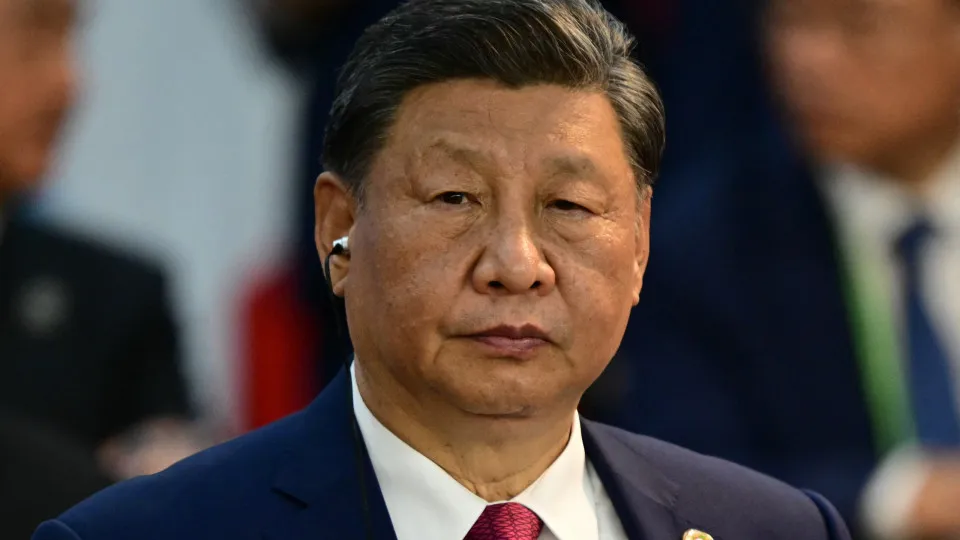
Xi Jinping promised to intensify the fight against corruption and defend the need to “grab” the illicit leaders before the plenary of the Chinese Communist Party. The president warned that corruption is the “greatest threat” and that the fight “should never be lost”.
© Getty Images
16/10/2026
by
Lusa
O chinese president Xi Jinping has promised to step up the fight against corruption and eliminate the leaders involved in illicit practices in an intervention that has been released less than two weeks from an important meeting of the Chinese Communist Party (CPC).
The speech, given in January to the Central Commission for Inspection and Discipline, the main anti-corruption body of the PCC, was published on Thursday by Qiushi magazine, a political theory magazine of the party, with new passages that include warnings about the persistence of corruption in the structures of power.
“ The fight against corruption is a great battle that we cannot afford to lose and we must never lose. We cannot stop for a moment or even step back”, said Xi.
The Chinese leader defended the need to “grab from the root or shoot the sick trees whenever necessary”, using a metaphor of classical Chinese poetry that evokes the replacement of the old for the new.
“ Corruption is the greatest risk, threat and challenge our party faces. It is an obstacle to the development of the [Communist] Party and the country,” he added.
Xi acknowledged that corrupt practices remain widespread in party structures and have a high tendency to reappear.
Disclosure of the speech takes place before the fifth plenary session of the 20th Central Committee of the PCC, scheduled for 26-29 October, in Beijing, during which the leaders should discuss and approve a document to deepen the governance and internal discipline mechanisms of the party.
The meeting should focus on combating systemic corruption, strengthening political supervision and removing institutional gaps in public administration and government bodies.
The meeting also takes place at a time when preparations for the renewal of the Chinese leadership will take place, culminating in the congress of the PCC, scheduled for autumn 2027, when a new Central Committee will be elected and changes announced in the main leadership positions.
The anti-corruption campaign has already reached a significant part of the current party leadership: 34 of the 205 effective members of the Central Committee are under investigation or have lost their seats in the People's National Assembly, the main Chinese legislative body.
On Tuesday, the Central Commission for Inspection and Discipline announced an investigation into suspected corruption against Huang Qifan, former mayor of Chongqing, who had been considered a political survivor for years, despite successive scandals that struck near figures.
Huang retired eight years ago.
In the speech now released, Xi also warned of the risks associated with leadership changes in local governments and party structures, at a time when several Chinese provinces are renewing their principal leaders.
The President asked for measures to prevent leaders about to leave their posts from fulfilling their duties or for newly appointed persons to seek immediate results to the detriment of long-term objectives.
“ We must intensify investigations into cases of corruption involving the main leaders, the younger staff and other responsible people,” he said.
Xi Jinping launched a vast anti-corruption campaign after coming to power in 2012 that reached thousands of officials and leaders, including senior political and military officials.
Although presented by the authorities as essential to preserve the integrity of the Communist Party, the campaign has also been pointed out by observers as an instrument for consolidating the power of the Chinese leader.