
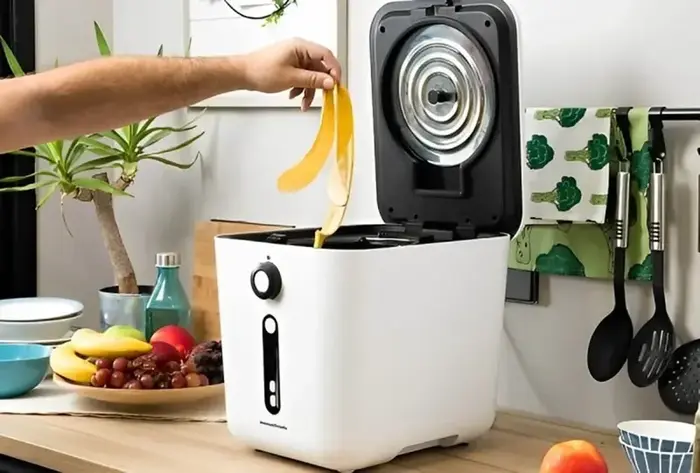
Domestic composting is more than a sustainable practice. Yeah, it's an expression of our commitment to the health of the planet.
By immersing ourselves in the art of transforming organic waste into a valuable resource, we open the doors to a more ecological lifestyle and connected to nature.
What is Domestic Composting
It is a sustainable process in which organic waste from the kitchen and garden are decomposed in a controlled way to create a material called compost. This compound is a natural fertilizer and rich in nutrients. Therefore, you can use it to enrich the soil of gardens, pots of plants or homemade gardens.

The composting process involves the decomposition of organic waste by microorganisms such as bacteria, fungi and other soil organisms. These microorganisms break organic materials into simpler compounds, resulting in a final product that is beneficial to soil and plants.
In domestic composting, green waste, rich in nitrogen, such as fruit, vegetables, eggshells and coffee lees, are combined with waste. For, among these materials provide the necessary nutrients if the decomposition is performed efficiently.
Domestic composting not only reduces the amount of waste sent to landfills, helping to reduce the carbon footprint, but also produces a valuable resource that promotes soil health. In addition, it is an affordable and simple practice, allowing you to actively contribute to environmental sustainability in your home.
Buy Domestic Composite Machine
The search for more sustainable practices and environmentally friendly has led to notable innovations in the field of domestic composting.
The domestic composer, with his advanced technology and ecologically friendly features, is thus irresistible choice for those who wish to contribute to a more sustainable lifestyle.
Efficient Transformation of Food Waste
With a power of 550 W, triple blade and non-stick ceramic coating, the composting process takes place in a simple, silent and, most importantly, no unpleasant odors. In addition, fast processing time between 6 and 10 hours.
It is a significant differential compared to traditional methods!
Automatic Cleaning System
The presence of the automatic cleaning system elevates the practicality of this machine. Because in just one hour, cleaning is completed and you guarantee the hygiene and longevity of the equipment. The easy adaptation to all kitchens, combined with the low noise level (<45 dB), makes it a modern and practical complement to houses that seek a sustainable approach.
Organic Waste Recycling and Waste Reduction
The main purpose of this machine is to reduce waste by converting organic waste into valuable fertilizer.
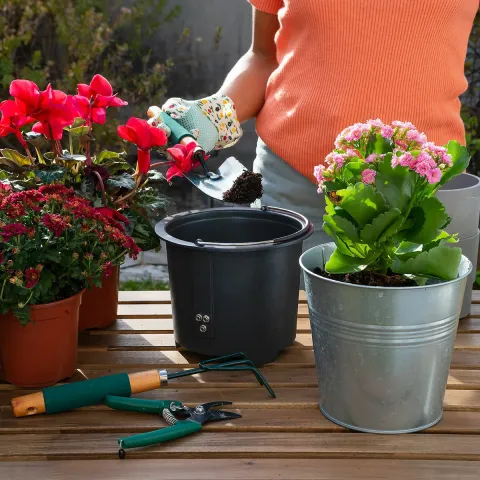
With the ability to reduce the initial volume of waste by up to 80%, it transforms food remnants into natural fertilizer, enriching the soil of gardens, plants and pots. In addition, this is a step towards reducing environmental impact.
Composting Without Odour
The inclusion of three carbon filters is a remarkable feature of this machine. Yes, filters neutralize bad odors, making internal composting viable and enjoyable. With an average service life of 720 hours, or up to six months, depending on the use, these filters guarantee a continuous experience without unpleasant odors.
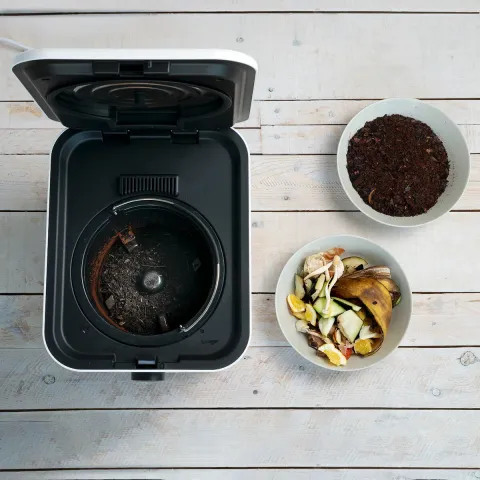
In short, the Domestic Composing Machine is a kitchen accessory for those who wish to adopt a practical and modern approach at home. Combining efficiency and ease of use, it represents a valuable investment in the search for a more ecological lifestyle. By buying this device, not only are you turning waste into resources, but also contributing to a healthier and more balanced planet.
What Can I Put in Composing Machine
Here are some examples of products you can put inside the composting machine.
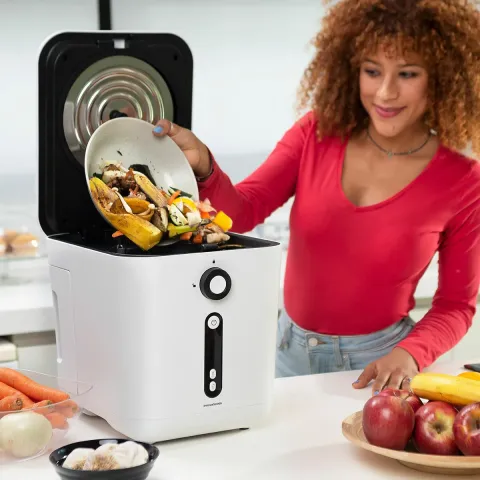
- Kitchen waste:
- Fruit and vegetable remnants
- Egg shells
- Coffee spray
- Meals (without products of animal origin or excess fat)
- Garden Materials:
- Dried leaves
- Small branches and pruning trimmings
- Cut grass (in small quantities to avoid compaction)
- Other Acceptable Materials:
- Minced cardboard
- Unprocessed napkins and paper towels
- Tea bags (without labels or metallic staples)
- Avoiding:
- Animal products (meat, bones, dairy products)
- Excess oils and fats
- Plastic or metal materials
- Waste treated with chemicals (such as treated wood)
Conclusion
When incorporating the composting domestic in your everyday life, you will not only reduce your environmental impact, but will also become an active part of a life cycle, transforming waste into valuable resources.
Experience the magic of composting and discover how small gestures at home can have a significant impact on our planet.