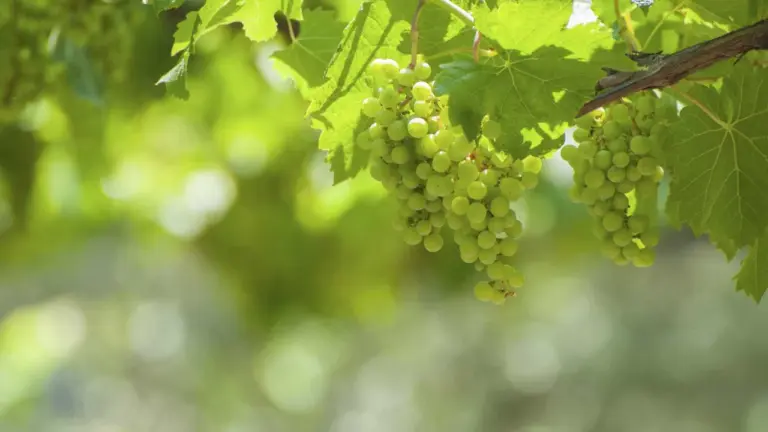
The president of the Green Wine Region pointed out that despite the shrinkage of the world wine market, the consumption of white wines, especially green wines, has grown.
© Getty Images
27/11/2026
by
Lusa
A president of the Region of Vinhos Verdes said today that despite the fall in world consumption of wine, the demand for greens, of low alcohol content, has an increase, in counter-cycle with the shrinkage of the market.
“ Although wine consumption is difficult internationally, (...) because demand is declining or diverging for other types of products, consumption is increasing in white wines, even in the shrinking market,” said Dora Simões.
The president of the Viticulture Commission of the Green Wine Region (CVRV), who spoke to journalists outside the initiative “Vinhos Verdes Insights: wine balance of 2026”, added that the region “is particularly well positioned to respond to the new trends of consumption, not only by the traditional profile of the Green Wines, but also by the diversity of styles it has developed”.
“ The classic green wine, slightly gasified and with low alcohol content, continues to find room in the market, but also grows the demand for quiet whites, including wines with internship capacity ", observed.
The person who spoke in Arcos de Valdevez, district of Viana do Castelo, in the Amândio Galhano Vitivinícola Station (EVAG), which brought together winemakers, producers and technicians from the Demarcated Region of Vinhos Verdes, also highlighted the “world interest of international markets by the Alvarinho variety”, considering “that this is an opportunity that the region should know how to seize”.
“The situation is much better for us than for others and we really need to focus on what needs to be done. We have to take this grape variety, because it is very grounded in the region of the Green wines ", said.
For Dora Simões, other factors for this trend are “the increase in production in 2026, the efficiency of vineyards, the performance of exports and the need to prepare the region for the future.
“ We anticipate an increase in the production of practically all over the country of wine for the Protected Designation of Origin or Protected Geographical Indication (DO/IG). Last year, 100 million liters of wine were produced and, this year, only in wine suitable for production as DO or IG, we will have between 2.2 and 2.3 million liters of wine ", specified.
Despite the difficulties facing the sector on an international scale, exports of Green Wines continue to be positive in some of the main markets, namely the United States, Brazil and the United Kingdom.
Despite the current context favorable to white wines, Dora Simões warned that the region cannot be dependent on this trend. “Consumption habits are cyclical and what today represents a competitive advantage may not be of the same importance in a few years’ time.”.
According to Dora Simões, CVRVV “is developing micro-winemaking trials with indigenous grape varieties in the region, seeking to identify varieties and wine profiles that can meet consumer preferences in the medium and long term”.
The results of these trials, presented under the Green Wines Insights forum, allow producers to know new possibilities before taking planting decisions.
Asked about the impact of climate change on wine production, the technical director of the Amândio Galhano Vitivinícola Station, Tânia Rodrigues, explained that although it is not yet possible to identify a constant climate pattern, there are significant differences when compared to the current conditions of about 15 years ago.
“The temperature is rising and the precipitation is not necessarily increasing or decreasing, but it is more concentrated in winter periods,” he said.
One of the most visible effects of these changes is the anticipation of harvests. According to Tânia Rodrigues if, previously, the harvest of grapes could take place in October, today this scenario is practically unthinkable for the production of dry, traditional wines of the region.”.
Sustainability Director R&D Academia, Alexander Cornejo, presented six ongoing projects in the region that “search to modernise the wine sector through the use of artificial intelligence, digital tools, scientific research and intelligent monitoring systems.
They aim to improve environmental sustainability, reduce costs and use of plant protection products, increase the efficiency of certification processes and enhance the ability to prevent and control pests and diseases.