
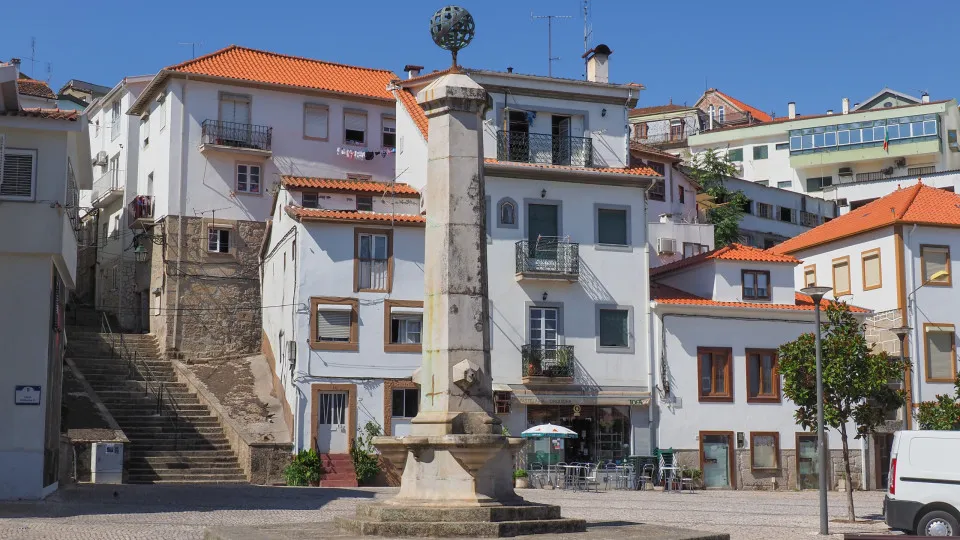
Some 200 people marched today in Covilhã, Castelo Branco district, for the right to decent housing and at fair prices, demanding measures that go beyond the offer of real estate funds at luxury prices.
© Shutterstock
14/11/2026
by
Lusa
Cerca of 200 people marched today in Covilhã, Castelo Branco district, for the right to decent housing and at fair prices, claiming measures that go beyond the offer of real estate funds at luxury prices.
Marisa Marques, from the local center of the Porta a Porta, explains that “in the Covilhã, real estate funds have created answers for the lack of accommodation for students, but also condition the market”.
These ventures, “have an offer, at high prices, of T0 and T1, but then lack offer for families, with T2 or T3 types and at balanced prices”.
The average of a quarter for students in Covilhã, Castelo Branco district, “is between 220 and 300 euros. But there are also rooms at 700 euros in such T0s, in luxury residences, that this government even started by supporting what these real estate funds have for the city, but that also do not meet the needs of all students, because not everyone has the financial capacity to meet these values”.
Another concern in this city is “with pensioners, whose pension is short to respond to rents, who are often forced to leave their homes, some who are unworthy to live”.
Between the public garden and the town square, this human frame was repeating slogans, in the same line as what happens today in more than 30 cities of the country, united by the “right to live”, within the national demonstration called by the platform Casa Para Viver, which requires the reversal of the new law of rental, among other measures.
Marisa Marques recalls that the housing problem is not new, but “it has increased since the inauguration of this government, when it presented the Construct Portugal program”.
“ We immediately saw what they came to, without any decorum, that is, to facilitate the life of those who live from the profit of real estate, to which this rent law has joined, which turns everything into a jungle and leaves the population at the mercy of the landlords. Without any brakes or respect for the lives of people whose wages do not grow at the pace of inflation and income”, he reiterates.
The support measures announced by the government, especially for younger people, “are targeted at a market segment that does not correspond to the majority of the population. A moderate income of 2,300 euros is an anecdotal thing. The VAT exemption (Value Added Tax) for house construction up to EUR 648 thousand, without any consideration, is to give the benefit to those who live off speculation and real estate profit”.
Marisa Marques considers that “the public guarantee for young people is for those who can buy houses of 300 and 400,000 euros, they are not measures that meet the needs of the majority of the Portuguese population, who live off their work”.
It also acknowledges that “the municipalities have little room to build public housing without government support, but this State Budget for 2027 is the lowest budget for the sector for decades, representing 0.3% of GDP (Gross Domestic Product), which does not give much confidence. Trust is given by people today on the street”.
Inter-Reformed people joined the protest on behalf of older people and young people. Luís Garra, president of this structure, says to Lusa that “there are two dimensions that affect older people: the conditions of habitability, because landlords do not invest in comfort, and the pressures to leave the houses, to be rehabilitated or re leased, but at higher prices”.
Even if they do not have housing problems, “they have children and grandchildren, who leave their parents’ homes more and more, because they are not able to rent, even to access the credit to buy”.