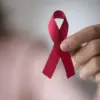
The DGS joined the European Autumn Test Week, which runs from 23 to 30 November, with the offer of free HIV testing, other sexually transmitted infections and viral hepatitis.
© Global Images/ Reinaldo Rodrigues
19/11/2026
by
Lusa
A DGS joined the European Autumn Test Week initiative, which runs from 23 to 30 November and during which the population can perform free HIV testing, other sexually transmitted infections and viral hepatitis.
“ The performance of the test allows the early identification of an infection, knowledge of the state of health and, when necessary, access to health care in good time and start the appropriate treatment”, says the Directorate-General for Health (DGS) in a note published in the ‘site’.
The health authority stresses that there are currently effective therapies for these infections and, in some cases, healing is possible.
“The early diagnosis and early onset of therapy contribute to reduce transmission and achieve better health outcomes,” he stresses.
Through the National Programme for Sexually Transmitted Infections and HIV and the National Programme for Viral Hepatitis, DGS is thus associated with the other European countries in this initiative, reinforcing the importance of early diagnosis.
The tests are free, fast and confidential and can be performed at various points in the country that can be consulted at https://www.dgs.pt/in-detail/european-week-of-the-autono-2026-pdf.aspx
In a report released at the end of last year, the European Centre for Disease Prevention and Control (ECDC) warned of the increase in sexually transmitted infections among young people, particularly gonorrhea, where reporting rates increased almost 200% between 2021 and 2023, signaling an “urgent need” of national “robust and inclusive” responses.
The experts of the organization also considered that education on HIV and sexuality based on skills for life, in school contexts and in accordance with international standards, is crucial to empower young people to “take control and make informed decisions about their sexuality and relationships in a free and responsible manner”.
The report stressed that condoms, when used correctly and consistently, are among the most effective methods of primary prevention against sexually transmitted infections.
In 2024, Portugal recorded fewer cases of HIV infection, totaling 997, but more than half of the diagnoses occurred late, especially in people aged 50 or over, according to the report “HIV Infection in Portugal 2025”, prepared by DGS and the National Institute of Health Dr. Ricardo Jorge (Insa).
In that year, 108 deaths were reported, of which 46.3% occurred more than 20 years after diagnosis and 17.6% five years later, the report states, indicating that between 1983 and 2024, Portugal accounted for 66,421 cases of HIV infection and 16,050 deaths.
Despite the sustained downward trend, the report warns that Portugal remains among the countries of the European Union with higher annual AIDS diagnosis rates, approximately three times the European average.