
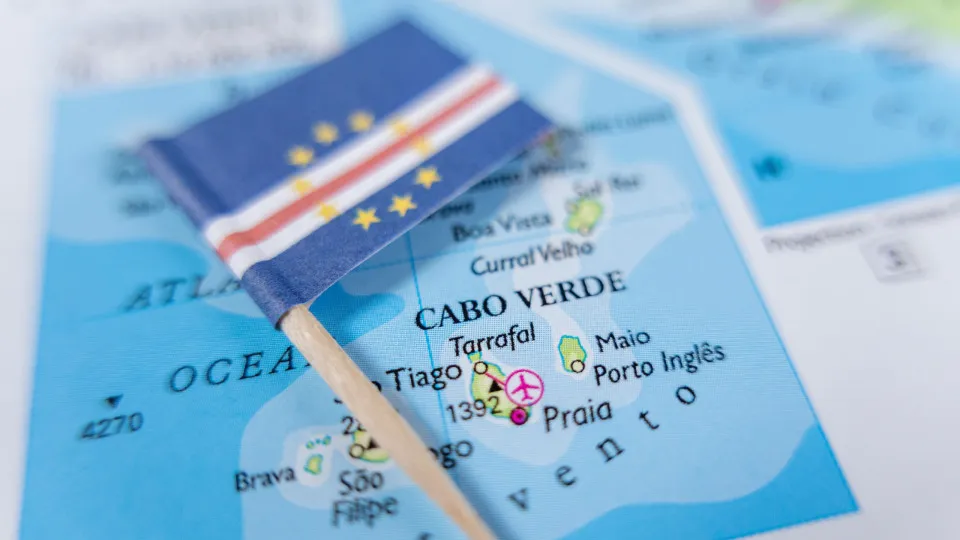
Portugal will have 67 voting tables for the Cape Verdean diaspora to vote in Cape Verde’s presidential elections, the embassy in Lisbon said.
© Shutterstock
09/11/2026
by
Lusa
Portugal will have 67 voting tables so that the Cape Verdean diaspora can vote on Sunday, the day when the presidential elections are held in that country, the embassy in Lisbon announced today.
“The Cape Verde Embassy makes it public that 67 voting assembly tables will operate in Portugal, which are distributed through the Lisbon and Vale do Tejo Region, North Region and South Region of the country and Autonomous Region of the Azores,” said the diplomatic representation in the statement sent to Lusa.
According to consular information, the voting tables will work on Sunday, November 15, between 8:00 and 6:00.
They may exercise their right to vote to duly registered Cape Verdean citizens who are accompanied by “any civil identification document issued by the Cape Verdean authorities, even if expired, or valid residence permit or passport of the host country, or valid civil identification document issued by a third State allowing identification”.
Citizens find their place of vote through the ‘sites’ of the National Election Commission of Cape Verde (https://cne.cv/) and the General Directorate of Support for the Electoral Process (https://dgape.cv/).
Specifically, according to the press release, in the Region of Lisbon and Vale do Tejo, the voting tables will be located in Almada (Cova da Piedade e Monte da Caparica), Amadora (Alfornelos, Buraca, Damaia, Reboleira, Casal de São Brás e Mina) Barreiro, Cascais (São Domingos de Rana), Lisbon (Belém/Restelo, S. Bento/Rato, Lumiar Carnide/Benfica), Loures (Zambujal, Sacavém and Catujal/Unhos), Moita (Vale da Amoreira), Odivelas, Oeiras (Carnaxide and Porto Salvo), Seixal (Amora, Arrentela and Corroios), Sintra (Agualva-Cacém, São Marcos, Monte Abraão, Queluz, Rio de Mouro, Mira-Sintra and Algueirão-Martins) and Vila Franca de Xira (Vialonga).
In the North Region, it will be possible to vote in Aveiro, Braga, Bragança, Castelo Branco, Coimbra, Covilhã, Guarda, Leiria, Mirandela, Porto, Portalegre and Viana do Castelo.
In the South, there will be voting tables in Beja, Évora, Faro, Portimão, Loulé (Quarteira) Setúbal and Sines.
Finally, in the Autonomous Region of the Azores will be on Terceira Island (Angra do Heroísmo), Pico Island (Madalena do Pico) and São Miguel Island (Ponta Delgada).
For these elections there are 426,531 voters, of which 76.898 in the diaspora (18% of the total), according to the latest data, concerning September.
José Maria Neves, who won the first round five years ago, with 51.8% of the votes, seeks to maintain the Cape Verdean tradition of re-election for a second term.
This was the case with Mascarenhas Monteiro, who won the elections in 1991 and 1996, Pedro Pires in 2001 and 2006 and Jorge Carlos Fonseca in 2011 and 2016.
The vote also calls for former minister Joana Rosa – the first woman to appear in the presidential election ballot in Cape Verde – Judge Antero Tavares, secondary school teacher Loisito Sousa, businessman Gilson Alves and university professor Casimiro de Pina.