
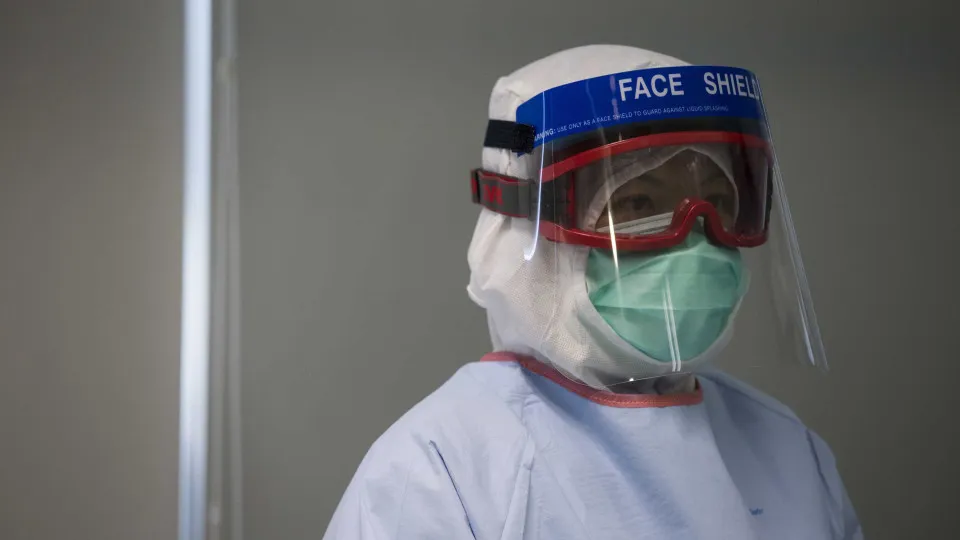
The WHO has admitted that advances in combating the Ebola epidemic in the DRC are fragile and insufficient, although progress has been made in reducing cases.
© Reuters
13/11/2026
by
Lusa
A World Health Organization (WHO) today admitted that advances in the fight against the Ebola epidemic in the Democratic Republic of Congo (DRCongo), which exceeds 5,400 deaths in almost six months, are “fragile and insufficient”.
According to WHO, the current challenges in the fight against the Ebola virus, about half a year since the declaration of the associated health crisis, are hampered by insecurity in the affected areas.
“ We must do much more, and the challenge that our response to the outbreak currently faces is the increase of insecurity, with more than 80 attacks on health facilities and personnel verified by the WHO ", indicated in a press conference the agency's Emergency Director, Chikwe Ihekweazu.
WHO's manager stressed that a peak of 700 to 800 new weekly cases has been reduced to the current figures, which are between 400 and 500, but have stabilised at this level.
“ We are working intensively to reduce it below that level, and in some areas the cases are decreasing, but it is very difficult to design what will happen in the future,” he said.
In this sense, he pointed out that most of the first epicenters of the outbreak were successfully controlled, and even in Bunia, the main one, where there is still a significant transmission, “there are fewer new cases and the treatment centers that were overloaded a few months ago now have much smaller beds.”.
Heekweazu insisted that the violence of armed groups in the affected areas of the east and north of the country restricts access to people who need help, interrupts epidemiological surveillance, treatments and forces thousands of people to move, hindering health care.
At the same press conference, the UN humanitarian coordinator for the current epidemic, Julien Harneis, added that in recent days more people have died in affected areas by attacks by the Allied Democratic Forces (ADF), a group linked to the Islamic State (EI) and operating in eastern DRCongo than by the Ebola virus.
“ However, it is not spoken of, as if it did not exist. Violence affects dozens of villages throughout southern Ituri and North Kivu (provinces affected by the outbreak), passes virtually unnoticed and generates fear among the population ", lamented.
Both recalled that the UN launched a humanitarian response plan to tackle the $2,210 million (about €19,994 million) epidemic, of which it has received only half so far.
The outbreak of the Ebola virus was declared on May 15, and two days later the WHO declared it an international emergency.
Since May the DRC has faced the second most deadly Ebola epidemic in history, with more than 5,400 deaths, at least 11,042 confirmed cases and a lethality rate of 48.9%, according to the latest official data.
This week, after almost six months since the declaration of the epidemic, the NGO Médicos Sem Fronteiras (MSF), which participates in the containment work, criticized the current response, denouncing, among other things, “a worrying disconnection” between the vast resources mobilized to combat the epidemic and those who actually reach the affected areas.
In view of the criticism, Harneis said that “the mere fact that so far the [virus] Ebola has remained largely contained in eastern DRC,” coupled with the fact that when it spread outside the country “it was possible to control the transmission quickly again, demonstrates the enormous effort made throughout the region”.
Today, also, four UN agencies – including WHO – have warned that a record of 30.3 million people in DRCongo will face levels of acute food insecurity crisis, or worse, during the first half of 2027.