
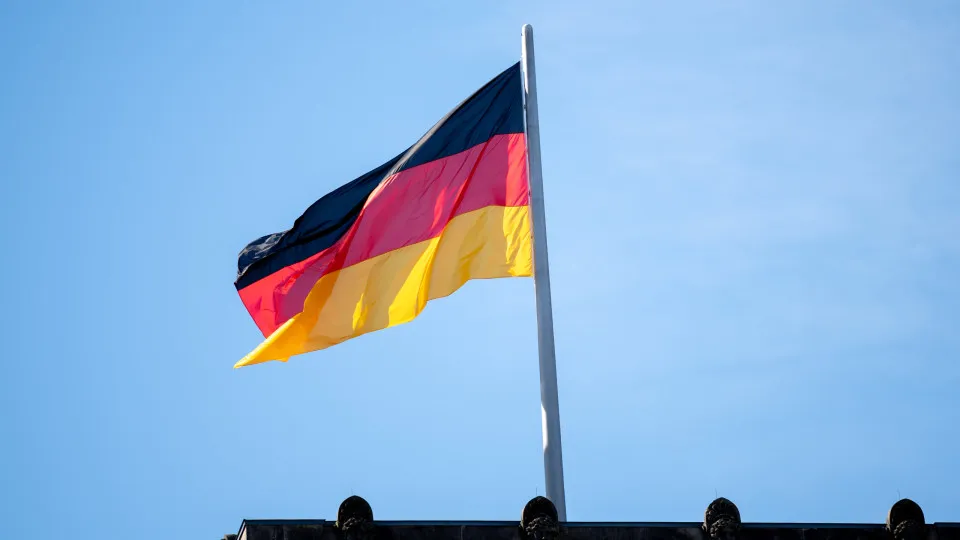
The European Commission expects Germany's economy to grow by 1.3% in 2026, slowing to 1.0% in 2027, after years of stagnation, according to the autumn economic forecasts released in Brussels.
© Marcin Golba/NurPhoto via Getty Images
17/11/2026
by
Lusa
A germany's economy is expected to return to growth after years of stagnation, and the European Commission points to an acceleration of 1.3% this year, which slows to 1.0% by 2027, a review upwards from the previous year.
“ After several years of stagnation, the economy is expected to grow by 1.3% in 2026, 1.0% in 2027 and 0.7% in 2028,” according to the autumn economic forecasts released today in Brussels.
The Community executive states that this acceleration of the Gross Domestic Product (GDP) “is supported mainly by a strong increase in German exports at the beginning of 2026, which should continue to benefit in 2027 from the overall dynamism of artificial intelligence (IA) and from the expansion of defence and infrastructure expenditure”.
Brussels also points out that increased uncertainty and high inflation delay the recovery of private consumption, while increased labour, energy and financing costs are halting private investment.
The expected inflation rate for Germany is 2.9% this year, accelerating to 3.2% by 2027 and slowing to 2.0% by 2028.
The Community executive also anticipates that the ratio of government debt to GDP will rise to 64.3% this year, to 66.3% in 2027 and 68.9% in 2028.
Germany is still expected to have a stable unemployment rate of 4.0% in 2026 and in the next two years, according to the European Commission's autumn economic forecasts.