
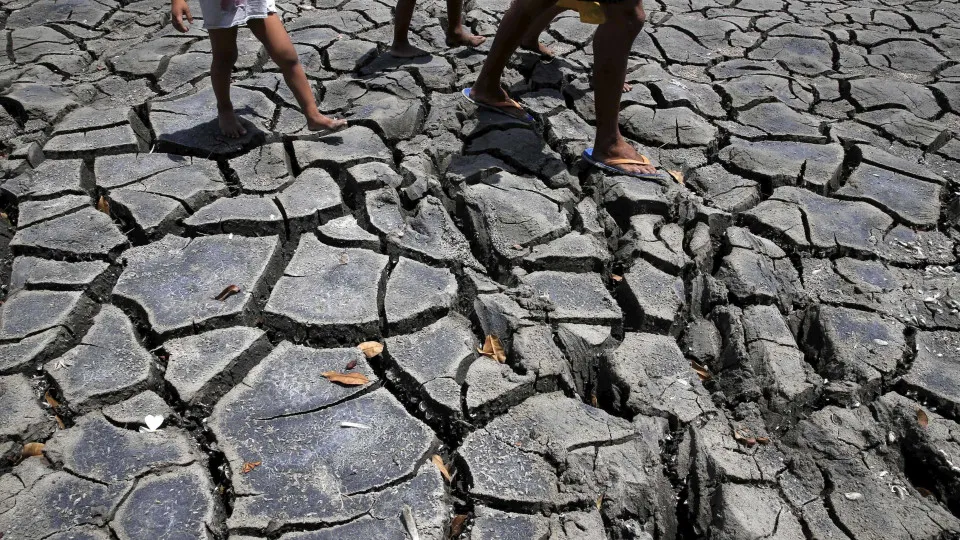
The World Meteorological Organization (WMO) today warned that this year’s climate phenomenon El Niño may become one of the strongest on record since 1950, with significant impacts on global temperatures and precipitation patterns.
© Reuters
08/10/2026
by
Lusa
Sfollowing the organization, the El Niño currently under way will continue to intensify in the coming months, reaching its peak in December and remaining active at least until February 2027.
The United Nations agency warns that this could become one of the strongest episodes recorded since 1950, with significant impacts on global temperatures and precipitation patterns.
According to the OMM, there is a close probability of the phenomenon persisting until February next year.
Although this does not mean that all regions of the world will face above average temperatures every day, it significantly increases the likelihood of extreme heat waves and other effects associated with rising temperatures.
El Niño is a natural variation of the climate system that causes the heating of the surface waters of the central and eastern equatorial Pacific. However, the current occurrence arises in a context of global warming caused by human activity, which may amplify its effects.
The forecasts indicate that the sea surface temperature in the so-called Niño 3.4 region, a reference area in the tropical Pacific, may reach an anomaly of about 3.7 degrees Celsius between October and December, a value that would represent a new historical maximum.
The previous record was 2.6 degrees above average, recorded between November 2015 and January 2016, during another strong episode of El Niño.
The intensification has been rapid, with the sea surface temperature rising from 1.6 degrees above average in June to 2.5 degrees in August.
According to the Secretary-General of the OMM, Celeste Saulo, the phenomenon does not create additional heat on the planet, but releases into the atmosphere the heat accumulated in the oceans. As the oceans are currently warmer than in any other period observed, there is an unprecedented amount of energy available to be released.
The organization therefore expects the El Niño to produce temperatures above average in much of the planet and to alter the rainfall regimes in various regions.
Precipitations above normal in the central and eastern equatorial Pacific, in the Horn of Africa, in parts of Central and Eastern Asia, in the north of the Arabian Peninsula, in some areas of North America and southeast South America are expected.
On the other hand, there should be drier than usual conditions in the western Pacific, the equatorial Atlantic, the Indian subcontinent, South Central America, parts of the Caribbean and the northwest of South America, as well as areas of the South Pacific to the southern end of the South American continent.
In Central America, drought is already causing agricultural losses, crop reduction and cattle mortality. In India, monsoon disturbances threaten the agricultural production and livelihoods of millions of people.