
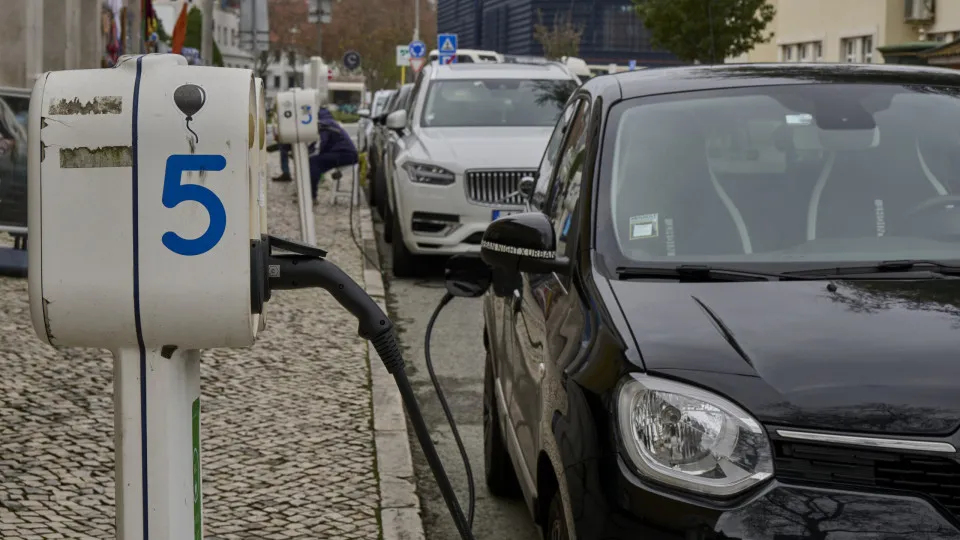
UVE – Association of Electric Vehicle Users argues that this is not the time for discussion about new forms of taxation of electric cars when the transition is still underway.
© Horacio Villalobos#Corbis/Corbis via Getty Images
08/10/2026
by
Nlast week, the Mobility and Transport Authority (AMT) presented a study on the Financing of the Road Network – in which he argued that electric cars should be part of the network financing.
In the context of encouraging the purchase of environmentally friendly cars in the energy transition that is needed: electrics benefit from subsidies and exemption from the IUC (circulation tax) and the ISV (vehicle tax). There are even local measures such as the green parking sign in Lisbon that makes parking cheaper and easier.
However, the Road Service Consignation, one of the main mechanisms for financing the road network in Portugal, is largely dependent on the revenue of the tax on petroleum and energy products – that is, fuels used in combustion models.
More electric, less recipes for the roads?
That's why, aMT warns that lower consumption of fossil fuels may represent a reduction in revenue if nothing is done – believing that the annual decrease can be between EUR 140 and 200 million in 2030, if the electricity mobility quota is between 20 and 30 percent. He therefore argues that “the evolution of energy taxation mechanisms should seek to preserve the sustainability of the tax base”.
Discussion comes at an inappropriate time
UVE – Association of Electric Vehicle Users has now issued a statement where contrasts the analysis of the MTA. It says that “it is not the right time to put at the center of the discussion the need to involve electric vehicles in the search for solutions to compensate for the possible reduction of revenues from fossil fuels”.
It points out that a period of instability and uncertainty in the energy sector, where it is urgent to reduce dependence on fossil fuels – the energy transition of transport is essential for this.
Electrification should not be seen as a threat
In this context, the LVU believes that public policies should remain focused on accelerating the transition, while recognising that there is an opportunity to rethink the infrastructure financing model so that it is less dependent on fossil fuels. But he stresses: “Transport electrification should not be seen as a threat to current tax revenues“.
The entity considers that by 2030 a car park composed of 20 to 30 percent electric cars will hardly be reached. And even if that happened, the reduction in fuel consumption would not necessarily have the same proportion. And he says: “The replacement of 20 or 30 percent of light passenger vehicles with electric vehicles will have an impact on fuel consumption substantially different from the electrification of 20 or 30 percent of heavy goods vehicles.”.