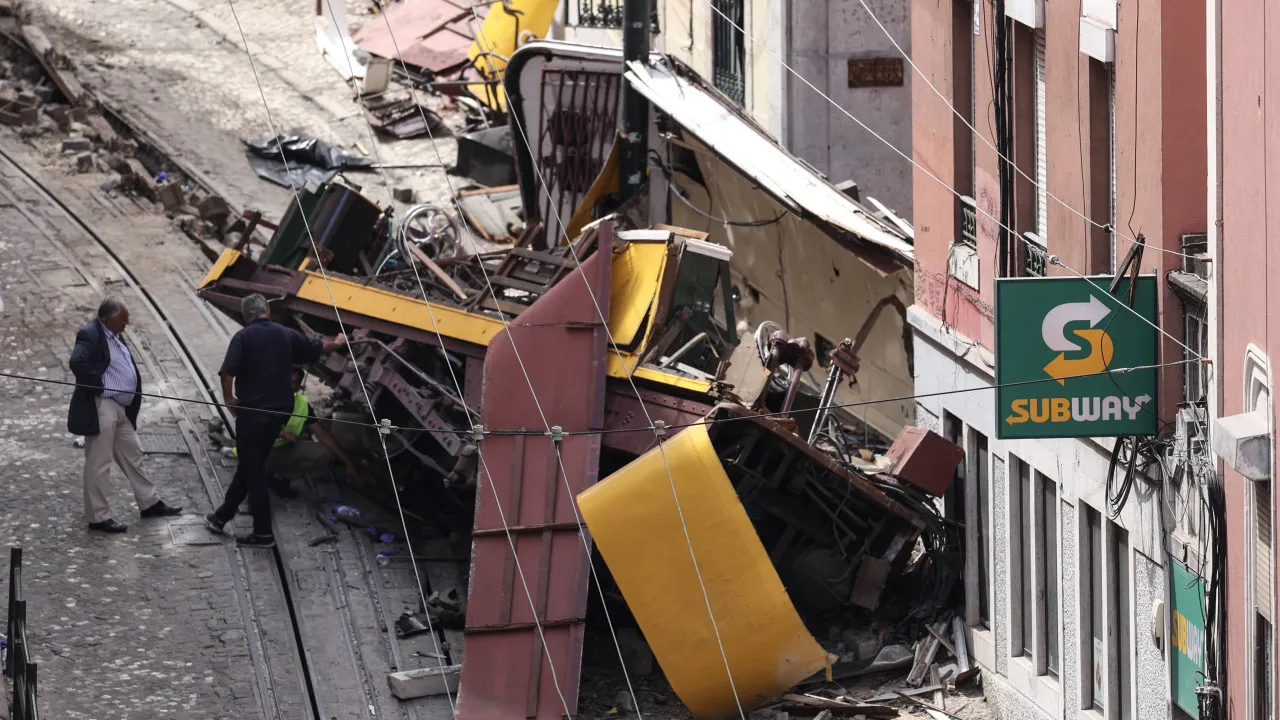
Reports from the external audit of CATIM confirm that the lifts of Gloria, Lavra, Santa Justa and Bica presented inconsistencies in the cables used, according to documents made available by the PSD/CDS-PP/IL governance to the opposition councilors.
© Lusa
18/11/2026
by
Lusa
Transport
Othe historical funiculars of Gloria, Lavra, Santa Justa and Bica, in Lisbon, presented discrepancies regarding the cables used in public transport equipment, according to reports from the external audit of CATIM, carried out after the accident that caused 16 deaths.
The reports, dated October and November of last year, were made available today by PSD/CDS-PP/IL governance to opposition councilors, following a television report that denounces the omission of these documents, which point to failures in those equipment managed by the municipal company Carris.
The matter was raised at the private meeting of councillors this morning, with the opposition accusing Carlos Coins' leadership (PSD) of lying and hiding the documents.
According to the reports of the Center for Technological Support for Metalworking Industry (CATIM), to which Lusa had access, in the lifts of Gloria, Lavra, Santa Justa and Bica – closed since the accident of September 2025 – cables were being used other than those indicated in the reference standards.
According to CATIM, the cables installed complied with EN12385-4, but for that type of equipment, “the cable to be installed must comply with EN12385-8”.
In the case of the lift of Gloria, which derailed, the entity concluded that, despite the certificates of the cables that were being used, indicate that they cannot be used with a dettorcer, “it was found that the elements connecting the cables to the vehicles (trumbs) have a dettorcer”, and yet, “after the installation of the last cable in 2024, there is no evidence that any inductive magnetic inspection and testing of the cable” of that equipment has been carried out.
In October 2025, the preliminary report of the Office for the Prevention and Investigation of Aircraft Accidents and Rail Accidents (GPIAAF) to the accident already indicated that the cable joining the two cabins of the Gloria elevator – and which gave in to its point of attachment of the carriage that derailed – did not comply with the specifications of Carris, nor was it certified for use in the transport of persons.
In the case of the Lavra lift, CATIM concluded that the installation did not meet the conditions of safety to go into operation, while in the Bica funicular a set of non-conformities were identified “that require significant and unavoidable interventions”.
In the Santa Justa elevator, despite the disconnection of the cable, the entity stressed that “the couplings from cable to drum and cabins were carried out in order to ensure safety in all operating conditions”, explaining that the handling and support of the equipment is ensured by 12 cables”, that is, “the system is too redundant”.
As for the funicular of Grace – the only one that has been reopened since the end of April – CATIM has registered the “global compliance of the facility with the applicable security requirements”, but has marked some failures in the emergency and rescue evacuation plan.
The D.A. is still investigating the derailment of Gloria's elevator.
In September, after a year of the accident, the MP was waiting for the completion of trials and experts scheduled for this month of November, to then carry out “the thorough analysis of the facts, the careful assessment of the sufficiency of evidence and the clearance of possible criminal responsibilities, so it is estimated that the final order of inquiry, except some imponderable, may take place by the end of the first quarter of 2027”.
The GPIAAF, which planned to present its final conclusions within one year of the tragedy, postponed the disclosure of that report also by the end of the first quarter of 2027, “due to the complexity of technical expertise”.