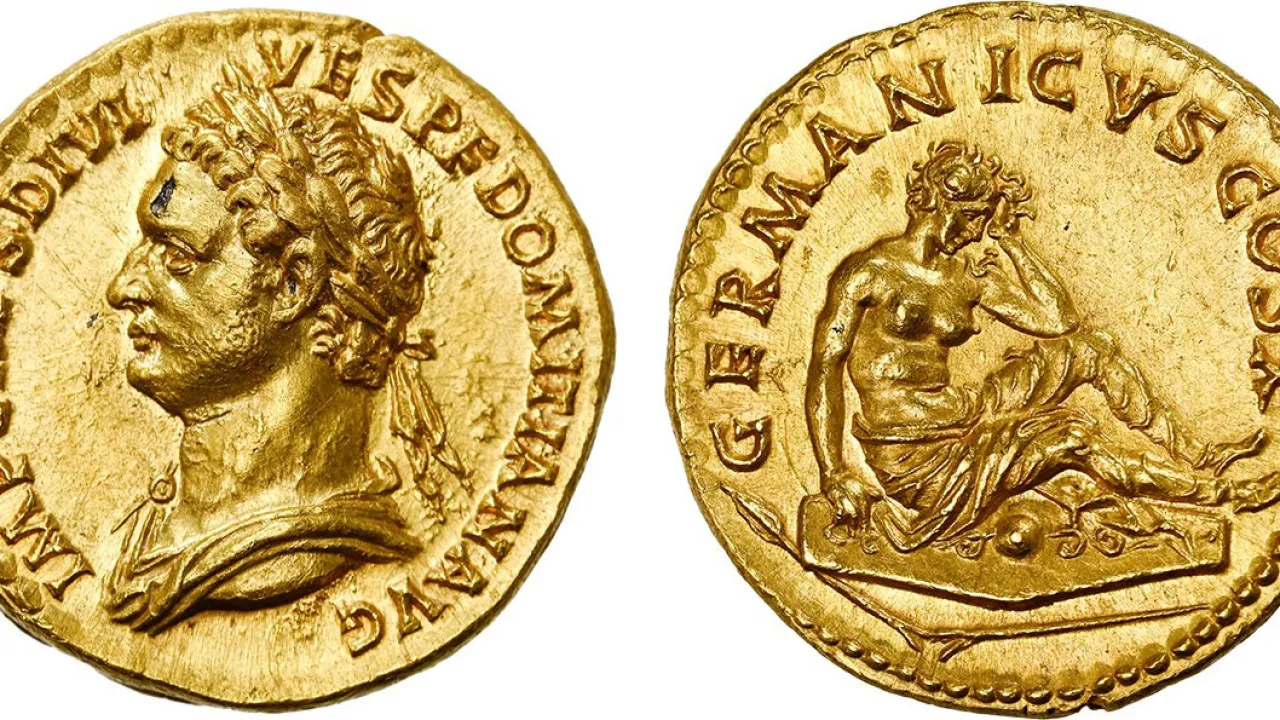
The coin will be part of the collection of the National Museum of Archaeology (MNA). The purchase was ensured through the Commission for the Acquisition of Cultural Goods.
© Museums and Monuments of Portugal (MMP)
20/11/2026
by
News to Minutes
O Portuguese State guaranteed this week through the Commission for the Acquisition of Cultural Goods for the National Museums and Palaces, the purchase of a rare roman gold coin for eur 29,166. The coin will be part of the collection of the National Museum of Archaeology (MNA).
“The Domitian Aureus, well-classified cultural since 1954 belonging to a roman treasure discovered in 1953, in Friúme (Council of Ribeira da Pena, district of Vila Real), will be presented at the MNA reopening exhibition“, refers to Museums and Monuments of Portugal (MNP) in a statement sent to the essays.
They also add that the currency “was first acquired because it was inventoried in the Government Diary (2nd series, No 65, of March 18, 1954), to which it added had known provenance, had been the subject of scientific publications, and found itself in an excellent state of conservation. Thus, 2026 closes a process that began 72 years ago”.
The Aureus was a gold coin used in the Roman Empire, in this case it was coined during the government of Emperor Domitian.
“ She was sister-in-law in 84 A.D. in Rome, during the period when she was emperor (between 81 and 96 A.D.) and illustrated Germania, who was defeated, sitting on the shield, with a broken spear at her feet, celebrating the campaign against the Cats that earned Titus Flavius Domitian the title of Germanicus. The last emperor of the Flavia dynasty, known for the valorization and reform of imperial wedge, used purer silver and gold to strengthen the prestige and wealth of the empire ", can be read in the same note.
The discovery was initially reported by Mário Ramires in 1954, in the magazine Nummvs, in the “Monetary Treasure of Friume”, No. 6, Vol. II, pp. 74–80, the archaeological site being referred to by CNS 19373 and the name “Casal”. In a subsequent resurgence at auction, Mário de Castro Hipólito observes the numisma and publishes “The Aureus of the Treasure of Casal, Friume”, also in Nummvs No. 33, vol. X, 2 December 1974”. “Still, this numism remains in the possession of private, despite the status of cultural well-invented”, is still detailed.
So far, “in the collection of the National Museum of Archaeology (MNA) only “there are goldens of some emperors, but only another of Domitian. With this incorporation, which has only parallel in the great museums of the World, the collection of numismatics of the Museum is even more valued in the international panorama. Soon, the maximum classification process will be started as a National Good”, the statement ends.
It is recalled that the Government also announced last Tuesday that the Portuguese State bought, at auction, a jewel from Queen Dona Amelia for more than 220 thousand euros. The play, which returns to the country, will be integrated into the state collections.