
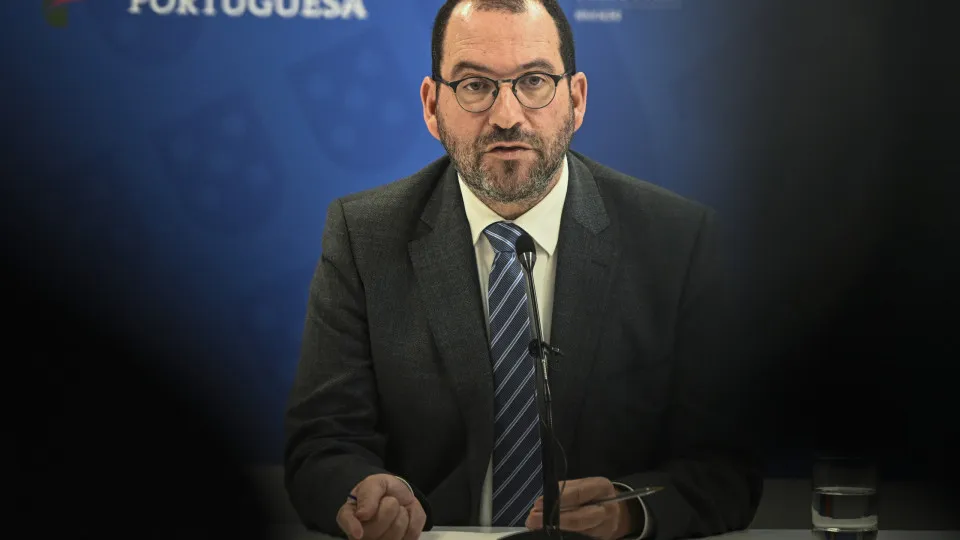
Former Minister of Education João Costa today advocated earlier support for students with difficulties and an articulated intervention that does not forget the difficulties of the students' families, such as housing, poverty or job insecurity.
© Getty Images
06/10/2026
by
Lusa
João Costa was heard urgently in parliament today at the request of the Aquida because of the poor results of 15 year old Portuguese students in the international tests conducted by the OECD, the PISA (Programme for International Student Assessment).
“ We need to look at these data more cautiously so that we do not leave for the shouting of the fault it was of this or it was of that ", said former Minister João Costa, arguing that two temptations should be avoided: relativize the results or use them for party and simplistic readings.
Portuguese students had the worst results of the last two decades in the PISA tests of 2025 and João Costa never denied a share of responsibilities, since he was Secretary of State for Education between 2015 and March 2022 and then minister until 2024.
However, he stressed today that it is important to have “analytical rigor, political responsibility and collective ability to learn from data”.
The worsening of the results of the Portuguese follows an international trend and João Costa pointed out as possible explanations the pandemic, the increase of inequalities, well-being problems and the increasing use of digital, which affects reading, concentration and learning.
“ The decline is common to very different countries, so we must also look at common social, technological and cultural factors ", said, defending that we need to know how to interpret the results and turn them into concrete actions.
For João Costa it is necessary to support students with difficulties earlier and there must be an “inter-sector collaboration”: It is not enough to look inside the classroom, it is necessary to pay attention to the housing problems of the families of the students, to look at those who are starving or the “families that have to have two or three jobs because they cannot pay the bills”.
Investing in teacher training is another of the essential measures for the former minister, who believes that “a magic key” is not necessary, but “persistent work, intelligent monitoring and consistent support for schools”.
For João Costa, “educational systems do not improve because of an isolated measure. They improve by consistent accumulation of policies over time.”.
Therefore, he believes that one should learn from countries that resist the decline, but without copying models out of their context: “Compare is necessary, copying without context is dangerous,” he warned.
On the changes to the curricula made in his mandate, the former minister acknowledged that the curriculum is important, but does not explain everything, remembering that there are countries with good results with different curriculum models, some more focused on knowledge, others more focused on skills.
For João Costa, the central point is the quality of teaching, the depth of learning and the ability to work texts, problems and complex concepts.
“ We need ice in the veins: look at the results seriously, act responsibly and not forget that educating is much more than climbing a ranking ", defends.
During the hearing, the deputies of the PSD, CDS and Aquida were the most critical of João Costa, accusing him of being the main responsible for the poor results of Portuguese students.
“The pandemic and new technologies can explain a part, but they don’t explain everything,” said the deputy of the Aquita José Carvalho, speaking of “examicide”, in a reference to the decision to replace the 4th and 6th years of exams with measurement tests.
“Congratulations, it goes back to history as the worst Minister of Education of Portuguese democracy,” said Deputy Paulo Nuncio of the CDS, who accused João Costa for “eight disastrous years of politics.”.
João Costa criticized Paul Nuncio’s intervention, asking him not to “repeat chavos that help nothing.”.
In reply to Members, João Costa also promised to send a dossier containing all the measures he took while he was in the Ministry of Education.
At the hearing he said he wished he had done as the United Kingdom, which stands out “for having spent more resources in monitoring the recovery of learning” lost during the pandemic.