
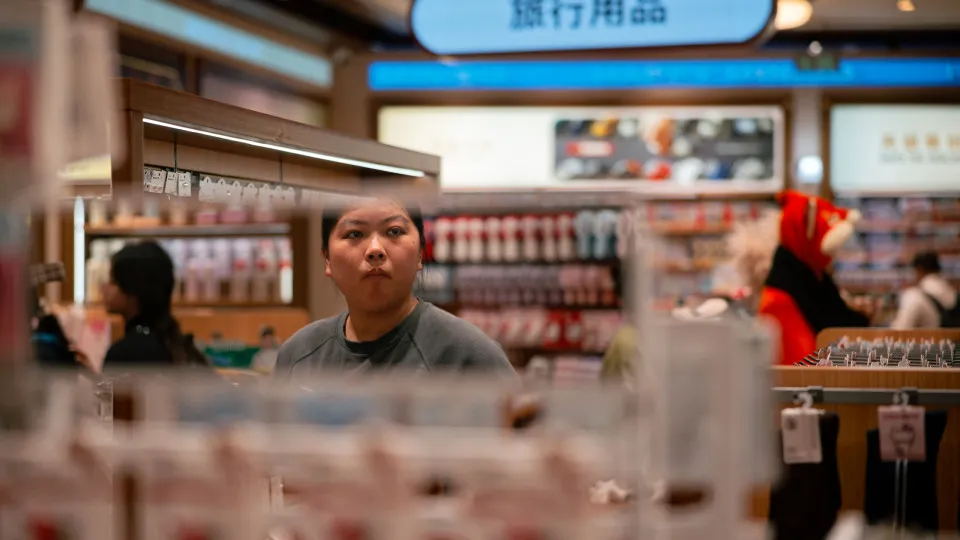
Singles Day, China's largest shopping festival, is revealing difficulties in stimulating consumption despite the discounts offered by digital platforms in a context of poor family confidence.
© Lusa
11/11/2026
by
Lusa
O Singles Day, China's largest shopping festival, is revealing difficulties in stimulating consumption, despite the discounts offered by digital platforms, in a context of poor family confidence.
Celebrated today, November 11, the festival, known as “11.11”, is considered an important consumer barometer in the second largest world economy, although promotional campaigns begin several weeks earlier.
According to the Syntun data analysis platform, sales accumulated until 31 October slightly exceeded a billion yuan (about EUR 130 billion), a value similar to that recorded in the same period last year.
In 2025, total sales reached a record of almost 1.7 billion yuan (EUR 230 billion), mainly driven by the extension of promotional campaigns.
“The optimism about the recovery of domestic demand has faded,” said Max Zenglein, senior economist for Asia – Pacific at the The Conference Board study center.
“ Improving confidence has repeatedly proved to be short-lived,” he added.
The Chinese economy grew by 4.6% in the first nine months of the year, driven mainly by exports, while retail sales increased by only 1.1%, according to official data.
The prolonged housing crisis continues to weigh on family trust. House prices have fallen by about 20% or more since the peak of 2021, reducing the owners' perception of wealth.
In Foshan, Guangdong province, 24-year-old Gabby Liang said he reduced Internet purchases, especially non-essential products.
“ During last year's Bachelor's Day festival, I bought plenty of skin care products. But this year I hope to buy less”, said, quoted by the Associated Press news agency.
For Yaling Jiang, founder of ApertureChina, consumers face a growing “fatigue of discounts” due to the multiplication of promotional campaigns throughout the year.
“ Before, people expected the biggest discounts of the year ", explained. “This is no longer the case after the festival has expanded to several platforms and has lasted a month,” he added.
In the face of consumer restraint, Chinese e-commerce giants are resorting to artificial intelligence (IA) to boost sales.
Alibaba has integrated its Qwen AI model into the Taobao and Tmall platforms this year to facilitate orders and customize product recommendations.
The weakness of domestic demand contrasts with the dynamism of Chinese exports, which grew 35% in October, driven by technological products, including semiconductors and electric vehicles.
Despite the widespread weakness of consumption, some segments continue to grow, in particular health and welfare products.
According to WPIC Marketing + Technologies, Internet sales of imported fish oil increased by almost 43% in the 12 months ending in September.
Zenglein considered that the strong expansion of exports reduces pressure on Chinese authorities to adopt stronger measures to stimulate consumption.
“ As long as China continues to advance in its industrial and technological ambitions, policy makers will have little incentive to fundamentally rebalance the economy towards the search for families,” he said.