The Gang Repression Force (GSF) announced that operations in Haiti have entered a new phase, with greater pressure on gang networks and decommissioning refuges.
© Guerinault Louis/Anadolu via Getty Images
19/11/2026
by
Lusa
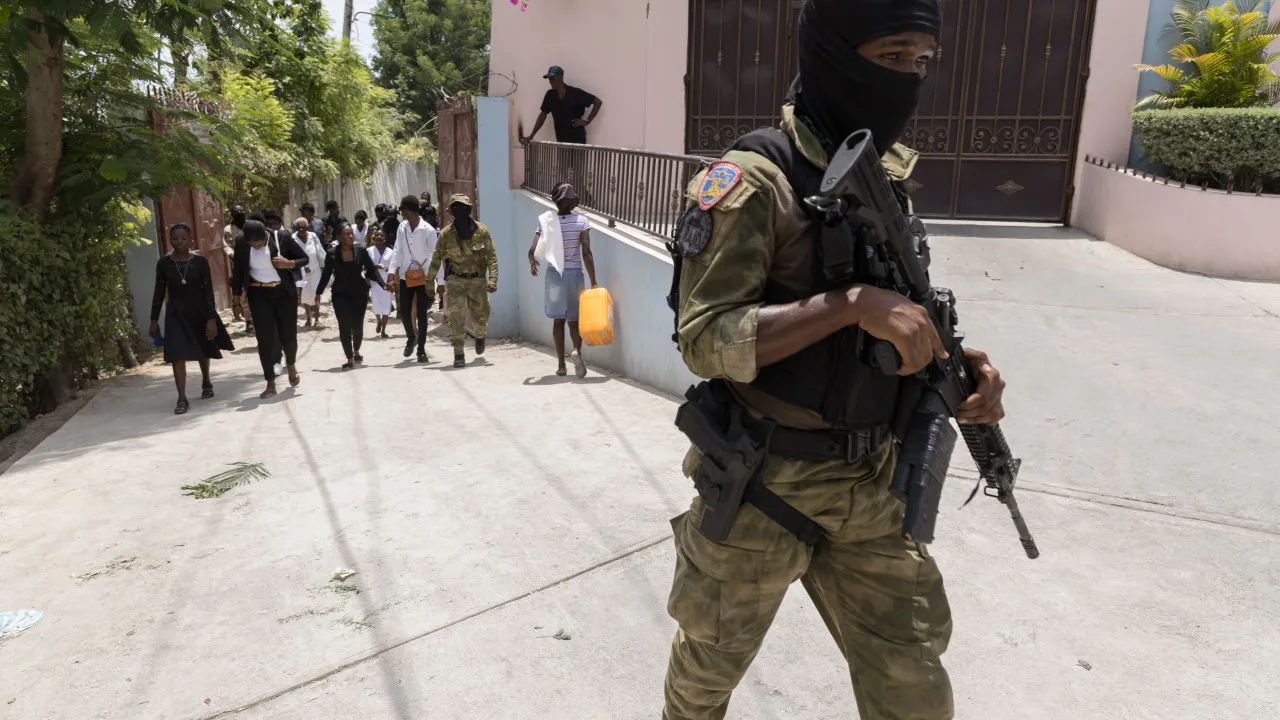
A Gang Repression Force (GSF) today said that operations against armed groups in Haiti “entered a new phase”, with more pressure on the networks, decommissioning of refuges and greater control of areas.
The GSF indicated that during months it conducted night patrols, collected information and carried out specific operations to identify gang positions and weaken their influence.
“ Now operations are entering a new phase: increasing pressure on gang networks, dismantling more refuges and expanding control over strategic areas,” GSF said in a message on social network X.
The information is accompanied by a video of an intervention in Tabarre, a commune in Port-au-Prince, where GSF military personnel are seen accessing properties that apparently had previously been used by gangs.
The aim of these new actions is “of course”, because it is “not only to move the gangs, but to dismantle their control over the communities, to recover the territory and to prevent their return,” the UN Security Council authorized this multinational force.
Today, the Haiti National Police (PNH) announced the death of 34 alleged members of an armed gang in the locality of Martissant, in southern Port-au-Prince.
The gang members were shot down in a Renel refuge.In fact, Ti Lapli, leader of the Grand Ravine gang, reported the police on their social media, gathering a video of the operation in which three armored vehicles are seen entering the area, followed by an explosion in a house, apparently attacked by a drone.
Grand Ravine, the gang led by Ti Lapli, is composed of about 300 members and is allied with the G-Pep coalition, which participated in “a number of actions that threaten peace, security and stability in Haiti,” according to the UN.
This operation is in addition to the progress made by El Salvador's troops, such as the recovery of control of Portail Léogâne, Haiti's power station (EDH) and the Sylvio Cator football stadium, where the Central American military installed a base of operations.
El Salvador's president, Nayib Bukele, sent more than 2,000 military personnel to Haiti after the disappearance of four members of his GSF forces, after suffering an ambush of armed gangs on October 18 in the Santo area of Croix-des-Bouquets, the metropolitan area of Port-au-Prince.