France, Germany and Sweden have criticised the new proposal of the President of the European Council, António Costa, for the Community budget of 2028-2034, which provides for a cut of 10.2% compared to the originally envisaged one.
© Lusa
21/11/2026
by
Lusa
A France, Germany and Sweden have criticised the new proposal by the President of the European Council, António Costa, for the Community budget of 2028-2034, which provides for a cut of 10.2% compared to the originally envisaged one.
The 10.2% cut from the European Commission's initial project does not satisfy Paris due to the lack of guarantees on support for farmers, nor Berlin and Stockholm, which require an even greater reduction in expenditure.
“The new proposal for negotiation on the next multiannual European budget is very disappointing”, said sources of the Elisha, quoted by the Europa Press agency, because they consider that the figures presented by the Portuguese Socialist “are not sufficient”, especially as regards the Common Agricultural Policy (CAP) and the guarantees to maintain income support for farmers.
France warned that the approach of the Portuguese socialist “is not a basis for an agreement”, making clear its opposition to the five-day document of the extraordinary summit on 26 and 27 November, in which European leaders will try to bring the positions on the forthcoming Community accounts closer together.
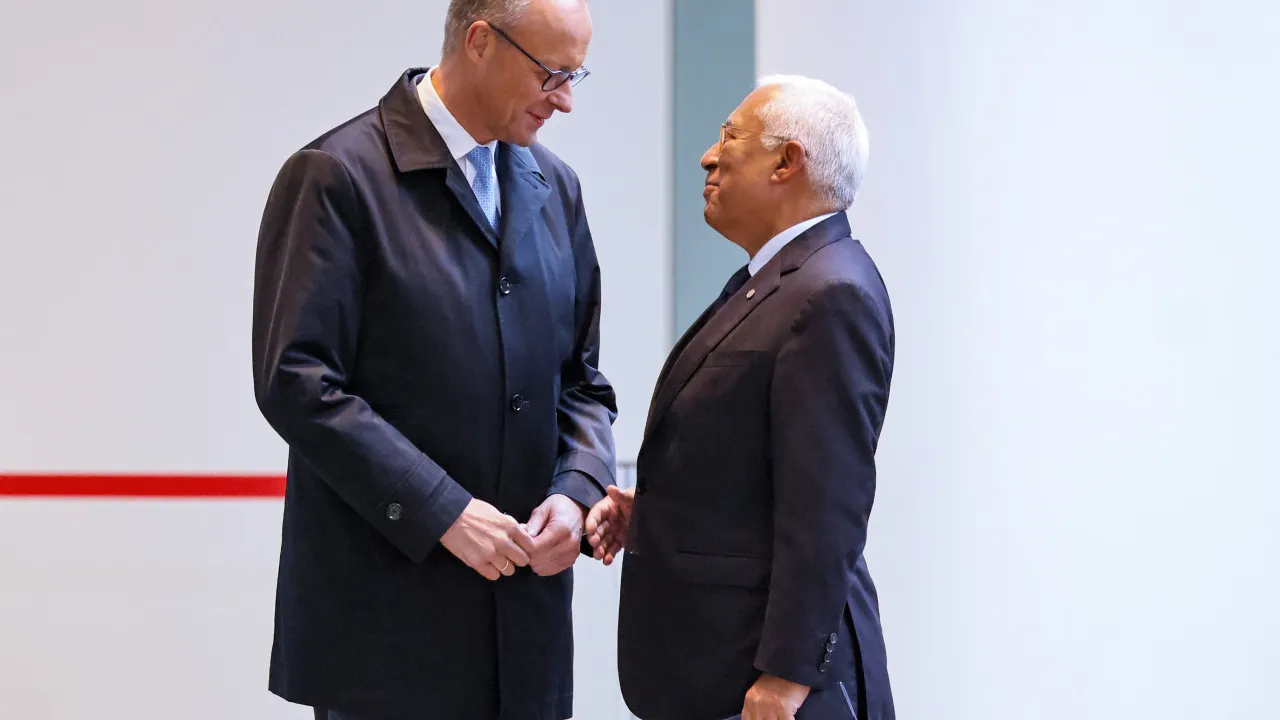
The German Chancellor, Friedrich Merz, acknowledged that the new proposal represents “a first step”, although he warned that its total amount “continues to be too high”.
Merz considered that an increase in the European budget of more than 40% is incompatible with the efforts to consolidate public finances that virtually all Member States face.
“An EU budget that grows by more than 40% at the same time simply does not comply with current realities,” he stressed in a statement, in which he advocated the need for “modernized, realistic and feasible” accounts that meet European priorities for competitiveness, security and defence.
The German Chancellor also warned that the new proposal would risk aggravating the imbalances existing in the current multiannual financial framework and required corrections in the revenue system to ensure a fair and fair distribution of burdens between Member States.
In addition, he insisted that the next budget should ensure “solid, sustainable and multiannual” support for Ukraine, with the participation of the 27, since he believes that European security is a shared responsibility that all countries must shoulder.
Despite his reservations, Merz thanked Costa for her “pragmatism and commitment” in conducting the negotiations and was willing to work towards reaching an agreement before the end of 2026, a goal that he considers to be in the interest of the whole of Europe.
Swedish Minister for European Affairs, Jessica Rosencrantz, also acknowledged that the new document represents “a step in the right direction”, although she warned that the 27 are still “a long way from reaching a compromise”, considering that the budget is still too high and that Sweden’s contribution would increase excessively.
“The EU must make difficult decisions on its priorities, as we all do at home,” said Rosencrantz, who also insisted that Stockholm wants a budget focused on competitiveness and security in Europe, a position that, as he recalled, has been “since day one”.
The Swedish Minister also assured that her government would continue to defend a “modern and fair” budget after warning that Sweden’s contribution would increase “too much with the current proposal”.
The overall amount proposed by António Costa for the Multiannual Financial Framework 2028-2034 is EUR 1 582.5 billion, at constant prices of 2025, which represents a reduction of EUR 180.5 billion (10.2%) compared to the initial proposal of the European Commission.
At current prices, the proposed budget amounts to EUR 1,780,9 billion, less EUR 204 billion (10.3%) than the 1,984.9 billion initially proposed by Brussels.